



Scrunch AI is an AI search visibility platform, owned by Sitecore since June 2026, that tracks how AI assistants mention and cite your brand, reads AI bot traffic from your CDN logs, and on its Enterprise plan serves AI agents a cleaned-up copy of your pages through its Agent Experience Platform (AXP). The self-serve Core plan costs $250 a month for 125 prompts on four engines (ChatGPT, Perplexity, Google AI Overviews and Copilot), with answers re-collected every 72 hours; Claude, Gemini, Google AI Mode, Meta AI and Grok are Enterprise-only. Our verdict: a strong choice for enterprise teams and agencies that control their CDN, and expensive for small teams that mostly want broad engine coverage.
This Scrunch AI review is built from Scrunch's own pricing page, FAQs and help center (all checked on October 24, 2026), Sitecore's acquisition announcement, 74 G2 reviews, Google's crawler and spam documentation, and a close read of the 12 pages that currently rank for Scrunch. You get verified prices and limits, what $250 actually buys once you do the sampling math, an engine-by-plan map, a plain look at AXP and the cloaking question, sourced user complaints, a scorecard, and a short list of alternatives.
Disclosure: AI Rank Lab, which publishes this blog, sells a competing AI visibility tool. We did not have a paid Scrunch account for this review, so we do not claim hands-on testing; every product claim below links to Scrunch's own documentation or a named source, and we flag where those sources disagree. Most of the other reviews ranking for this query are also written by competing vendors, several without saying so.
Key takeaways
- Price: Core is $250/month (125 prompts, 5,000 responses a month, 4 engines, 5 seats). Agency Core is $500/month (250 prompts, 3 client workspaces, unlimited users). Enterprise is custom. Prices checked October 24, 2026.
- Engine gating is the big catch: Core and Agency Core track ChatGPT, Perplexity, Google AI Overviews and Copilot only. Claude, Gemini and Google AI Mode need Enterprise.
- Refresh rate: new prompts run daily for 14 days, then every 72 hours by default. That matches the 5,000 monthly responses on Core: about 10 answers per prompt per engine per month.
- Real strength: Agent Traffic reads server or CDN logs (Cloudflare, Vercel, Akamai and others), which sees AI crawlers that never run JavaScript, and splits them into training, indexing and retrieval.
- AXP is Enterprise-only and routes AI user agents such as ChatGPT-User and PerplexityBot to an optimized copy of your pages. Googlebot and Bingbot are not routed, so it does not change what Google AI Overviews or AI Mode ground on.
- User sentiment is good (4.6/5 from 74 G2 reviews); the recurring complaints are a learning curve, export limits, integration bugs and, in one detailed review, a messy sales process.
What is Scrunch AI?
Scrunch is a generative engine optimization (GEO) platform: it measures where a brand appears, is missing or is misrepresented in AI-generated answers, and then tries to change what AI systems read about that brand. It sells to brands and agencies, with an enterprise lean, and says more than 500 brands and agencies use it.
Three company facts matter for buyers:
- Who owns Scrunch: Sitecore, the enterprise content management and digital experience vendor, announced it had acquired Scrunch on June 3, 2026. The press release does not state a price; B&T, citing Bloomberg, reported $225 million. G2 now lists the product as "Scrunch AI by Sitecore".
- Roadmap direction: Sitecore says Scrunch's recommendations will be automated inside SitecoreAI's content management, content marketing and digital asset management products. If you run Sitecore, that is a reason to look closer. If you do not, it is a reason to ask how standalone customers will be served.
- Funding before the deal: B&T reports Scrunch raised $26 million, including a $15 million Series A led by Decibel.
Scrunch also states it is SOC 2 Type II compliant and offers role-based access control, which is table stakes for the enterprise buyers it targets.
What does Scrunch do? A feature walkthrough
Scrunch does four jobs: it monitors AI answers, explains why you appear or do not, measures AI bots visiting your site, and (on Enterprise) changes what those bots receive. Its site groups this into Monitoring and Insights on one side and Agent Experience on the other.
Monitoring and citations
You give Scrunch prompts (typed, pasted as keywords, imported by CSV or generated from personas) and it collects the answers. For each prompt it records whether your brand is present, how you compare with up to five competitors on Core, sentiment, and which domains and URLs the answer cited. Core also includes funnel-stage tagging, limited query fan-out analysis and three topics in AI Search Trends.
According to Scrunch's data collection FAQ, answers are gathered with a mix of browser automation and official platform APIs, chosen per platform, and the FAQ does not say which method is used where. That matters because API answers and logged-out consumer answers can differ; ask which method applies to the engines you care about.
Personas are one of Scrunch's distinctive features. The personas help article says persona context is injected into the prompt at collection time (name and description on ChatGPT, Claude and Grok; name only on the other engines), and you can filter every report by persona. The same article's introduction says personas do not personalize responses, so the documentation contradicts itself; treat persona splits as prompt variants, not as real user personalization.
Insights, site audits and page optimizations
Insights turn the monitoring data into recommendations: content gaps, sources to target and crawl errors. Core includes 5 site audits a month, a 25-page site map, one page optimization a month and "basic" content generation. Enterprise gets full-site audits and "advanced" content generation. We found no documented way to publish fixes to a CMS from Scrunch today; the Sitecore integration is where that is heading.
Agent Traffic: AI bot analytics from your logs
Agent Traffic shows which AI bots visit which pages, split into training, indexing and retrieval traffic, with a feed of recent requests and a 12-week trend. The important detail is how the data arrives. Scrunch's supported integrations list is built on logs, not a JavaScript tag:
| Integration | Method | What it needs |
|---|---|---|
| Cloudflare Workers | Worker | Free plan for low-to-moderate traffic; paid Workers $5/month plus $0.30 per million requests over 10M |
| Cloudflare Logpush | Log push | Cloudflare Enterprise contract (Scrunch calls it the most reliable setup) |
| Vercel | Log drain | Vercel Pro or higher, plus $0.50 per GB of log data |
| Akamai DataStream 2 or Cloud Monitor | Real-time logs | Akamai Enterprise contract |
| WordPress | Plugin | Free |
| Custom API | Send logs directly | Free; docs on request from support |
| Webflow, Shopify, BigCommerce, Squarespace, Wix, HubSpot CMS | Put Cloudflare in front | A Cloudflare proxy setup (full or partial, by platform) |
Log-based collection is the more complete way to count crawlers, because many AI bots fetch HTML without executing JavaScript, so tag-based tools (ours included) see less of that traffic. The trade-off is setup effort: one agency reviewer on G2 said connecting Agent Traffic to clients' CMS platforms was hard, which is what you would expect when the answer for Shopify or Wix is "put Cloudflare in front".
Agent Experience Platform (AXP) and Agent Pages
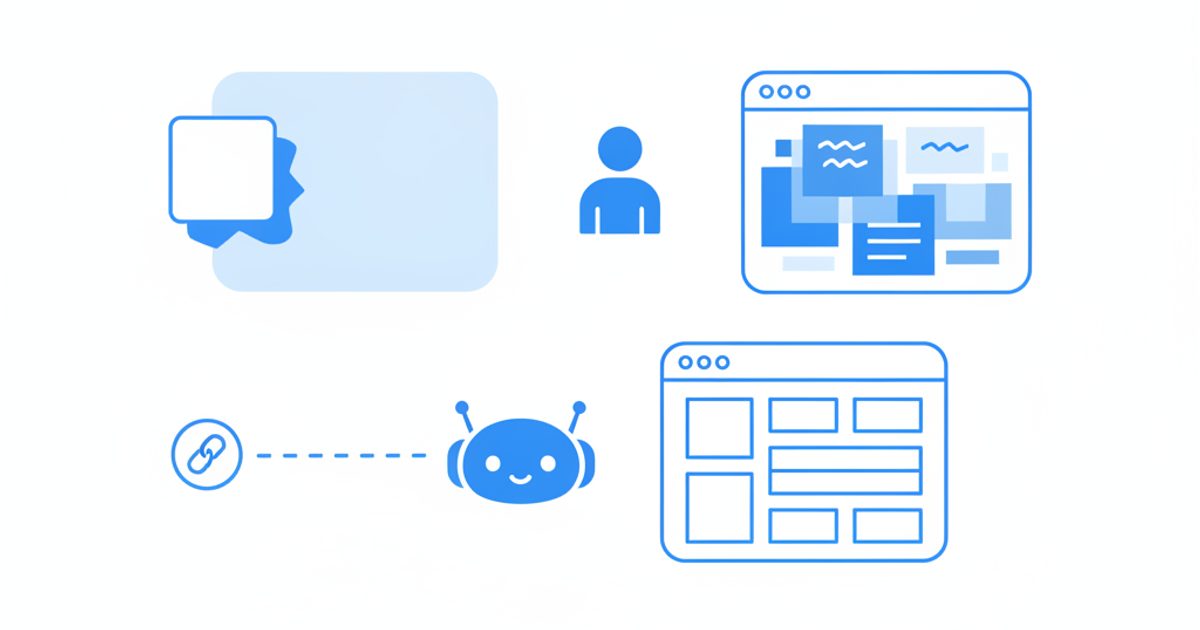
AXP serves AI agents a parallel, machine-friendly version of your pages while humans keep seeing the normal site. Scrunch's AXP help article describes the mechanism: a Cloudflare Snippet sends requests from AI user agents such as ChatGPT-User, PerplexityBot and Applebot to a Scrunch-hosted origin, which returns server-rendered HTML with no JavaScript dependency, structured summaries and clarified entity definitions. The URLs do not change, so citations still point to your real pages. Content is prepared and approved in advance, and AXP runs in pass-through mode until you approve it. It does not rely on llms.txt.
In September 2026 Scrunch announced Agent Pages as generally available: you pick pages from a crawled site map, Scrunch strips non-content markup and tracking parameters, adds missing JSON-LD and delivers the result at the edge. An optional Site Optimization layer goes further and restructures copy, using facts from approved internal sources such as Notion, SharePoint or a DAM. On the pricing page, AXP is listed only under Enterprise and is not priced.
Shopping and product observability
Scrunch has a Shopping module for product-level AI search performance. On the pricing page, product observability is an Enterprise feature, so e-commerce teams on Core should not expect product-level reporting.
How much does Scrunch AI cost?
Scrunch AI pricing starts at $250 a month for Core, $500 a month for Agency Core, and custom quotes for Enterprise. These are the plans we saw on scrunch.com/pricing in a normal browser on October 24, 2026, and they match Scrunch's own pricing FAQ.
| Plan | Price | Prompts / responses | Engines | Workspaces and seats | Notable inclusions |
|---|---|---|---|---|---|
| Core (brands) | $250/month | 125 unique prompts; 5,000 responses/month | 4: ChatGPT, Perplexity, Google AI Overviews, Copilot | 1 brand workspace, 5 users | 5 site audits/month, 1 country, 1 language, 5 competitors, agent traffic, 1 page optimization/month, Google SSO, email support |
| Agency Core | $500/month | 250 unique prompts; 10,000 responses/month | Same 4 | 3 brand + 3 pitch workspaces, unlimited users | 5 site audits per brand per month |
| Enterprise (brands or agencies) | Custom (sales) | Custom | 9: adds Claude, Gemini, Google AI Mode, Meta AI, Grok | Custom | AXP, full-site audits, Looker Studio, Query and advanced API, MCP access (custom), product observability, SAML/OIDC SSO, dedicated account team |
Three pricing caveats the other reviews mostly miss:
- Two price lineups are in circulation. Many reviews (and some automated fetches of the pricing page we ran on the same day) show an older Starter ($300 monthly or $250 billed annually, 350 prompts) and Growth ($500 or $417, 700 prompts) ladder covering more engines. GEO Toolbox reported both lineups being served at once in July 2026. What a real browser showed us on October 24 was Core and Enterprise. Get your quote in writing.
- Trial terms conflict. The pricing page offers a 7-day free trial. Scrunch's pricing FAQ says a credit card is required and you are upgraded after the trial unless you cancel, and describes the trial as Explorer-level access (100 prompts, three page audits). Set a reminder before day seven.
- AXP and the extra engines are quote-only. If Claude, Gemini or AI Mode coverage is a must, you are buying Enterprise, and there is no public number for that.
What does $250 a month actually buy?
The useful way to read Scrunch's limits is per answer collected. Core's 125 prompts on 4 engines make 500 prompt-engine pairs. Spread across 5,000 responses a month, that is 10 answers per pair per month, which lines up with Scrunch's documented cadence of daily runs for a new prompt's first 14 days, then every 72 hours. At $250, that is roughly $0.05 per collected answer. Agency Core works out the same: 250 prompts x 4 engines x 10 = 10,000.
For comparison, Peec AI's Starter plan is $95 a month for 50 prompts on 3 chosen models with daily tracking, or about 4,500 answers a month at roughly $0.02 each. That is not a like-for-like product comparison (Scrunch includes log-based bot analytics and audits; Peec has no AXP equivalent), but it shows where Scrunch's money goes: fewer, less frequent samples, plus the agent-side features.
Does a 72-hour cadence matter? It depends on how volatile your answers are. In AI Rank Lab's own tracking data (972 repeated runs of 42 prompt-engine pairs, February 13 to October 22, 2026), 42.9% of pairs flipped between mentioning and not mentioning the tracked brand at least once. Ten samples a month is enough to see a trend for most brands; it is thin for spotting a sudden drop within a week. We wrote up those stability numbers in our AI answer consistency study.
Which AI engines does Scrunch track on each plan?
Scrunch markets nine engines, but only four are available without an Enterprise contract. One G2 reviewer complained that model gating by tier was not made clear upfront, so here it is in one table.
| Engine | Core / Agency Core | Enterprise |
|---|---|---|
| ChatGPT | Yes | Yes |
| Perplexity | Yes | Yes |
| Google AI Overviews | Yes | Yes |
| Microsoft Copilot | Yes | Yes |
| Claude | No | Yes |
| Gemini | No | Yes |
| Google AI Mode | No | Yes |
| Meta AI | No | Yes |
| Grok | No | Yes (one Scrunch FAQ still calls it "coming soon") |
Why the gating matters in practice: across 3,764 AI-referred page views recorded by the AI Rank Lab tracking tag on 30 sites (July 27, 2025 to October 24, 2026), Gemini sent 17.9% and Claude 12.2%, so about 30% of AI referral visits came from two engines Core does not track. Copilot, which Core does track, sent 1.6%. The sample is small and referrer-based (it undercounts ChatGPT visits tagged only with UTM parameters), so treat it as directional; still, check your own GA4 AI referrals before accepting a four-engine plan.
Strengths: where Scrunch is genuinely good
- Log-based agent analytics. A wide, well-documented set of CDN and hosting integrations, with a clear training / indexing / retrieval split. Several G2 reviewers single out Agent Traffic and site maps as the reason they use Scrunch.
- An agent-side delivery layer. AXP and Agent Pages go beyond reporting: they change what AI retrieval bots receive without a re-platform. Most tools in this category stop at reporting.
- Enterprise readiness. SOC 2 Type II, RBAC, SAML/OIDC on Enterprise, a Responses API with full answer text and citations, and now Sitecore's backing.
- Agency packaging. Agency Core's unlimited users and pitch workspaces, plus a partner program with up to 20% referral commission and a free prospecting license, are built for agencies winning and serving clients.
- Usability and support. On G2, "easy" or "intuitive" comes up in half of the ten reviews shown first, and one reviewer singles out onboarding and ongoing support. One small-business reviewer said they tested nearly every tool and found Scrunch the best-priced.
Limitations and user complaints
Scrunch AI holds 4.6 out of 5 from 74 reviews on G2 (checked October 24, 2026). The complaints are specific rather than damning, and they cluster into five themes:
- Sales and contract process. A manager at a small software company (3.5/5, April 2026) wrote that pricing confirmed in writing was retracted during negotiation, the contract did not match verbal commitments, and it took more than 10 days to close. Their advice: "Get everything in writing and verify every line of the contract."
- Learning curve after the UI overhaul. An enterprise agency account manager (October 2026) found the redesigned interface harder after learning the old one.
- Integration bugs. A mid-market web marketing manager reported the GA4 integration making it hard to switch properties and disconnecting from the Site Maps view.
- Exports and raw numbers. Reviewers asked for raw mention counts rather than percentages and for chart exports (they currently screenshot charts for client decks).
- Data transparency. A reviewer who reports to clients wanted more help with prompt research and more transparency about the data to pass on to clients; another noted features often ship to the API before the dashboard.
Beyond G2, the structural limitations are the ones covered above: four engines below Enterprise, a 72-hour default cadence, AXP and API access locked to custom contracts, and no published prompt-volume data to tell you which prompts matter most.
Is Scrunch AXP cloaking?
By Google's definition, probably not, but it is a governance question you should own. Google's spam policies define cloaking as showing different content to users and search engines with the intent to manipulate rankings and mislead users. AXP does not route Googlebot or Bingbot, so Google Search sees the same page your visitors do. The risk is different: if the agent copy drifts from the human page (for example, restructured claims that legal never approved), AI assistants will quote something your visitors cannot see. Scrunch's help article also notes the mirror is not private, since anyone spoofing an AI user agent can request it.
One technical point the ranking reviews miss: the AXP help article lists Google-Extended among the agents routed to AXP, but Google's crawler documentation says Google-Extended has no separate HTTP user agent string; it is a robots.txt control token, and crawling happens under Google's normal user agents. In practice, AXP cannot change what Google AI Overviews or AI Mode ground on, because Google says its AI features are rooted in the normal Search index, which Googlebot builds and AXP does not touch. AXP's reach is the engines with their own fetchers, such as ChatGPT and Perplexity.
What does the Akamai case study prove?
Scrunch's headline proof point is an Akamai pilot (December 1, 2025 to January 19, 2026) comparing AXP-enabled pages with non-AXP pages: 85% more citations, 38% more prompts with citations and a 364% rise in brand presence for related non-branded prompts. It is a useful signal, with limits: it is vendor-published, ran seven weeks, does not state how many pages or prompts were included or how they were chosen, and applied content restructuring together with AXP delivery, so the two effects cannot be separated. It also measures citations and presence, not traffic or revenue. If AXP is your reason to buy, ask for a pilot on your own pages with a held-out comparison set.
Scrunch AI scorecard
We score every tool we review on the same nine criteria, from public documentation and verified pricing. Scores are our judgment, not lab measurements.
| Criterion | Score (1-5) | Why |
|---|---|---|
| Engine coverage at entry price | 2 | 4 engines on Core; Claude, Gemini and AI Mode need Enterprise |
| Data freshness | 3 | Daily for 14 days, then every 72 hours; on-demand refresh available |
| Pricing transparency | 3 | Core and Agency Core public; Enterprise and AXP quote-only; conflicting lineups and trial terms |
| AI bot and agent analytics | 5 | Log-based, wide CDN support, training/indexing/retrieval split |
| Help fixing gaps | 3 | Insights, audits and 1 page optimization/month on Core; AXP on Enterprise; no documented CMS publishing yet |
| Agency fit | 4 | Unlimited users, pitch workspaces, partner program; only 3 client workspaces on Agency Core |
| Enterprise readiness | 5 | SOC 2 Type II, RBAC, SAML/OIDC, APIs, Sitecore backing |
| Independent evidence of results | 2 | Vendor case studies only; no published methodology for lift claims |
| User sentiment | 4 | 4.6/5 from 74 G2 reviews; complaints are specific and fixable |
Who should buy Scrunch, and who should not?
Scrunch is a good fit if you:
- Are an enterprise brand that controls its CDN (Cloudflare, Akamai, Vercel) and wants AI bot analytics from logs.
- Want to change what ChatGPT and Perplexity fetch from your site without re-platforming, and have the budget for an Enterprise quote.
- Already run Sitecore, or plan to, and want insights flowing into that content stack.
- Are an agency that pitches AI visibility and values unlimited seats and demo workspaces.
Look elsewhere if you:
- Need Claude, Gemini or Google AI Mode tracking on a self-serve budget.
- Want daily data on every prompt, or more than 125 prompts, for under $250.
- Want one tool that also writes and publishes the fixes to your CMS.
- Are a solo marketer or small business that just needs a baseline.
How to evaluate Scrunch in the 7-day trial
Seven days is short, and new prompts only run daily for the first 14, so plan the trial before you start it.
- Prepare 20 to 30 prompts in advance that a buyer would really ask, split across awareness, comparison and purchase intent. Our guide to comparing AEO tools explains how to check whether a tool's numbers hold up.
- Load them on day one so you get the full run of daily answers inside the trial window.
- Spot-check five answers by hand in the real ChatGPT and Perplexity interfaces. Differences are normal; systematic ones (your brand always missing in Scrunch, present by hand) are a red flag worth asking about.
- Connect Agent Traffic through your CDN on day one; log data needs time to accumulate.
- Ask sales four questions in writing: the Enterprise price for the engines you need, whether AXP is included or separate, which collection method each engine uses, and the renewal and cancellation terms.
- Cancel or convert before day seven, since the FAQ says trials convert automatically.
Alternatives to consider
Disclosure: AI Rank Lab is our product. We list it first because this is our site, and we've kept the same criteria for every tool below.
| Tool | Entry price (checked Oct 24, 2026) | Engines on entry plan | Choose it if |
|---|---|---|---|
| AI Rank Lab | $69/month (Starter, 10,000 credits) | ChatGPT, Claude, Gemini, Perplexity, Google AI Overviews, Google AI Mode | You want broad engine coverage plus audits, an Action Plan, content and publishing in one tool |
| Peec AI | $95/month (Starter, 50 prompts) | Any 3 models you choose, tracked daily | You want daily data and unlimited users at a lower entry price |
| Otterly AI | $29/month (Lite, 15 prompts) | ChatGPT, Google AI Overviews, Perplexity, Copilot; AI Mode, Gemini and Claude are add-ons | You need a cheap baseline, Copilot coverage and GEO URL audits |
| Profound | Free 7-day trial; Enterprise is custom | Trial: ChatGPT, Gemini, AI Overviews; Enterprise: up to 9 engines | You are a large enterprise comparing Scrunch head-to-head at the top end |
AI Rank Lab
AI Rank Lab runs the prompts you choose on ChatGPT, Claude, Gemini, Perplexity, Google AI Overviews and Google AI Mode, stores every run for comparison over time, and records mentions, position, sentiment, competitors and cited URLs; the Action Plan's citation tracker re-checks the prompts you opt in weekly. The difference from Scrunch is the fixing side: an SEO/AEO/GEO audit, a prioritized Action Plan, a content wizard and publishing to WordPress or other sites by webhook, plus GA4 and Search Console connections and AI referral and bot tracking. Plans are $69, $149 and $499 a month (credit-based), with 100 free credits at signup and no card. Where Scrunch is the better choice: automatic re-collection of every prompt every 72 hours, log-based bot analytics, Copilot, Meta AI and Grok tracking, and an agent-side delivery layer like AXP, none of which we offer. Our own AI Rank Lab review covers its limits in the same way.
Peec AI
Peec's Starter ($95), Pro ($245, 150 prompts) and Advanced ($495, 350 prompts, 5 projects, Looker Studio) plans all include unlimited users and daily tracking on three models of your choice; Enterprise unlocks up to 13 models and API access. Choose it if: you want more samples per dollar and clean daily trend lines, and do not need bot analytics or agent-side delivery.
Otterly AI
Otterly starts at $29 a month for 15 prompts, with Standard at $189 (100 prompts) and Premium at $489 (400 prompts); Gemini, Google AI Mode and Claude are paid add-ons per engine. Choose it if: you are budget-constrained and want Copilot coverage and URL-level GEO audits. Our Otterly vs Scrunch comparison goes deeper on how the two differ.
Profound
Profound's pricing page now shows only a free 7-day trial (50 prompts, daily, three engines) and custom Enterprise plans covering up to nine engines, including DeepSeek and Exa, with SSO, SOC 2 and API access. Choose it if: you are a large enterprise evaluating the high end and want the widest engine list. Our Profound alternatives guide covers that segment.
Verdict: is Scrunch AI worth it?
Scrunch is worth it for enterprise brands and agencies that will use what makes it different: log-based AI bot analytics and, on Enterprise, AXP. For those buyers, the Sitecore backing and enterprise security make it a safe shortlist pick, as long as they get pricing and engine coverage in writing and pilot AXP on their own pages. For small teams, $250 a month for four engines and an answer every three days is hard to justify when cheaper tools track more engines more often.
If you want to see how your brand shows up on ChatGPT, Claude, Gemini, Perplexity and Google's AI features before you commit to any contract, you can run a brand visibility check in AI Rank Lab with the free signup credits.
Get a free AI ranking consultation
Want your brand to show up when ChatGPT, Gemini and Perplexity answer questions in your market? Tell us about your site and our team will send a personalized strategy.


