

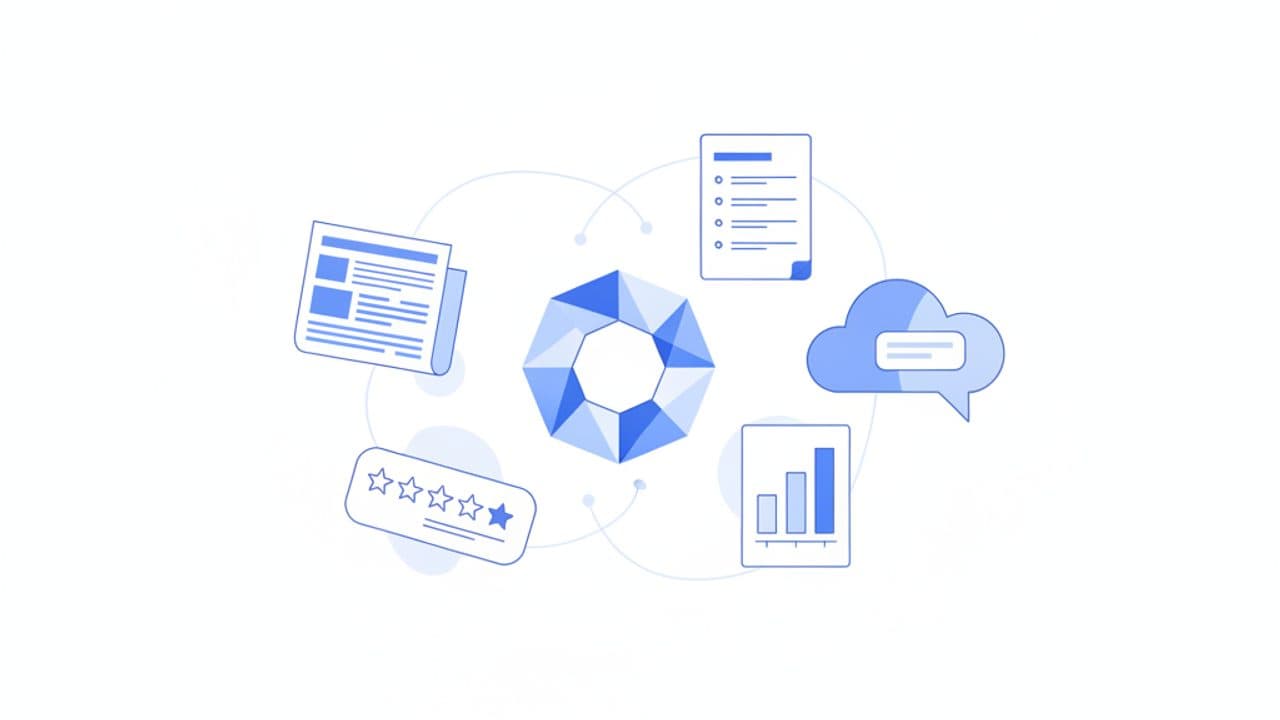
Digital PR for AI search means earning genuine coverage, data citations, list inclusions and expert quotes on the third-party pages that ChatGPT, Gemini, Claude, Perplexity and Google's AI features already retrieve for your buyers' questions, so your brand is named in the answer even when your own site is not the page being cited. It works because most AI citations point to pages a brand does not own: Muck Rack's May 2026 analysis of more than 25 million cited links puts non-owned, non-paid sources at 84% of citations, while paid and advertorial content gets 0.3%.
This guide shows why that happens (with every study's sample and its publisher's commercial interest stated), what the most-cited third-party domains look like in the prompts we track, how to build a PR target list from the sources AI cites for your own prompts, which tactics have the most citation potential, how to run data-led PR without becoming a source of bad statistics, how to approach listicle authors ethically, and how to measure PR by mentions and citations instead of backlinks alone. Studies and policies were checked on October 24, 2026.
Key takeaways
- Earned media is a large share of AI citations, but how large depends on the definition. Muck Rack counts all non-owned, non-paid sources (84%); journalism alone is 25-27%. Studies that separate brand sites find those still take 54-57% of citations, so PR complements owned content rather than replacing it.
- The outlets that matter vary by category. In Otterly's 16-industry analysis, trade and niche media earned more AI citations than mainstream media in 15 of 16 industries. In the prompts tracked in AI Rank Lab, none of the top 20 cited third-party domains was a news outlet.
- Your PR target list is the list of URLs AI already cites for your prompts. Find them by running your prompts repeatedly, logging every cited URL, and flagging pages that name competitors but not you.
- Highest-potential tactics: inclusion in third-party "best", "vs" and "alternatives" pages, original data others reference, trade-press coverage and complete review profiles. Lowest: wire press releases and undisclosed paid placements.
- Measure across many runs, per engine. In our data, the cited-domain sets of two consecutive runs of the same prompt overlapped by a median of only 41% (Jaccard similarity), so one screenshot proves nothing about a placement.
What is digital PR for AI search?
Digital PR for AI search is classic earned-media work (research, media relations, expert commentary, reviews and partnerships) aimed at a new outcome: being mentioned or cited inside AI-generated answers. The deliverable is not only a backlink. It is your brand appearing, accurately and in the right context, on pages that AI engines retrieve when they assemble an answer.
That distinction matters because a mention and a citation are different things. An AI answer can name your brand while citing a review site, a trade article or a competitor's comparison page as its source. We cover that difference in detail in brand mentions vs citations in AI search. For PR, the practical consequence is simple: a placement on a page AI engines cite can put your name in thousands of answers without your domain ever being linked.
Why does earned media influence what AI engines cite?
Earned media influences AI answers because of how answers are built. Search-connected assistants break a prompt into sub-queries, retrieve pages from a web index, and write an answer grounded in those pages. Questions like "best project management tool for agencies" or "X vs Y" are answered most completely by third-party pages that compare several brands, so those pages get retrieved and cited. A brand's own site can only speak for itself.
Three further mechanisms add weight to third-party coverage:
- Corroboration. When several independent sources describe a brand the same way, an engine has consistent evidence to repeat. Ahrefs' 2025 study of about 75,000 brands found branded web mentions had the strongest correlation with AI Overview visibility of any factor it tested (Spearman 0.664), far above backlink count (0.218). Ahrefs stresses this is correlation, not causation.
- Training data. Models also learn from the public web. Coverage that persists in widely read publications is more likely to shape what a model "knows" about a category, though no study cleanly measures this.
- Query type. Muck Rack found industry-trend queries draw journalism citations at more than double the rate of how-to questions, so news coverage matters most for "what is happening in X" prompts.
One important limit comes from Google itself. Its guide to optimizing for generative AI features (updated July 10, 2026) says that "seeking inauthentic 'mentions' across the web isn't as helpful as it might seem" and lists pursuing inauthentic mentions among tactics to ignore. Google's AI features run on its core ranking and spam systems. The PR that works is coverage a journalist, reviewer or list author would publish anyway because it is true and useful, not mention-building for its own sake.
The evidence: how much of what AI cites is earned media?
The short answer is that it depends on which sources a study counts as "earned". The table below lists the main 2025-2026 studies with their samples and who published them. Nearly all come from companies that sell PR, distribution or AI-visibility products, which is worth keeping in mind.
| Study (publisher, date) | Sample and engines | Key finding for PR | Caveat |
|---|---|---|---|
| What Is AI Reading? (Muck Rack, May 2026) | 25M+ cited links, 17 industries; ChatGPT, Claude, Gemini | 84% of citations are non-owned, non-paid ("earned"); journalism 27%; paid and advertorial 0.3% | "Earned" includes third-party corporate content, encyclopedias and government sites; Muck Rack sells PR software |
| Where do AI citations come from? (Profound, Jul 2026) | 11.84B citations, 29 industries, 8 engines, Apr-Jul 2026 | Brand-owned sites are about 57% of citations; earned share is highest on ChatGPT (30%) and lowest on AI Overviews (17%); 59% median in pharma vs 11.4% in SaaS | Observational; Profound sells AI-visibility software |
| AI Search Index (Otterly, Sep 2026) | 6.1M citations, 17 US industries, 7 engines, Jul-Aug 2026 | Company-owned pages 53.7%; news and media 16.9% (from 4.4% to 32.2% by industry); ChatGPT's news share fell from 21.3% to 10.4% after an August 2026 change | US only; two-month window |
| Content types study (Otterly, Oct 2026) | 617,985 citations, 5 industries, 7 engines, Sep 2026 | Listicles are 66.6% of classified citations; publishers that may earn commissions are 36.6%; editorial publishers with no declared commercial tie 11.7% | 295 of 400 prompts were "best/top" style |
| News licensing deals (Otterly with Press Ranger, Aug 2026) | 129.3M citations, 7 engines, Jun 2026; 91 AI-publisher deals | Publishers with OpenAI deals get 48% more ChatGPT citations per cited page; no premium on 5 of 7 engines; trade media out-cite mainstream in 15 of 16 industries | One-month snapshot; association, not causation |
| AI Overview brand visibility factors (Ahrefs, May 2025) | ~75,000 brands; Google AI Overviews | Branded web mentions correlate 0.664 with AI Overview mentions; backlinks 0.218 | Correlation only; Google-only; Ahrefs sells Brand Radar |
| Earned distribution study (Stacker with Scrunch, undated page) | 87 stories from 30 brands, 8 engines, ~30 prompts per story | Median 239% "citation lift" when stories were distributed to publisher networks vs the brand's own domain | Small sample, loosely defined metric; Stacker sells distribution |
Two readings survive every caveat. First, the non-owned web is where a large share of AI citations, and most of the comparative "who is best" content, lives. Second, owned content is still the single largest bucket in studies that isolate it, so PR and on-site content are two halves of one program. Muck Rack's authors make the definitional point themselves in PR Daily, calling "earned" "probably not a perfect label".
Which domains dominate citations in the prompts we track?
We looked at which third-party domains appear most often in the answers AI Rank Lab has stored. Method: 1,711 successful prompt runs stored in AI Rank Lab as of October 24, 2026, 1,676 of which cited at least one source, covering 14 tracked brand domains across ChatGPT, Claude, Gemini, Perplexity, Google AI Overviews and Google AI Mode. We counted the number of runs in which each domain was cited, excluded the tracked brands' own domains, took the top 20 and classified each one. We name only well-known public vendors and platforms.
| Domain type | Domains in the top 20 | Share of top-20 citations (2,852) | Public examples |
|---|---|---|---|
| Software vendors' own sites (SEO, AEO/GEO and AI-content tools) | 16 | 78.4% | conductor.com, seranking.com, tryprofound.com, writesonic.com, jasper.ai, writer.com |
| Review platform | 1 | 4.9% | g2.com |
| Business directory | 1 | 5.2% | (not named) |
| Consumer-category publishers and platforms | 2 | 11.5% | (not named) |
| News and media outlets | 0 | 0% | - |
The caveat is large: a little over half of the runs in this sample (about 56%) come from software and marketing-tool brands, so it leans toward B2B software questions, and 14 brands is a small base. Industry studies show far more journalism in finance, health and consumer categories. Within B2B software, though, the pattern matches Profound's 11.4% earned median for SaaS. In this kind of category, the "earned media" AI leans on is mostly other companies' comparison pages and review platforms, not newsrooms. Muck Rack's own breakdown, as reported by 5WPR, counts third-party corporate content and blogs as 24% of all citations, almost as much as journalism.
For a B2B brand, that changes the PR target list: inclusion in vendor and publisher roundups, a complete G2 presence and trade-media coverage come before a national newspaper feature. Whether vendors' self-published "best tools" lists deserve that weight is a separate question, which we cover in do self-promotional listicles still get cited by AI.
The same data shows why one check is never enough. Across 42 prompt-engine pairs with at least five runs each (972 runs, February to October 2026), the cited-domain sets of two consecutive runs of the same prompt had a median Jaccard overlap of 0.41, and a median 3.4% of cited domains appeared in every run. A placement can be cited on Tuesday and missing on Wednesday.
How do you find the sources AI engines cite for your prompts?
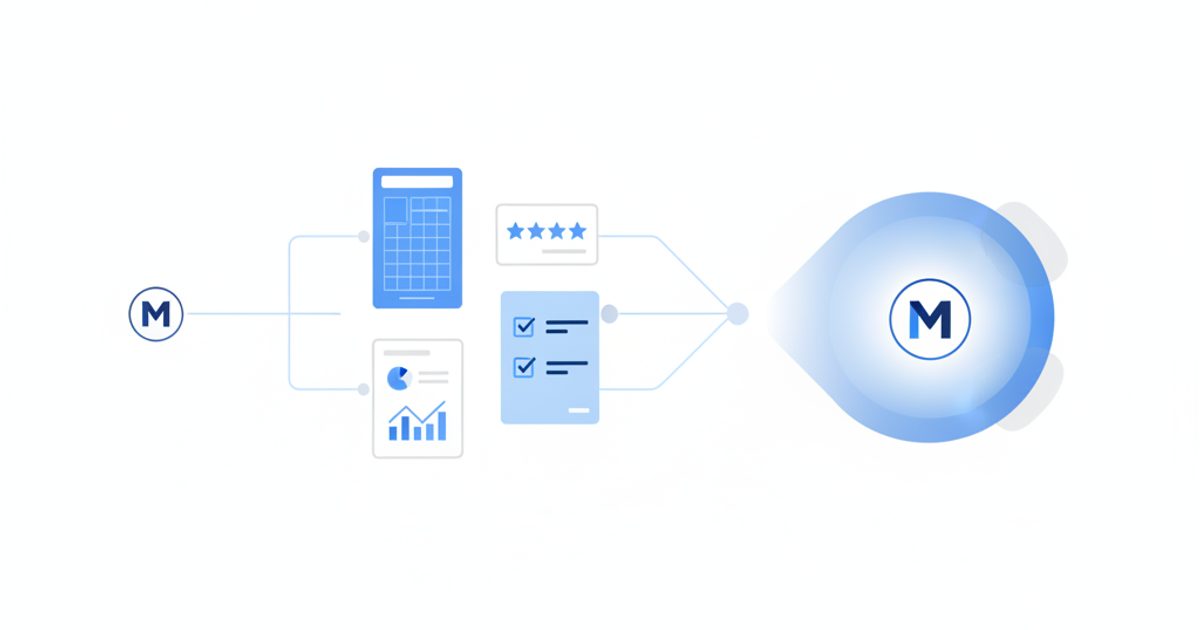
You find them by running the questions your buyers ask on each engine, several times, and logging every URL each answer cites. The output is a ranked list of third-party pages: the ones that cite competitors but not you are your PR targets. You can do this by hand for a small prompt set or with a tracking tool for anything larger.
The manual method
- Write 20-50 prompts that mirror real buying questions: "best [category] for [audience]", "[you] vs [competitor]", "[category] pricing", "is [you] good for [use case]", and one or two industry-trend questions for news coverage.
- Run each prompt on every engine that matters to you (ChatGPT with search on, Perplexity, Gemini, Claude with web search, Google AI Overviews and AI Mode). Engines cite very differently: in Muck Rack's sample, ChatGPT included citations in 96% of responses (about 5 each), Gemini in 82% (about 8) and Claude in 55% (about 13).
- Repeat each run at least three times on different days. Our data above shows why: cited sources churn heavily between runs.
- Log every cited URL in a sheet with prompt, engine, date, whether your brand is mentioned and which competitors are mentioned.
- Classify each URL: trade or news article, third-party list or comparison, review platform, forum or community, reference (such as Wikipedia), a competitor's own site, or your own site.
- Rank by frequency and flag the pages that appear often, mention competitors and do not mention you. That is your PR target list.
Perplexity is a quick place to start because it displays sources prominently. PR consultant Linus Kurtenbach suggests adding a column to media lists showing whether each outlet appears in AI answers (Otterly interview, August 2026). For which source types each engine prefers in general, see our study of what sources LLMs cite.
Tools that list cited sources
Disclosure: AI Rank Lab is our product. We list it first because this is our site, and we've kept the same criteria for every tool below.
- AI Rank Lab - runs the prompts you choose on ChatGPT, Claude, Gemini and Perplexity, plus Google AI Overviews and AI Mode, and stores every run with mentions, competitors named and cited URLs. The citation tracker lists the domains and URLs AI engines cite for your prompts and competitor citation share, which is the PR target list described above. Prompts run when you run them; the Action Plan citation tracker re-checks prompts you opt in weekly.
- Peec AI - strong source reporting with "used" and average-citation-rate views per domain, and a clear public guide to source gap analysis.
- Otterly AI - citation and domain breakdowns per engine, some of the most detailed public research on earned media, and a partnership with Getfluence that connects citation data to off-site publishing.
- Muck Rack Generative Pulse - built for communications teams; it connects AI citations to the outlets and journalists behind them, which suits teams that already run media relations in Muck Rack.
- Profound - enterprise-scale citation data with source categories, plus agent integrations for third-party placement and affiliate programs.
Turning cited sources into a PR plan
| Cited source type | What it usually is | Legitimate way in |
|---|---|---|
| Third-party "best", "vs" or "alternatives" page | Publisher or vendor roundup | Factual inclusion brief to the author; product access for testing |
| Trade or niche publication | Industry news, analysis, buyer's guides | Data stories, expert commentary, contributed analysis with clear bylines |
| Review platform (G2, Capterra, Trustpilot) | Aggregated customer reviews | Complete profile; ask real customers for honest reviews with no sentiment-tied incentive |
| Forum or community (Reddit, Quora) | Peer discussion | Disclosed, helpful participation; see our Reddit AI search guide |
| Reference (Wikipedia, Wikidata) | Encyclopedic summary | Earn coverage independent sources can be cited for; do not edit about yourself |
| Mainstream news | Trend and business coverage | Newsworthy data, timely commentary, genuine announcements |
Which PR tactics have the most AI-citation potential?
The tactics with the most potential are the ones that put your brand on page types AI engines already favor for buying questions: comparison and roundup pages, original data, trade coverage and review platforms. The ranking below is our editorial judgment from the studies above, not a measured result, so test it in your own category.
| Rank | Tactic | Why AI cites it | Evidence | Effort and risk |
|---|---|---|---|---|
| 1 | Inclusion in third-party lists and comparisons that are already cited | Answers "best X" and "X vs Y" sub-queries in one page | Listicles are 66.6% of classified citations, 73.2% for ranking prompts (Otterly) | Medium effort; low risk if unpaid or disclosed |
| 2 | Original data and statistics | Other writers reference the numbers, creating many independent mentions | Peec's statistics experiment (below); Muck Rack recency findings | High effort; high reputational risk if the data is weak |
| 3 | Trade and niche media coverage | Topical authority on category questions | Trade media earned 213% more citations than mainstream outlets overall (Otterly) | Medium effort; cheaper than tier-one placements |
| 4 | Review platform presence | Structured, multi-voice evidence about a product | G2 is in the top 20 cited domains in our tracked prompts and in Peec's 30M-source top 10 | Low-medium effort; strict rules on incentives |
| 5 | Expert commentary in trend stories | Journalism dominates industry-trend answers | Trend queries draw journalism citations at over twice the rate of how-to queries (Muck Rack) | Low effort per quote; value decays fast |
| 6 | Coverage in AI-licensed publishers | Possible preference on ChatGPT and Copilot | +48% citations per page on ChatGPT; no premium on 5 of 7 engines (Otterly) | Only worth a premium if ChatGPT is your priority |
| 7 | Syndicated or distributed stories | The same story lands on many publisher domains | Median 239% citation lift across 87 stories (Stacker, vendor study) | Medium cost; check that partners are real editorial sites |
| 8 | Wire press releases | Occasionally cited in trend answers | Press releases are 1.1% of citations and appear mostly in industry-trend answers (Muck Rack) | Low value for AI visibility; link-spam risk with optimized anchors |
| 9 | Paid placements and advertorials | Rarely cited | 0.3% of citations (Muck Rack) | Disclosure required; low return |
Two notes on the table. Recency matters for news: Muck Rack found more than half of journalism citations come from articles published in the past 12 months. And durability differs by page type: in Profound's study of 1.19 million page-engine pairings, news, announcement and research pages lost citation share fastest, while comparisons and listicles held longest (The half-life of an AI citation is 11 days). Plan news coverage as a recurring program, not a one-off.
Data-led PR: how do you publish stats that AI and journalists cite?
Data-led PR means publishing original numbers (a survey, a benchmark, an index, an analysis of your own product data) in a form other writers can quote, so the statistic spreads with your brand attached. Statistics travel well because writers need numbers and AI engines answer "how many" and "what percentage" questions by retrieving pages that state them clearly.
Credit for the sharpest test of this goes to Peec AI. In "Publish stats, get cited" (October 2026), Peec's GEO researcher Metehan Yesilyurt describes a deliberately extreme experiment: about 50,000 AI-generated, unverified statistics pages on a new domain, built for roughly $50. Within months the site drew more than 600,000 bot requests in 30 days (about 72,000 from ChatGPT-User), more than 330 referring domains, and citations in an academic paper and investment research, and it ranked second behind Statista for visibility on a set of tracked prompts. The site now carries a disclaimer, and the author warns against publishing fake data.
The lesson cuts both ways. Statistics pages are retrieved and repeated with very little scrutiny, which is exactly why yours have to be right. A fabricated or sloppy number that gets cited enough starts to look credible, which Yesilyurt calls "citation laundering". If your data is later shown to be wrong, the coverage turns into a liability. A data story that deserves citation has:
- A real dataset you can describe: who, how many, when, and how it was collected.
- A methods section on the page, with sample size, date range and limitations next to the headline numbers.
- One claim per sentence, with a denominator ("38% of 1,200 surveyed IT buyers", not "most buyers").
- A table of the key figures in HTML text, not only in a chart image, so both writers and crawlers can lift it.
- A named author or team and a visible update date.
- A pitch to the people already writing about the topic, starting with the trade outlets and roundup authors from your cited-sources list, offering the one finding that matters to their readers.
- A refresh schedule, because report-type pages lose citation share fastest.
How do you pitch listicle and roundup authors ethically?
You pitch them the way you would pitch a journalist: with accurate, checkable information that helps their readers, and with no payment tied to inclusion or rank unless it is openly disclosed. A good roundup author is evaluating products. Your job is to make that easy, not to buy a slot.
- Start with pages that matter. Pitch only roundups that appear in your cited-sources list and that are actively updated.
- Send a short inclusion brief: what you do in one sentence, who it is for, current pricing, two pieces of verifiable proof, and one honest limitation. Authors trust a brief that admits a weakness.
- Offer access, not copy. A trial, a demo account or a walkthrough lets the author test the product. Do not send pre-written rankings.
- Accept the author's verdict. Asking for a better position than the evidence supports burns the relationship.
- Disclose any commercial relationship. If the publisher earns an affiliate commission or you pay for placement, the FTC's Endorsement Guides expect the connection to be disclosed "clearly and conspicuously", and Google's spam policies expect paid links to carry rel="sponsored" or rel="nofollow".
Note that many cited lists are commercial already: Otterly classed 36.6% of the citations it analyzed as going to publishers that say they may earn commissions. Affiliate programs are legitimate when disclosed. Paying for undisclosed rank is not. We go deeper into list mechanics, including self-published lists, in the self-promotional listicles article.
How do you measure PR impact in AI answers?
Measure PR impact by tracking, across a fixed prompt panel and many repeated runs, how often AI answers mention your brand, how often they cite pages where you were placed, and how many of the most-cited third-party pages mention you, compared with a baseline taken before the campaign. Backlinks and coverage counts stay on the report, but they are inputs, not outcomes.
| Metric | Definition | How to measure |
|---|---|---|
| Mention rate | Share of runs in which the answer names your brand | Fixed prompt panel, each prompt run repeatedly per engine |
| Earned citation rate | Share of runs citing a third-party page that mentions you | Match cited URLs against your list of placements |
| Source coverage | Share of your top-cited third-party URLs that mention you | Re-check the cited-sources list after each campaign |
| Share of voice | Your mentions as a share of all brand mentions in the panel | See our guide to AI share of voice |
| Accuracy and sentiment | Whether answers describe you correctly and positively | Review answer text, not only mention counts |
| AI referral traffic | Visits from ChatGPT, Perplexity, Gemini, Claude and Copilot | GA4 referral reports or an AI referral tag; Search Console's generative AI report for Google |
Four rules keep the numbers honest:
- Baseline first. Run the full panel for two to four weeks before a campaign lands.
- Use many runs. With cited domains changing heavily from run to run, compare rates over dozens of runs, never single answers.
- Report per engine. In Otterly's August 2026 data, ChatGPT's news citations roughly halved while Perplexity's barely moved. A blended number hides that.
- Keep control prompts that the campaign should not affect, so you can tell campaign lift from an engine-wide shift.
AI Rank Lab stores every prompt run, so mention rate, cited URLs and competitor citations can be compared before and after a placement, and its citation tracker shows whether a placed URL starts appearing for your prompts.
Which digital PR mistakes hurt AI visibility?
The costly mistakes are the ones that trade short-term placement for long-term trust, or that measure the wrong thing:
- Paid placements without disclosure. They breach FTC endorsement rules, and paid links without rel="sponsored" or rel="nofollow" are link spam under Google's spam policies. They are also barely cited: 0.3% in Muck Rack's sample.
- Press-release spam. Google's spam policies name optimized anchor-text links in press releases distributed on other sites. In Muck Rack's sample, press releases were 1.1% of citations, mostly in industry-trend answers.
- Buying placement on high-authority hosts to borrow their ranking. Google treats third-party content published mainly to exploit a host site's ranking signals as site reputation abuse.
- Fake or incentive-tied reviews. The FTC rule on fake reviews and testimonials, in effect since October 21, 2024, bans buying reviews, sentiment-tied incentives and undisclosed insider reviews, with civil penalties.
- Unverifiable statistics. They may get cited, then become the thing your brand is known for getting wrong.
- Chasing tier-one logos only. In most industries trade media out-cites mainstream outlets, and in B2B software the cited sources are mostly comparison pages and review platforms.
- Reporting screenshots and backlinks only. One answer is a sample of one, and links do not show whether AI answers changed.
A 90-day digital PR plan for AI visibility
- Weeks 1-2: baseline. Build the prompt panel, run it repeatedly on each engine, and record mention rate, share of voice and every cited URL.
- Weeks 3-4: target list. Rank cited third-party pages by frequency and flag those that name competitors but not you. Fix review profiles and inaccurate facts first.
- Weeks 5-8: placements. Send inclusion briefs to cited roundup authors, pitch one data story to the trade outlets on the list, and offer expert commentary on trend stories.
- Weeks 9-12: measure and repeat. Re-run the panel, compare per engine against the baseline and control prompts, and move effort to the source types that moved answers.
The bottom line on digital PR for AI search
AI engines answer buying questions largely from pages brands do not own, so PR now shapes AI answers as well as headlines. The work is the same craft, aimed differently: find the exact pages AI cites for your prompts, earn honest inclusion on them, publish data that deserves to be repeated, and measure the result in mentions and citations across many runs. Skip the shortcuts. Undisclosed paid placements, release spam and invented numbers are the tactics most likely to backfire.
If you want the cited-sources list for your own prompts without building the spreadsheet by hand, AI Rank Lab's citation tracker shows which domains and URLs each engine cites for you and your competitors.
Get a free AI ranking consultation
Want your brand to show up when ChatGPT, Gemini and Perplexity answer questions in your market? Tell us about your site and our team will send a personalized strategy.


