

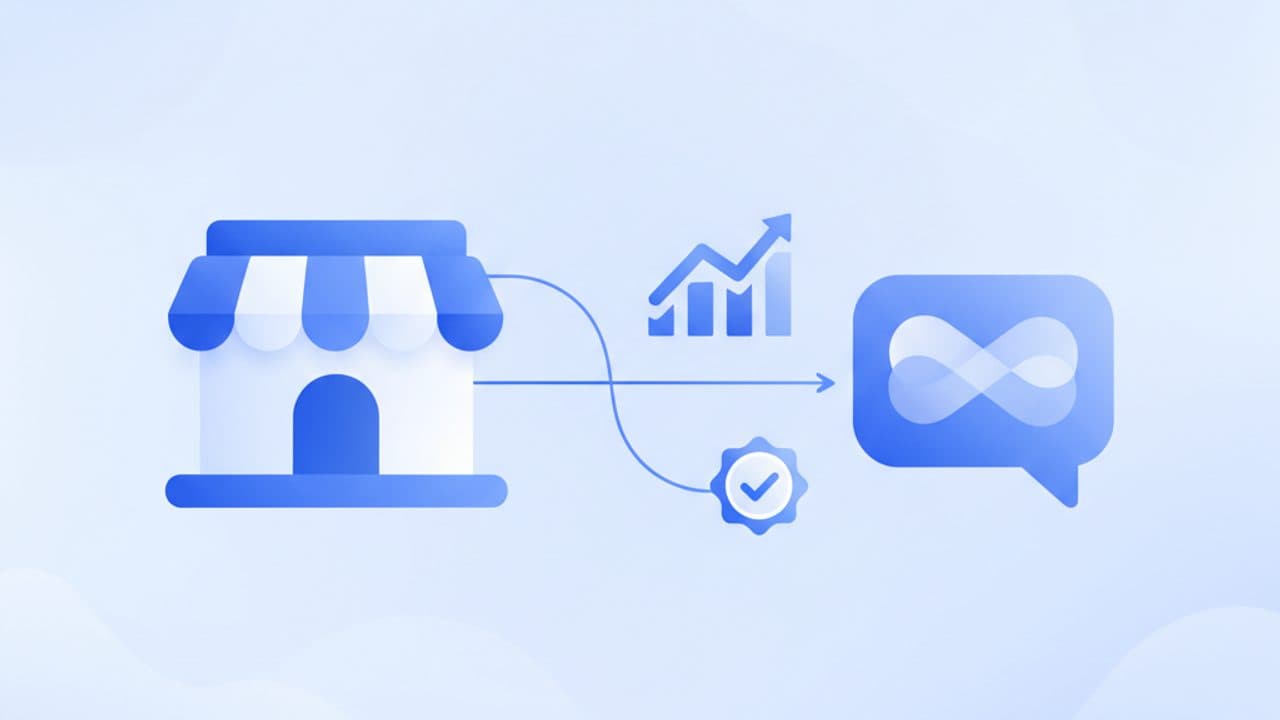
OpenAI is reportedly building ChatGPT analytics for business: a Search Console-style tool, part of a larger "Business Hub", that would show verified brands how often they appeared in ChatGPT responses (impressions) and how often people clicked through to their website (clicks), tracked daily on a chart. Juozas Kaziukėnas spotted it and posted about it on LinkedIn, and Barry Schwartz reported it at Search Engine Roundtable on November 6, 2026. OpenAI has not announced it, and there is no public launch date or price.
This post covers what the tool reportedly does, who can use it, what it will not show, how its numbers compare with Google Search Console, Bing Webmaster Tools, GA4 and third-party prompt trackers, and a checklist for setting a baseline before it launches so you have a before and after.
Reported November 6, 2026; checked November 7, 2026. Everything about the tool itself is labeled as reported. Anything we confirmed comes from an OpenAI, Google or Microsoft page we loaded on November 7, 2026, and is linked where we use it.
Key takeaways
- Reported, not announced. On November 7, 2026 we found no OpenAI page that mentions a "Business Hub" or an analytics tool for brands. The source is one LinkedIn post and the Search Engine Roundtable write-up of it.
- Two reported metrics: impressions (times your business appeared in a ChatGPT response) and clicks (clicks on links to your website), shown daily.
- Verified businesses only. Access reportedly requires proving ownership, for example by connecting a Shopify store.
- No prompts, no user data, no competitors. You would see that your impressions moved, not which questions moved them or who took your place.
- Separate from ChatGPT ads. It reportedly covers organic answers only.
- Prepare now: allow OAI-SearchBot, clean up product data, and record your current ChatGPT clicks in GA4 and your mention rate on a fixed prompt set, so the new chart has something to be compared against.
What is the ChatGPT Business Hub analytics tool?
It is a reported OpenAI tool that would let a business manage and track how it appears in ChatGPT, similar in spirit to Google Search Console or Bing Webmaster Tools. According to Search Engine Roundtable, a banner for it reads "Claim your business in ChatGPT", and the tool lists three functions:
- "See how your business shows up" - how often the business is mentioned in ChatGPT conversations.
- "Show customers what you offer" - add your latest products and keep business information up to date.
- "Help customers make decisions" - let a business agent answer customer questions with context the business controls.
Kaziukėnas describes the analytics part more precisely in his LinkedIn post: it counts impressions (the number of times the business appeared in ChatGPT responses) and clicks (clicks on links to the business's website), tracked daily and displayed as a chart. He says the feature is a work in progress that he first saw in August, and that it looks close to launch because a banner has now appeared. Schwartz adds that it appears to be separate from ChatGPT ads and aimed at organic ChatGPT responses.
Has OpenAI officially announced the Business Hub?
No. As of November 7, 2026, OpenAI has not announced a Business Hub or a brand analytics tool. Here is what we checked and what each claim rests on.
| Claim | Where it comes from | Status on November 7, 2026 |
|---|---|---|
| OpenAI is building a business analytics tool for ChatGPT | Kaziukėnas on LinkedIn; Search Engine Roundtable | Reported |
| Metrics are impressions and clicks, daily, as a chart | Kaziukėnas on LinkedIn | Reported |
| Part of a "Business Hub" for verified businesses (Shopify example) | Kaziukėnas on LinkedIn | Reported |
| No prompt data, user data or competitor benchmark | Kaziukėnas on LinkedIn | Reported |
| Separate from ChatGPT ads | Search Engine Roundtable | Reported (Schwartz's reading) |
| Any OpenAI page naming "Business Hub" | Searches of openai.com, help.openai.com, chatgpt.com and developers.openai.com | None found |
| Launch date, price, regions | - | Unknown |
Two OpenAI pages are close but are not this tool. The ChatGPT merchants page covers product feeds for shopping and does not mention analytics or a Business Hub. The ChatGPT Business page is about a paid workspace plan for teams. Some OpenAI help center pages refused our automated fetch, so if OpenAI publishes an announcement after this post, that announcement replaces this section.
What metrics will ChatGPT analytics for business show?
Two, according to the report: impressions and clicks, each counted per day. Nothing else on the analytics side has been described.
Impressions
An impression is reportedly one appearance of your business in a ChatGPT response. What is not known yet is how OpenAI counts it: whether a response that names you twice counts once, whether a product card counts the same as a name in the text, and whether answers in which you are cited as a source but not named count at all. Note that Search Engine Roundtable's wording is "how often the business is mentioned in ChatGPT conversations", which may or may not be the same thing as Kaziukėnas's "appeared in ChatGPT responses". Until OpenAI documents the definition, treat the number as a trend line, not a unit you can compare with other tools.
Clicks
A click is reportedly a click on a link to your website from a ChatGPT response. You can already measure most of this today. OpenAI's Publishers and Developers FAQ says ChatGPT appends utm_source=chatgpt.com to referral links, so those visits show up in GA4 and other analytics tools. The Business Hub number would be OpenAI's own count of clicks, which will not match your analytics exactly (bounces before the page loads, blocked analytics scripts and consent banners all create gaps).
Business info, products and the business agent
The other two reported functions are not analytics: keeping products and business information current, and a business agent that answers customer questions with context you control. No source describes how the agent is set up, where its answers appear, or whether they are labeled as coming from the business.
Who can use the ChatGPT Business Hub?
Only businesses that have verified ownership, according to Kaziukėnas, and his example of verification is connecting a Shopify store. Nothing has been reported about how a business without a Shopify store, such as a local service business, a SaaS company or a publisher, would verify.
What OpenAI does say about merchants today is on its merchants page, checked November 7, 2026: Shopify and Etsy catalogs are already integrated with "no additional setup or application" required, other merchants apply through a form (and join a waitlist), shopping is available only to ChatGPT users in the U.S., and a self-serve merchant portal is planned for later this year. No source connects that portal to the Business Hub. It is our reading, not a reported fact, that the two could turn out to be related.
What does the ChatGPT business tool not show, and why does it matter?
It reportedly does not show the prompts behind your impressions, any user data, or any benchmark or ranking against competitors. Kaziukėnas also notes it will not explain why mentions or clicks rise or fall. That leaves four practical gaps:
- No prompts means no diagnosis. If impressions drop 30%, you cannot tell whether you lost a product category, a comparison query or a branded question. Google Search Console's query report exists precisely to answer that, and this tool reportedly has no equivalent.
- No competitor data means no share of voice. A flat line could mean you are holding steady or that the whole category grew and a competitor took most of it.
- No user data means no audience view. You will not see country, device or user type, at least based on what has been reported.
- Daily counts are noisy. ChatGPT answers vary from run to run. In AI Rank Lab's own prompt tracking, across 246 successful ChatGPT runs of 12 prompt-engine pairs (February 13 to October 30, 2026), the brand's mention status flipped between mentioned and not mentioned at least once for 7 of the 12 pairs (58.3%). A daily impression chart will move for reasons that have nothing to do with your work, and without prompts you cannot separate that noise from real change.
Kaziukėnas's own suggestion is the right one: use the tool as first-party confirmation of whether GEO and AEO work is paying off, and pair it with external prompt tracking for the why.
How does it compare with Search Console, GA4 and AI visibility trackers?
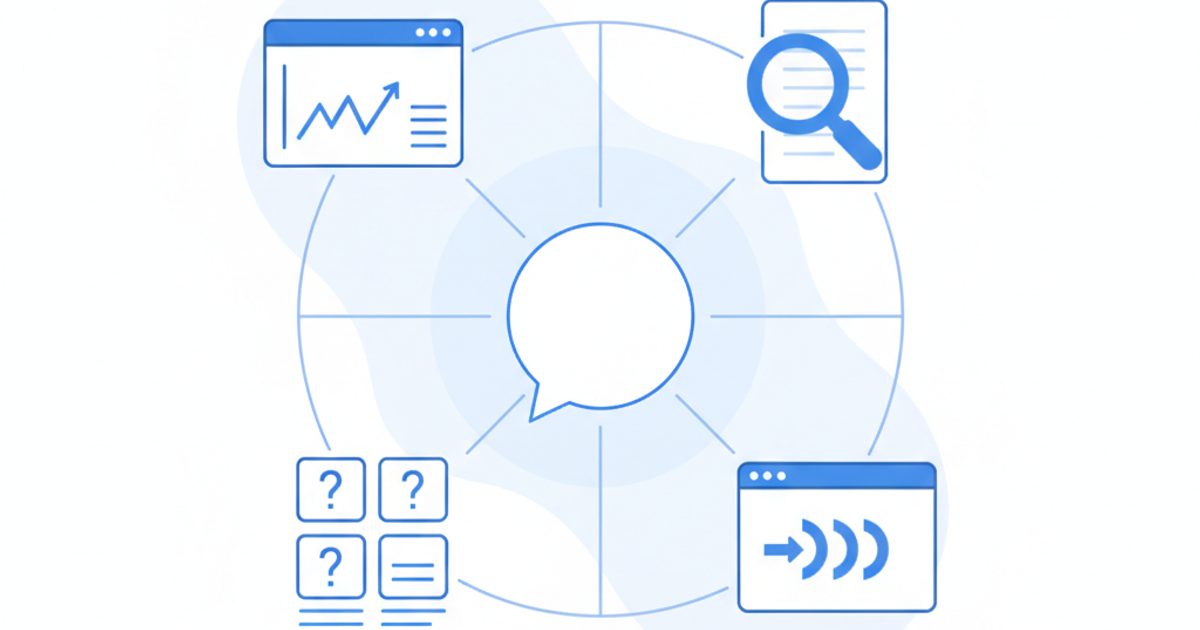
Each tool answers a different question, and none replaces the others. The Business Hub would be the only source of OpenAI's own counts for ChatGPT. Search Console and Bing Webmaster Tools cover their own engines. GA4 sees only the visits that arrive. Prompt trackers sample answers and can see competitors, but they can never see real user conversations.
| Tool | What it counts | Data source | Query or prompt data | Competitor data | Cost |
|---|---|---|---|---|---|
| ChatGPT Business Hub (reported) | Impressions and clicks in ChatGPT, daily | OpenAI, first-party | No (reported) | No (reported) | Unknown |
| Google Search Console, Generative AI performance report | Impressions of your URLs in AI Overviews and AI Mode (and Discover) | Google, first-party | No query dimension in this report | No | Free |
| Bing Webmaster Tools, AI Performance (public preview) | Citations, average cited pages, page-level citations | Microsoft, first-party (Copilot, Bing AI summaries, select partners) | Sampled grounding queries | No | Free |
| GA4 (or any analytics tool) | Visits that arrive from ChatGPT (utm_source=chatgpt.com, chatgpt.com referrer) | Your site | No | No | Free |
| Third-party AI visibility trackers (AI Rank Lab, Ahrefs Brand Radar and others) | Mentions, position, citations and sentiment in sampled answers across engines | The tracker's own prompt runs | Yes, the prompts you choose | Yes | Paid (AI Rank Lab from $69/month) |
Sources for the table: Google's Search Central post on the generative AI performance reports (published June 3, 2026, rolled out to all sites August 31, 2026), Microsoft's AI Performance announcement (February 10, 2026), OpenAI's publisher FAQ for the UTM parameter, and the AI Rank Lab pricing page, checked November 7, 2026. For how Google counts an AI impression, see our guide to the Search Console generative AI report; for the GA4 setup, see how to track ChatGPT traffic in GA4.
Which question does each tool answer?
- "Is ChatGPT showing my business more or less than last month?" - the Business Hub, once it exists. Today, only sampled prompt tracking can estimate this.
- "Are my pages showing up in Google's AI answers?" - Search Console's generative AI report.
- "Are Copilot and Bing citing my pages, and for what?" - Bing Webmaster Tools AI Performance.
- "How many visitors did ChatGPT send, and did they convert?" - GA4.
- "Which questions mention us, which mention competitors, and what sources do engines cite?" - a prompt tracker.
Where third-party trackers fit
Disclosure: AI Rank Lab is our product. We list it first because this is our site, and we've kept the same criteria for every tool below.
- AI Rank Lab runs the prompts you choose on ChatGPT, Claude, Gemini and Perplexity, plus Google AI Overviews and AI Mode, when you run them, and stores every run so you can compare over time. It records mention, position, sentiment, competitors mentioned and cited URLs (brand visibility, citation tracker), and it connects GA4 and Search Console. That covers the prompt and competitor gaps the Business Hub reportedly leaves.
- Ahrefs Brand Radar is a strong choice if your team already lives in Ahrefs. Ahrefs documents it for benchmarking brand mentions against competitors and tracking custom buyer-intent prompts, which it says take about 24 hours to populate.
- Manual tracking in a spreadsheet works for a small prompt set. Rankability's guide lays out a sensible logging workflow and KPIs (mention rate, citation rate, recommendation rate).
Where the Business Hub will be better than any tracker: it would be OpenAI's census of real conversations, not a sample. No external tool can see that.
What is the difference between impressions, mentions, citations and clicks?
They measure different events, and the reported tool uses only two of them. Mixing them up is the fastest way to misread a dashboard.
| Term | What it means | Where you can see it |
|---|---|---|
| Impression (ChatGPT, reported) | Your business appeared in a ChatGPT response; exact counting rules not published | Business Hub, if it launches |
| Impression (Google) | A URL from your site appeared in an AI Overview, AI Mode or Discover AI feature | Search Console generative AI report |
| Mention | Your brand name appears in the answer text, with or without a link | Prompt trackers; reportedly the Business Hub |
| Citation | A link to one of your URLs is shown as a source for the answer | Prompt trackers; Bing AI Performance (for Microsoft surfaces) |
| Click | A user follows a link from the answer to your site | Business Hub (reported); GA4 via utm_source=chatgpt.com |
A brand can be mentioned without being cited (named in the text, no link) and cited without being mentioned (a page used as a source in an answer about something else). Only citations and some product cards can produce clicks.
Is the Business Hub the same as ChatGPT ads?
No. According to Search Engine Roundtable, the tool appears to be separate from ChatGPT ads and aimed at organic responses. ChatGPT ads are sponsored units that advertisers buy through OpenAI's Ads Manager and that appear below answers; our ChatGPT ads guide covers how they work and what they cost. If you run both, give paid clicks their own UTM tags. Organic ChatGPT clicks already arrive as utm_source=chatgpt.com, and mixing the two will make any organic before-and-after meaningless.
Is it the same as the ChatGPT Business plan?
No, and the names are easy to confuse. ChatGPT Business is OpenAI's paid workspace plan for teams, with admin tools for managing people, usage and billing. Its analytics are about how your staff uses ChatGPT. The reported Business Hub is about how ChatGPT presents your business to its users. Buying ChatGPT Business seats is not reported to give you access to the Business Hub.
How does it relate to ChatGPT shopping and merchant feeds?
The reported tool overlaps with shopping, but it is not the same program. The "Show customers what you offer" function and the Shopify verification example suggest it builds on the product data OpenAI already ingests. OpenAI's merchants page says merchants can share product feeds with images, pricing and reviews, keep pricing and availability synced, keep checkout on their own site, and that feeds give more control over how products appear than letting ChatGPT crawl the site. If you sell products, the feed work is worth doing regardless of the Business Hub; our guide to getting products into ChatGPT shopping goes through it.
How should brands prepare before the Business Hub launches?
Set up a baseline now. When the chart appears, the first question everyone will ask is "is this good?", and the only useful answer is a comparison with what you measured before. This is the order we would work in:
- Confirm your verification path. If you sell on Shopify, make sure the person who will claim the business has owner or admin access to the store. If you do not, note that the only documented route into ChatGPT shopping today is the application form on the merchants page.
- Make OAI-SearchBot welcome. OpenAI's crawler documentation says sites that opt out of OAI-SearchBot "will not be shown in ChatGPT search answers", and that robots.txt changes can take about 24 hours to apply. Blocking GPTBot is a separate, training-only choice. Check your robots.txt and your CDN or firewall rules; AI Rank Lab's free robots.txt generator and SEO, AEO and GEO audit both check crawler access.
- Clean up product and business data. Names, prices, availability, descriptions, return policy, locations and opening hours should match across your site, your feed and your store platform. The reported "Show customers what you offer" function suggests this data will be what ChatGPT presents.
- Record your current ChatGPT clicks in GA4. Build a segment for
utm_source=chatgpt.complus the chatgpt.com referrer and save the last 90 days. Count by UTM, not referrer alone: across sites running the AI Rank Lab tag (July 27, 2025 to November 2, 2026), 5,656 page views across 35 sites carriedutm_source=chatgpt.com, while 2,125 page views across 29 sites carried a ChatGPT referrer. The two sets overlap, so do not add them, but a referrer-only report will show you a fraction of the real number. Our GA4 tracking guide has the setup, and AI Rank Lab's GA4 integration reports it without building segments by hand. - Record your mention rate on a fixed prompt set. Pick 20 to 50 prompts that cover your categories, comparisons and branded questions (our guide to choosing which prompts to track explains how), run them several times, and save the mention rate, citations and competitors named. This is the prompt-level context the Business Hub reportedly will not give you. AI Rank Lab's brand visibility tracking stores each run for comparison when you rerun it.
- Record competitor share now. The tool reportedly has no benchmark, so the competitor columns from step 5 are the only share-of-voice view you will have.
- Start a change log. Date every content update, feed change, PR mention and robots.txt edit. A daily chart with no annotations invites wrong conclusions.
- Decide what success looks like. Write down, before launch, which trend would count as progress (for example, clicks per 1,000 impressions rising while mention rate on your prompt set holds). Deciding after you see the chart is how teams talk themselves into whatever the line shows.
What is still unknown about the ChatGPT Business Hub?
Most of the details a measurement team would need. As of November 7, 2026, nothing has been reported on:
- Launch date. Only that it was first seen in August and a banner has now appeared.
- Regions. ChatGPT shopping is U.S.-only today; whether the Business Hub follows that is unknown.
- Eligibility beyond Shopify. No other verification method has been described.
- Price. No pricing has been reported.
- Data retention and history. Whether you will see data from before you claimed the business, and for how long data is kept.
- Exports and API. Whether the numbers can be downloaded or pulled into other tools. Google's generative AI report, for comparison, launched without API access.
- Metric definitions. What exactly counts as an impression, and whether shopping cards, ads or business agent answers are included.
We will update this post when OpenAI publishes something official.
What does this mean for AEO and GEO measurement?
If it launches as described, it would be the first time OpenAI gives businesses its own numbers on organic ChatGPT visibility, and that matters. Until now, articles like Ahrefs' February 2026 guide could accurately say ChatGPT offered no impressions data and no Search Console equivalent. A first-party trend line would settle arguments about whether AI visibility work is moving anything. It would not tell you what to do next. That still comes from knowing which prompts you appear in, which sources the engines cite, and where competitors beat you.
If you want that prompt-level view in place before the Business Hub arrives, AI Rank Lab tracks mentions, citations and competitors across ChatGPT, Claude, Gemini, Perplexity and Google's AI features, with 100 free credits on signup and no card required.
Get a free AI ranking consultation
Want your brand to show up when ChatGPT, Gemini and Perplexity answer questions in your market? Tell us about your site and our team will send a personalized strategy.


