


Prompt research is the work of choosing which questions you will run through ChatGPT, Claude, Gemini, Perplexity and Google's AI features to measure whether they mention or cite your brand. Done well, it starts from evidence of real buyer demand (sales calls, support tickets, Search Console queries), rewrites that demand the way people actually talk to AI, sorts it by funnel stage and persona, keeps branded prompts out of the headline number, and freezes the set so a change over time means something.
This guide gives you a seven-step method, an evidence ladder that ranks prompt sources by how far you can trust them, a side-by-side of how five vendors estimate "prompt volume" and what they admit it cannot do, the arithmetic of branded-prompt bias with our own tracking data, sizing rules, and a worked 65-prompt set you can adapt. Google, Bing and vendor features were checked on October 18, 2026.
Key takeaways
- Track intents, not exact strings. When SparkToro asked 142 people to write a prompt for the same headphone need, the prompts had an average semantic similarity of just 0.081, yet the same four brands appeared in 55-77% of the 994 answers. Group prompts into intent clusters and track two or three phrasings of each.
- Real prompts are longer and more personal than generated ones. In Otterly's comparison, survey-sourced prompts averaged 15.1 words against 8.8 for tool-generated prompts, and 52.1% used "I", "my" or "me" against 18.8%. Generated lists need a reality check.
- Branded prompts inflate visibility. In a 40-prompt set with 10 branded prompts, a brand named in 20% of unbranded answers reports 40% blended. Measure branded prompts in their own group.
- Prompt volume is modeled, not measured. Every vendor builds it from panels, clickstream or Google volumes. Use it to rank prompts inside your own set, never to size a market.
- Size the set for the decision. Across 968 repeated runs of 42 prompt-engine pairs in AI Rank Lab, 42.9% of pairs flipped between mentioning and not mentioning the brand at least once. Plan on at least 50 unbranded prompts per engine for a brand-level number, and version the set whenever you change it.
What is prompt research?
Prompt research is the AI-search equivalent of keyword research: it decides the sample of questions every AI visibility metric is calculated on. It has two jobs. Discovery finds out what your buyers ask AI assistants about your category. Selection turns that long list into a fixed, tagged set you run on a schedule and report on.
The second job is the one most teams underestimate. Mention rate, citation share and AI share of voice are all computed over the prompt set, so the set defines the number. Swap ten prompts and your "visibility" can move twenty points with nothing changing in the market. That is why this guide treats prompt research as measurement design, not brainstorming.
It is also different from prompt engineering, which is about writing instructions that get better output from a model. If you are looking for ready-made instructions to give an AI marketing assistant, see our list of AI marketing agent prompts instead. This page is about the questions your customers ask.
How is prompt research different from keyword research?
Keywords are short, measured and return a fairly stable list of links. Prompts are longer, unmeasured and return a generated answer that changes from run to run. Keyword research is still the best seed for prompt research, because keywords are the only demand data with real volumes behind them, but you cannot paste a keyword list into a tracker and call it done.
| Dimension | Keyword research | Prompt research |
|---|---|---|
| Unit | A short query string | A conversational request, often with personal context and constraints |
| Length | A few words | Search-enabled ChatGPT prompts averaged 8.7 words in early 2026, up from 4.7 a year earlier (Semrush clickstream study). Google says the average AI Mode search is triple the length of a traditional Search query (Google, May 2026). |
| Demand data | Measured or panel-based search volumes | No AI platform publishes prompt logs to marketers; every "prompt volume" figure is an estimate |
| Result | Ten ranked links, fairly stable day to day | A generated answer. SparkToro found less than a 1 in 100 chance that ChatGPT or Google's AI returns the same brand list twice for the same prompt. |
| What you measure | Rank position | Whether you are mentioned, cited, where you appear in the answer, and how you are described |
| Wording sensitivity | Each keyword variant is tracked separately | Engines expand a prompt into related sub-searches (Google calls this query fan-out), so close paraphrases often share an answer pool |
| Personalization | Location, device, some history | Location, language, memory and conversation history |
Two findings shape everything below. First, the way people phrase prompts is wildly diverse: in the SparkToro and Gumshoe study (January 2026), 142 human-written prompts for one headphone need had an average pairwise semantic similarity of 0.081. Second, the answers to those different prompts converged on the same brands. Intent is stable; wording is not. So you research intents and track a few phrasings of each, rather than hunting for the one "correct" string. Our query fan-out explainer covers why paraphrases end up retrieving similar sources.
The seven-step prompt research method
The method moves from evidence to a frozen, tagged set. Each step below starts with what to do, then explains why.
- Decide what the set has to measure - the business questions, engines, markets and competitors.
- Collect demand evidence from the sources on the evidence ladder, best first.
- Convert keywords and notes into prompts using the context real people add.
- Map every prompt to a funnel stage and persona, and tag it.
- Split branded from unbranded prompts before you calculate anything.
- Size the set and the runs so changes beat the noise.
- Freeze, version and maintain it on a fixed review cycle.
Step 1: Decide what the prompt set has to measure
Write down the decisions the data will drive before you write a single prompt. Each decision needs a different kind of prompt:
- "Are we recommended in our category?" needs category prompts such as "best payroll software for a 200-person company".
- "Are we cited as a source on the problems we solve?" needs problem prompts, where the answer cites guides rather than naming vendors.
- "Do we win against the competitors we lose deals to?" needs comparison and alternatives prompts.
- "Is what AI says about us accurate?" needs branded prompts, measured separately.
In the same document, fix the engines, countries, languages and the named competitor list. These are part of the measurement, not settings you change later.
Step 2: Where do you find the real prompts people ask AI assistants?
Start with what buyers actually said, then widen out to measured search data, and only then to modeled or generated prompts. Most guides list prompt sources as if they were equal. They are not: a question a prospect asked on a sales call is direct evidence, while a prompt an LLM brainstormed is a hypothesis. The ladder below ranks the common sources by the strength of evidence they give you.
| Rank | Source | What it is evidence of | How to extract it | Main weakness |
|---|---|---|---|---|
| 1 | Sales calls and demo recordings | Verbatim buyer questions, constraints and competitor names | Search transcripts for "what's the best", "how do you", "we tried", "compared to" | Only buyers who already found you |
| 2 | Support tickets and onboarding questions | Objections, setup worries and post-purchase questions | Group tickets by topic, keep the customer's wording | Customers only |
| 3 | Lead forms ("How did you hear about us?" plus "What did you ask?") | Self-reported AI discovery and the question behind it | Add an optional free-text field to demo and signup forms | Self-reported, small sample |
| 4 | On-site search logs | What visitors expected to find and could not | Export internal search terms from analytics | Already on your site |
| 5 | Google Search Console, non-branded long queries | Measured Google demand in your topic | Use the branded queries filter, then a query regex for questions or six-plus words | Search behavior, not AI prompts |
| 6 | Bing Webmaster Tools grounding queries | Phrases Copilot and Bing's AI used when retrieving your cited pages | AI Performance report export | Retrieval phrasing, a sample, and only for pages already cited |
| 7 | People Also Ask, related searches, AI Overview queries | Google's own question graph for a topic | Collect from live results for your seed keywords | Already search-shaped and short |
| 8 | Reddit, Quora and community threads | Long, contextual, unfiltered phrasing | Search your category plus "recommend", "vs", "switched from" | Skews to enthusiasts and complainers |
| 9 | Panel-based prompt volume tools | Estimated frequency of a prompt or topic | Vendor databases (see the prompt volume section) | Modeled, methods only partly disclosed |
| 10 | LLM brainstorming and tool-suggested prompts | Angles you had not thought of | Ask a model for prompts per stage and persona | Shorter and more "best X" heavy than real prompts |
Two of these sources are newer than most guides on this topic. Google added a branded queries filter to the Search Console Performance report in November 2025, available to all eligible sites since March 11, 2026. It is AI-assisted rather than regex-based, it counts misspellings and unique product names as branded, and it only works on top-level properties with enough query volume. Bing launched AI Performance in Bing Webmaster Tools as a public preview in February 2026, including "grounding queries": the key phrases the AI used when retrieving content it cited. These are the closest thing to first-party AI query data a site owner can get today, but they describe retrieval, not what the user typed.
The rule we apply: every prompt in the final set should trace back to at least one source from rows 1-8. A prompt that only exists because a model suggested it is labeled "hypothesis" and has to earn its place in the next review.
The bottom of the ladder deserves a warning. When Otterly compared survey-sourced prompts with prompts from its own research tool (study updated February 2026), the real prompts averaged 15.1 words against 8.8, used personal pronouns 52.1% of the time against 18.8%, and were problem-oriented 21.1% of the time against 7.1%. Generated prompts most often opened with "best". The study's "real" prompts were what marketing professionals said they would type, from one category in one country, and Otterly sells the tool it tested, so treat the exact figures as indicative. The direction matches the SparkToro finding: humans write longer, stranger, more specific prompts than tools do.
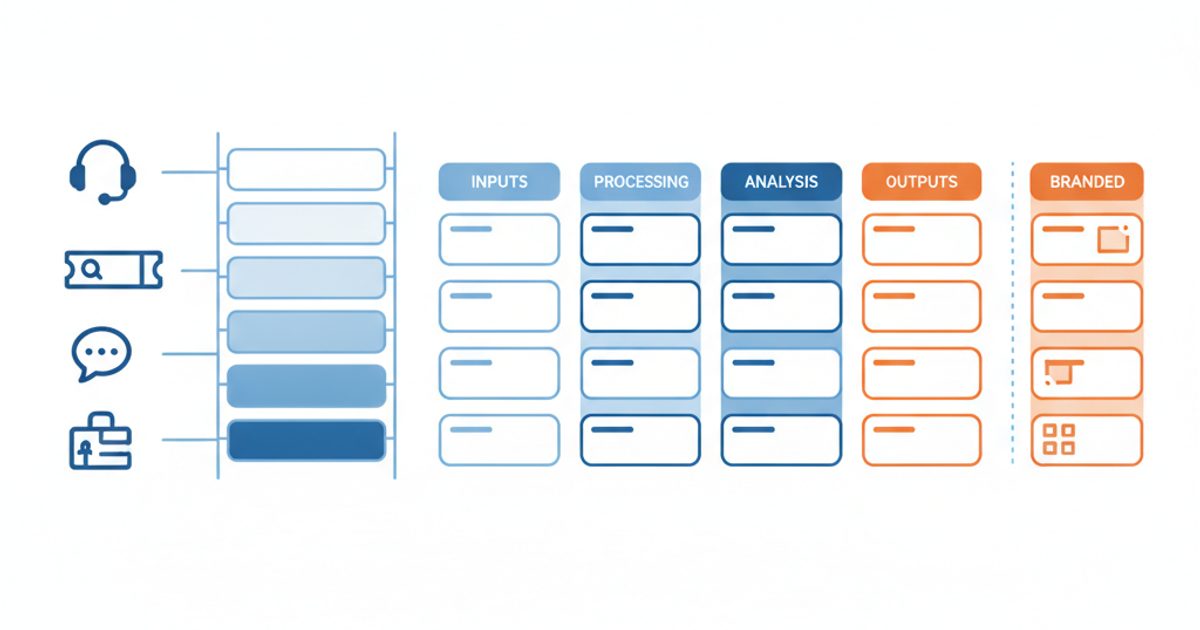
To speed up the generated end of the ladder, AI Rank Lab's brand visibility module includes an AI Prompt Research tool that drafts prompts from up to 20 seed keywords, from a specific page URL, or from a brainstorm on your domain, for a country and language you choose, and labels each with an intent and a category. Its setup wizard analyzes your website first so suggestions reflect what you actually sell. Treat that output like any row-10 source: a starting list to check against rows 1-8, not evidence on its own.
Step 3: How do you turn keywords into prompts?
Keep the keyword's intent and add the context a real person adds when they talk to an assistant: who they are, what situation they are in, and what constraint matters. A reliable pattern is situation + need + constraint + ask.
Take the keyword "payroll software for small business":
- Short, search-like: "best payroll software for a 40-person company"
- Conversational: "what payroll software should a 40-person company use if we pay hourly staff in three states?"
- Persona-rich: "I'm the only HR person at a 40-person restaurant group with hourly staff in three states. Our payroll takes two days a month. What should we switch to?"
Track all three phrasings for your most important intents. The short version mirrors search-enabled behavior, and the long version mirrors how people actually write when they explain a problem. Semrush's clickstream data shows the two converging: search-enabled ChatGPT prompts nearly doubled to 8.7 words while non-search prompts nearly halved to 13.5 words between early 2025 and early 2026.
Rules that keep conversions honest:
- One intent per prompt. "Best payroll software and how much it costs" is two questions; split it.
- Use the buyer's vocabulary, not yours. If you coined a category name, prompts that use it are effectively branded. Otterly saw real users prefer "track" over "monitor"; those small word choices matter.
- Add a year only on purpose. Ahrefs recommends a time marker such as "in 2026" when you want answers that pull in cited URLs rather than relying on training data. Decide per cluster and keep it consistent.
- No leading prompts. "Why is [your brand] the best payroll tool?" measures nothing.
To pick which seed keywords deserve conversion, start with the ones that already trigger AI answers in Google. The AI Rank Lab keyword planner shows Google volume, difficulty and whether a keyword shows an AI Overview, which is a useful filter before you spend time rewriting.
Step 4: How do you organize prompts by funnel stage?
Assign every prompt one stage and one persona, and weight the set toward the stages where you can still win new buyers. The taxonomy below is the one we use; the shares are our recommendation, not an industry standard, and should follow your sales cycle.
| Stage | The buyer is asking | Example template | Main metric | Share of the unbranded set |
|---|---|---|---|---|
| Problem (awareness) | Why is this happening, how do I fix it? | "how do I stop payroll errors when staff work across states" | Citation share (is your content a source?) | 25-30% |
| Category (consideration) | What kind of solution, and which ones? | "best [category] for [segment] with [constraint]" | Mention rate and position | 35-45% |
| Comparison and alternatives (consideration) | How do the options I know compare? | "alternatives to [competitor] for [use case]", "[competitor A] vs [competitor B]" | Mention rate, share of voice | 15-20% |
| Purchase and objections (decision) | What will it cost, how hard is switching? | "how long does it take to switch [category] providers mid-year" | Mention rate, sources cited | 10-15% |
| Brand evaluation (decision, branded) | Is this specific vendor right for me? | "[your brand] pricing", "[your brand] vs [competitor]", "is [your brand] good for [segment]" | Accuracy, sentiment, which sources are cited | Separate group, about a quarter to a third the size of the unbranded set |
| Post-purchase (retention, branded) | How do I do X in this product? | "how to run off-cycle payroll in [your brand]" | Accuracy, whether your docs are cited | Inside the branded group |
Then tag every prompt with at least six fields: stage, persona, topic cluster, branded yes/no, market and language, and evidence source (the ladder row it came from). Tags are what let you report "category prompts for HR directors in the US" instead of one blended number. In AI Rank Lab, saved prompt research results can be filtered by tag, country and intent, which is the same structure in tool form.
Step 5: Should you track branded prompts?
Yes, but never inside the headline visibility number. A prompt that names your brand will mention your brand almost every time; Peec points out that a prompt naming the brand makes visibility effectively 100% by construction. Mixed into a blended metric, those prompts make you look far more visible than you are.
The arithmetic is simple. Take 40 prompts: 10 branded, 30 unbranded. The brand appears in 100% of branded answers and 20% of unbranded ones. The blended mention rate is (10 x 100% + 30 x 20%) / 40 = 40%. The number that reflects how often AI recommends you to people who have not heard of you is 20%. Branded prompts doubled it.
Our own data shows why the branded flag has to live on each prompt. Across 968 successful runs of 42 prompt-engine pairs tracked in AI Rank Lab between February 13 and October 14, 2026 (only pairs with 5 or more runs), Gemini mentioned the tracked brand in every single run for 10 of its 13 pairs (274 runs). ChatGPT did so for 1 of 11 pairs, and never mentioned the brand in 4 of them; Claude did so for 6 of 11. Our aggregate does not record whether each of those prompts named the brand, so we cannot tell how much of Gemini's always-on rate is genuine visibility and how much is prompt wording. That is the point: without a branded tag on every prompt, nobody can. The full method is in our AI answer stability study.
Practical rules:
- Headline metric = unbranded prompts only. Report the branded group separately for accuracy, sentiment and which sources engines rely on to describe you.
- Use Google's definition of branded. The Search Console filter counts misspellings and unique product names as branded. Apply the same rule to prompts, including category terms only you use.
- Keep competitor-named prompts in their own cluster. "Alternatives to [competitor]" is unbranded for you, but it behaves differently from a generic category prompt. SE Ranking and Peec both recommend tracking comparison prompts separately so they do not skew category metrics.
- Write the split down and keep it fixed. Nightwatch suggests roughly 30% branded and 70% unbranded; Profound recommends keeping branded prompts a minority. Whatever you choose, changing the ratio changes the blended number.
Step 6: How many prompts should you track, and how many runs?
Plan on at least 50 unbranded prompts per engine for a brand-level number, 100 or more if you want to compare segments or engines, two to three runs per prompt per engine in each reporting window, and windows of two to four weeks. More prompts beat more runs of the same prompt.
The reason is noise. In the same AI Rank Lab dataset, 18 of 42 prompt-engine pairs (42.9%) flipped between mentioning and not mentioning the brand at least once, and two consecutive runs of the same prompt shared a median of only 41% of their cited domains. A mention rate is a proportion, so its uncertainty follows the standard interval in the NIST Engineering Statistics Handbook. Using distinct prompt-engine pairs as the sample size, a 50% mention rate carries a 95% margin of about +/- 13.9 points at 50 pairs, +/- 9.8 at 100, +/- 6.9 at 200 and +/- 4.9 at 400. A month-on-month move smaller than the margin is not a finding.
Published guidance on set size varies by a factor of ten, and almost none of it comes with reasoning:
| Source | Recommended starting set | Basis given |
|---|---|---|
| SE Ranking (April 2026) | 20-40 prompts across 2-3 models, at least 30 days | Described as expert consensus, not sourced |
| Nightwatch | 25-50 prompts, about 30% branded | Author's experience; Nightwatch's own library is 38 prompts |
| Otterly (September 2026) | 25-50 prompts, weighted to problem and category | Practical recommendation |
| Peec AI | 10-20 awareness plus 20-30 consideration prompts, track 30 days | Customer-journey framework |
| Similarweb (June 2026) | 8-15 prompts per topic | One worked brand example |
| Profound (February 2026) | Start around 100; users typically track 100 to 1,000 | Vendor's customer usage |
The small numbers are fine for exploration: 25 prompts will tell you which competitors keep appearing and which sources engines lean on. They are not enough to report a percentage and claim it moved. The reconciliation with SparkToro's advice to ask "at least 60-100X" is that their figure is about knowing one prompt's full recommendation set; for a portfolio number, spreading runs across many prompts is more efficient. The stability study has the full runs-versus-margin tables.
Step 7: How often should you update your prompt set?
Freeze the tracked set for each reporting period, run discovery monthly, and change the tracked set in one versioned batch per quarter, starting a new baseline each time. Editing prompts mid-period is the most common way teams fake a trend without meaning to.
- Monthly discovery. Re-run the evidence ladder: new sales-call themes, new Search Console queries, new grounding queries, and any brand the engines named that is not on your competitor list. Add candidates to a backlog, not to the live set.
- Quarterly change window. Promote backlog prompts, retire weak ones, and record the change in a log with the date, prompt, action and reason.
- Add, never edit. A reworded prompt is a new prompt. Retire the old one and keep its history, otherwise its trend line silently changes meaning.
- Re-baseline. Report the first period after a change as a new baseline, or report the old and new sets side by side for one period.
- Break the cycle only for real events: a product launch, entering a new market, a rebrand, or a competitor that suddenly appears in a large share of answers.
At each quarterly review, a prompt keeps its place only if it passes these checks:
- It traces to evidence (ladder rows 1-8) or has proven itself since it entered as a hypothesis.
- It maps to a product you sell and a buyer you want.
- Someone owns an action for it. Similarweb suggests rebuilding the set if more than half the prompts have no specific action attached.
- It is not a near-duplicate of another prompt in the same cluster.
- It still produces a useful signal. A prompt where you have been at 0% for a quarter is a content opportunity, not a candidate for deletion; a prompt where every brand is always present may be safe to retire.
Once the set is frozen, the runs themselves can be repeated in one tool: AI Rank Lab's AI visibility tracking re-runs the same prompts on demand across ChatGPT, Claude, Gemini and Perplexity, with separate trackers for Google AI Overviews and AI Mode, and records mentions, position, sentiment, competitors and cited URLs for each run.
What is prompt volume, and how accurate is it?
Prompt volume is an estimate of how often people ask AI assistants a given prompt or topic. It is always modeled. As Ahrefs notes, apart from Microsoft Copilot no major AI platform shares query data, so vendors build estimates from consumer panels, clickstream data or Google search volumes. Treat the number as a relative signal inside your own prompt set.
| Vendor and metric | Data behind it (as the vendor describes it) | Method | Limits the vendor states or leaves open |
|---|---|---|---|
| Ahrefs, "AI adjusted volume" | Google search volume plus Ahrefs' traffic data | Takes the parent keyword with the highest Google volume and applies a platform-specific ratio | Ahrefs says it is directional, not derived from user query data, and should not be used to estimate AI-only market size (August 2026) |
| Profound, Prompt Volumes | Conversations licensed from double-opt-in consumer panels, ChatGPT, Gemini, Claude and Perplexity | Panel prompts plus statistical modeling to correct demographic and geographic bias | Share of observed versus modeled data is not published (feature page) |
| Writesonic, Prompt Explorer | Keyword data reconciled with a conversation dataset | Two-signal ensemble, prompts grouped by intent | Shows "Low volume" below a threshold rather than guess (updated July 2026) |
| Scrunch | Describes the industry's panel and clickstream methods rather than its own volume figure | Treats volume as directional, values topic trends over single prompts | Calls much market data "noisy, heavily extrapolated, and often misunderstood"; extension panels miss mobile, native apps and Safari (September 2026) |
| Otterly, "Intent Volume" | Not explained in its prompt research guide | Shown next to prompts in its research tool | Method not described in the guide we reviewed |
For transparency: AI Rank Lab's AI Prompt Research also shows an estimated monthly intent volume next to suggested prompts. It is a rough figure produced by the AI model during generation, not a panel or clickstream measurement, so the same caution applies to ours as to everyone else's.
How to use prompt volume without being misled:
- Rank, do not total. Use volume to order prompts within one cluster or compare topics. Ahrefs warns that summing topic volumes within a prompt can produce overinflated results.
- Evidence beats volume. If a question shows up in sales calls every week and a tool says "low volume", keep the prompt. Panels under-sample niche B2B buyers.
- Compare tools only on trends. Different methods give the same prompt very different numbers. Watch direction within one tool, not levels across tools.
- Remember most AI use is not search. The NBER working paper How People Use ChatGPT (September 2025) found practical guidance, seeking information and writing make up nearly 80% of conversations, and Semrush measured web search switched on for 34.5% of ChatGPT queries in February 2026. Only part of any volume figure is the kind of question where brands get recommended.
Can you get real prompt data from Google, Bing or ChatGPT?
Not the prompts themselves. Each platform gives you a partial view, and together they are still the best evidence you have.
- Google Search Console: the Generative AI performance report shows impressions in AI Overviews and AI Mode by page, country, device and date, but no queries. Our Search Console generative AI report guide walks through it. Use it to see which pages already earn AI impressions, then use the regular Performance report with the non-branded filter to find the queries those pages rank for.
- Bing Webmaster Tools: grounding queries are the closest first-party view of AI query language. Bing describes them as a sample, and they reflect how the AI retrieved your page, not the user's words.
- ChatGPT, Claude, Gemini, Perplexity: none provides site owners with query logs. What you can see is referral traffic: pages that already receive AI visits tell you which topics work, and Ahrefs suggests building prompts backwards from those landing pages.
- Your own customers: the "what did you ask the AI?" field on a lead form is the only source of real AI prompts most companies will ever get. Add it.
Worked example: a 65-prompt set for a payroll software company
Here is how the method plays out for a hypothetical mid-market payroll software company selling to US businesses with 50 to 500 employees. The set has 50 unbranded prompts (14 problem, 20 category, 10 comparison and alternatives, 6 purchase and objection) that feed the headline metric, and 15 branded prompts (10 brand evaluation, 5 post-purchase) reported separately. Run on four engines, the unbranded set gives 200 prompt-engine pairs, which puts a 50% mention rate at about +/- 6.9 points. Twelve representative rows:
| Prompt as tracked | Stage | Persona | Branded | Evidence source |
|---|---|---|---|---|
| why does payroll take our HR team two days every month | Problem | HR manager | No | Sales calls |
| how to avoid payroll tax penalties when hiring employees in a new state | Problem | Finance lead | No | Search Console, non-branded |
| best payroll software for a 200-person company | Category | HR director | No | Search Console plus People Also Ask |
| I run HR for a 150-person manufacturer with hourly shift workers in three states. What payroll software handles overtime and multi-state tax well? | Category | HR director | No | Sales calls (persona-rich phrasing) |
| payroll software that integrates with our accounting system and time clocks | Category | Finance lead | No | Demo questions |
| alternatives to [Competitor A] for multi-state payroll | Comparison | HR director | No (competitor-named cluster) | Reddit threads |
| [Competitor A] vs [Competitor B] for mid-sized companies | Comparison | Finance lead | No (competitor-named cluster) | Search Console |
| how long does it take to switch payroll providers mid-year | Purchase | HR manager | No | Support tickets from new customers |
| [Your brand] pricing per employee | Brand evaluation | Finance lead | Yes | Search Console, branded |
| is [Your brand] good for companies with hourly workers | Brand evaluation | HR director | Yes | Sales calls |
| [Your brand] vs [Competitor A] | Brand evaluation | HR director | Yes | Lost-deal notes |
| how to run an off-cycle payroll in [Your brand] | Post-purchase | Payroll admin | Yes | Support tickets |
Notice what the set does not contain: no prompt uses the company's own category name, no prompt is phrased to flatter the product, every prompt names its evidence, and the two competitor-vs-competitor prompts sit in their own cluster so they cannot inflate the category number.
Common prompt research mistakes
- Pasting the keyword list in. Three-word keywords miss the context that changes AI answers. Convert them.
- Letting an LLM write the whole set. Generated prompts skew short and commercial. Use them for coverage, then check them against real evidence.
- Blending branded prompts into the headline. It can double your apparent visibility.
- Reading single runs. With 42.9% of pairs flipping in our data, one run per prompt is an anecdote.
- Editing prompts in place. It breaks the trend line without anyone noticing.
- Deleting prompts where you score 0%. Those are often the most valuable prompts in the set: they show where competitors win.
- Treating prompt volume as a market size. Even the vendors who sell it say not to.
Tools that help with prompt research
Disclosure: AI Rank Lab is our product. We list it first because this is our site, and we've kept the same criteria for every tool below. We compared what each tool contributes to discovery and selection, not overall platform quality, and did not compare prices here.
| Tool | What it adds to prompt research | Where it is the better choice | Watch out for |
|---|---|---|---|
| AI Rank Lab | AI Prompt Research from keywords, a page URL or a domain brainstorm, by country and language, with intent and category labels; website analysis before suggestions; keyword planner with AI Overview presence; scheduled tracking across four LLMs plus AI Overviews and AI Mode | Teams that want discovery, tracking and fixes (audits, Action Plan, content) in one place | Intent volume is an AI-generated estimate, not measured demand |
| Profound | Prompt Volumes built from licensed, opt-in consumer panel conversations across ChatGPT, Gemini, Claude and Perplexity | Enterprises that need panel-based demand estimates across many topics | Modeled data; observed versus modeled share not published |
| Ahrefs Brand Radar | A large prompt database and AI adjusted volume anchored to Google search volume | Teams already using Ahrefs who want estimates tied to familiar keyword data | Ahrefs itself calls the metric a directional proxy |
| Otterly | Prompt research from keywords, URLs or brand and country, with Intent Volume; a clear public method guide | Smaller teams wanting a simple, guided workflow | Intent Volume method not explained in its guide |
| Writesonic Prompt Explorer | Prompt-level volume estimates and trends, with a "Low volume" label instead of guesses on thin data | Content teams prioritizing which prompts to write for | No published accuracy metrics |
| Free stack: Search Console, Bing Webmaster Tools, a spreadsheet | Non-branded query filter, question regex, grounding queries, your own sales and support notes | Any budget; this is the evidence every paid tool should be checked against | Manual work, and no answer tracking |
Limitations of this method
- A prompt set is a sample of your design, not of real conversations. No tool sees what real users typed or were shown, and memory, location and conversation history change answers.
- The evidence ladder is a judgment. We rank sales-call questions above search data because they are verbatim buyer language, but they come from a small, skewed group of people who already found you.
- Funnel shares and the 50-prompt floor are recommendations. They are informed by the studies above and the margin math, not proven by our 42-pair dataset on its own.
- Vendor studies have conflicts of interest. Otterly, Peec, Profound, SE Ranking, Similarweb and Nightwatch all sell tracking, and so do we. SparkToro's study was run with Gumshoe.ai, which also sells AI tracking, and was not peer reviewed.
- Features change fast. Search Console, Bing Webmaster Tools and vendor details were checked on October 18, 2026.
The bottom line
Prompt research decides what your AI visibility numbers mean. Start from what buyers actually asked, convert it into the longer, more personal language people use with AI, tag every prompt by stage, persona and branded status, keep branded prompts out of the headline metric, size the set so changes beat the margin of error, and change it only in versioned batches. Treat prompt volume as a tiebreaker, not a foundation. If you want the discovery and the repeated runs handled in one place, AI Rank Lab's brand visibility tracking drafts prompts from your site and keywords and runs them across six AI surfaces, so your time goes on checking the evidence and acting on the gaps.
よくある質問
What is prompt research?▾
How many prompts should I track for AI visibility?▾
Should branded prompts be included in AI visibility tracking?▾
Is prompt volume data accurate?▾
Can I see what people ask ChatGPT about my brand?▾
How often should I update the prompts I track?▾
Can I use ChatGPT to generate the prompts I track?▾
Should I track the exact same prompt wording every time?▾
Do I need different prompts for each AI engine?▾
Get a Free AI Ranking Consultation
Want to improve your brand's visibility in AI search engines like ChatGPT, Gemini, and Perplexity? Fill out the form and our experts will create a personalized strategy for you.

著者
Devanshu
Chief Marketing Officer & AI Search Optimization Architect
Digital Marketing Strategist & Pioneer in SEO, Answer Engine Optimization (AEO), and Generative Engine Optimization (GEO).


