


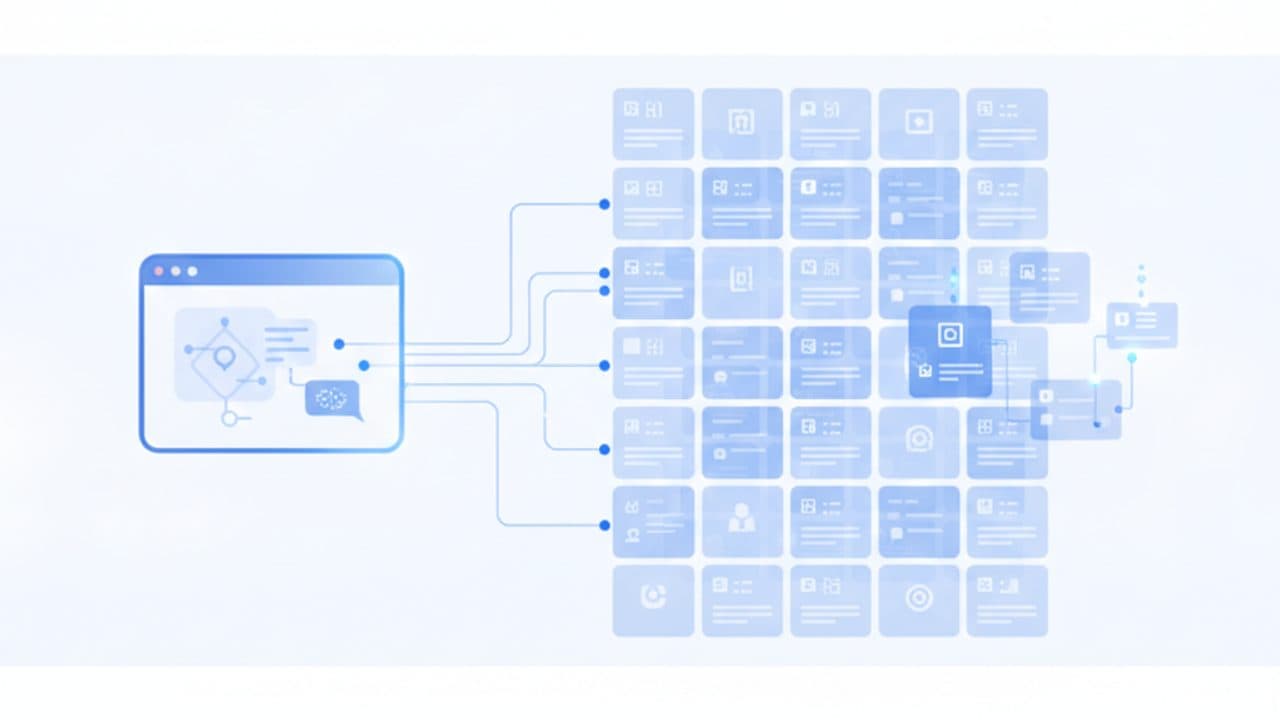
Copilot SEO is mostly Bing SEO, judged one passage at a time. When Microsoft Copilot needs the web, it turns the prompt into a short Bing search of "a few words," pulls results from Bing's index and cites the pages that support its answer. A page that Bingbot cannot crawl, that Bing has not indexed, or that a robots directive excludes cannot be cited at all. Among the pages that clear that bar, Microsoft's own guidance favors one clear topic per URL, the answer near the top, facts stated directly and structure (headings, lists, tables) that makes a passage easy to lift.
This guide is built from Microsoft's primary documentation, read on October 18, 2026: the Microsoft Learn pages that describe how Copilot queries Bing, the Bing Webmaster blog posts behind the AI Performance report (including the Topics Portfolio beta released on October 13, 2026), the IndexNow protocol docs and Microsoft Advertising's content guidance. It covers how Copilot picks sources, every Copilot surface and how its traffic shows up, a walkthrough of the report as it stands today, IndexNow setup, the robots directives that control Copilot, how all of this differs from Google, a checklist, and what our own tracking data says about the traffic Copilot actually sends.
Key takeaways
- Copilot grounds its web answers in Bing. Microsoft documents that it sends Bing a generated query of a few words, not your full prompt. If you're not in the Bing index, you can't be cited.
- Bing keeps its own index. Google rankings and Search Console don't carry over, so verify the site in Bing Webmaster Tools, submit a sitemap with honest
lastmoddates and turn on IndexNow. noarchivekeeps a page out of Copilot answers but leaves it in Bing search.nocachelimits Copilot to the URL, title and snippet.- The AI Performance report in Bing Webmaster Tools is the only first-party source of Copilot citation data. It shows citations, grounding queries, intents, topics and citation share, and since October 13, 2026 a Topics Portfolio beta with opportunity queries. It has no click metric.
- Copilot sends little direct traffic. It accounted for 1.7% of 3,677 AI-referred page views across 28 sites in our tag data, so judge it by citations, not sessions alone.
How does Microsoft Copilot choose which sources to cite?
Copilot retrieves candidate pages from Bing, then picks the passages that can support its answer. Microsoft has not published a ranking formula, but it has documented three parts of the process: the query, the index and how content is read.
Step 1: your prompt becomes a short Bing query
Microsoft's documentation for its work Copilot is the most explicit description of the mechanism. When web search is on, Copilot "parse[s] the user's prompt and identifies terms where information from the web would improve the quality of the response. Based on these terms, Copilot generates a search query that it sends to the Bing search service." That query "is different from the user's original prompt - it consists of a few words informed by the user's prompt" (Microsoft Learn, updated August 18, 2026). In Microsoft's own example, a long prompt about a possible acquisition of a company called Fabrikam becomes two searches: "Fabrikam strategy" and "Fabrikam financials."
That page covers Microsoft Copilot and Copilot Chat at work. Microsoft doesn't publish the same detail for the consumer Copilot app. Still, the AI Performance report shows the same pattern for consumer Copilot: it reports "grounding queries," the short phrases the AI used to retrieve content it cited. In practice, you compete for short, search-style queries, not for the long conversational prompt the user typed. That is the same decomposition we describe in query fan-out explained.
Step 2: Bing's index supplies the candidates
Microsoft is clear that grounding sits on top of normal search, not beside it: "Grounding builds on the same foundational infrastructure - the same crawlers, the same quality signals, the same deep understanding of the web - but it adds a new optimization layer on top" (Bing Search blog, May 6, 2026). The same post says the unit of value shifts from the page to "groundable information (discrete, supportable facts with clear provenance)," and that "abstention is a valid outcome when support is missing, stale, or conflicting." In plain terms, a page that is indexed but vague, out of date or contradicted by better sources may simply not be used.
Step 3: Copilot reads pages in pieces
Microsoft's Bing team says it directly: "AI assistants don't read a page top to bottom like a person would," and "assistants like Copilot break content down, a process called parsing, into smaller, structured pieces" (Microsoft Advertising, October 8, 2025). It also explains what happens with near-copies: "LLMs group near-duplicate URLs into a single cluster and then choose one page to represent the set" (Bing Webmaster blog, December 19, 2025). If three of your URLs say the same thing, Copilot may pick the one you'd least like it to cite.
Is Copilot just Bing search with a chat box?
No. It uses the same index and crawler, but it's doing a different job. Microsoft frames the difference this way: "Traditional search asks: which pages should a user visit? Grounding asks: what information can an AI system responsibly use to construct a response?" Ranking well in Bing gets a page into the candidate pool. Whether it gets cited depends on whether a passage on it supports the answer cleanly. Microsoft hasn't published how much weight Bing rank carries in that choice, and neither has anyone else with real evidence.
Where does Copilot appear, and does the same SEO apply everywhere?
Copilot is several products that share Bing as their web source. The optimization is the same for all of them: be in the Bing index with clear, quotable passages. What changes from one surface to the next is how you can measure it.
| Surface | Where people use it | Web source | What you can see | How a click shows in analytics |
|---|---|---|---|---|
| Microsoft Copilot (consumer) | Copilot app on Windows and mobile, copilot.microsoft.com | Bing grounding | Counted in the AI Performance report as "Microsoft Copilot" | copilot.microsoft.com referrer, when the browser passes one |
| Copilot Search in Bing | bing.com, launched April 4, 2025 | Bing index | AI Performance report | Arrives from bing.com, so referrer-based tools can't separate it from classic Bing organic |
| AI-generated summaries in Bing results | bing.com results pages | Bing index | AI Performance report | Same as above: Bing organic |
| Microsoft Copilot and Copilot Chat at work (formerly Microsoft 365 Copilot) | Copilot app, Teams, Outlook, Edge, Office apps | Bing, only if the admin allows web search and the user's Web content toggle is on | Microsoft doesn't say whether these citations are in the report | Not documented by Microsoft |
| Copilot Chat in Edge summarizing an open page | Edge sidebar | The page itself; Microsoft's example shows no search query is sent | Nothing | None: the user is already on your page |
| Partner AI products grounded by Microsoft | Not named by Microsoft | Bing grounding APIs; Web IQ since June 2, 2026 | "Select partner integrations" are included in the report, without a per-partner filter | Depends on the partner |
Some details matter for B2B sites. Microsoft renamed Microsoft 365 Copilot to Microsoft Copilot, and Microsoft 365 Copilot Chat to Microsoft Copilot Chat, so "Microsoft Copilot" now refers to both the consumer and the work product. At work, an IT admin can switch web search off with the "Allow web search in Copilot" policy. For US government clouds (GCC and DoD), it is off by default. Users of Copilot Chat can see "the exact web search queries" Copilot sent to Bing in the citation section, but only for 24 hours (Microsoft Learn, updated August 24, 2026). If your buyers work in Microsoft 365, their Copilot reaches your site only through Bing, and only when their employer allows it.
The partner row is why Bing matters beyond Copilot. Microsoft's Corporate Vice President for Search and AI wrote in February 2026 that "Microsoft grounding powers nearly every major AI assistant in the market" (Bing Search blog). Microsoft doesn't name those assistants, so treat that as Microsoft's own claim, not a confirmed list.
What does Microsoft officially recommend for AI search answers?
Microsoft has published more specific guidance on AI answers than Google has. These are its own words, from its own channels.
| Source (date) | What Microsoft says | What to do |
|---|---|---|
| Microsoft Advertising, "Optimizing Your Content for Inclusion in AI Search Answers" (Oct 8, 2025) | "Structure your content: Use schema, clear headings, and modular layouts." "Make answers snippable: Use concise, self-contained phrasing in lists, Q&As, and tables." | One idea per section, with a heading that names it; answers that still make sense when quoted alone |
| Same post | "Don't hide important answers in tabs or expandable menus." "Avoid relying on PDFs for core information." "Avoid putting key information only in images." | Key facts in visible HTML text on the page itself |
| Bing Webmaster blog, AI Performance launch (Feb 10, 2026) | "Clear headings, tables, and FAQ sections help surface key information and make content easier for AI systems to reference accurately." "Examples, data, and cited sources help build trust when content is reused in AI-generated answers." | Tables for comparisons, numbers with their sources, an FAQ where real questions exist |
| Same post | "Regular updates help ensure AI systems reference the most current version of your content." "Align text, images, and video so they consistently represent the same entities, products, or concepts." | Update pages that are cited, and use the same product and company names everywhere |
| Bing Webmaster Guidelines rewrite (Feb 2026, as reported by Search Engine Journal) | Focus each URL on a single topic, put essential information near the top, state facts directly, keep entity names clear and consistent | Split pages that try to answer three different questions; put the answer in the opening lines |
| Bing Webmaster blog, sitemaps (Jul 31, 2025) | lastmod "remains a key signal"; changefreq and priority "are ignored by Bing" | Use ISO 8601 date and time in lastmod, and only change it when the content changes |
| Bing Webmaster blog, duplicate content (Dec 19, 2025) | Canonicals, 301 redirects and hreflang help "search engines and AI systems surface the correct page" | Consolidate campaign variants, syndicated copies and parameter URLs |
The guidelines rewrite also changed what Bing treats as abuse. According to Search Engine Journal's February 27, 2026 report, the keyword stuffing section is now titled "Keyword Stuffing and Artificially Engineered Language" and covers content designed to trigger citations. Prompt injection now has its own section, "Prompt Injection and AI Manipulation." The AI-content rule now reads: "Large-scale content generated without oversight, quality control, or editorial review often lacks usefulness, accuracy, and originality, and may be excluded from indexing." Hidden instructions to Copilot and mass-produced pages written for AI answers are now named violations, not gray areas. (We couldn't read the guidelines page ourselves; see the methodology section.)
What Microsoft does not promise
None of this guarantees a citation. Microsoft's content guidance says: "While nothing guarantees selection, following these practices gives your content the best chance." The IndexNow FAQ says the same about indexing: "Submitting a URL does not guarantee immediate indexing." Treat any vendor claim of guaranteed Copilot placement with suspicion.
How is Copilot SEO different from optimizing for Google AI Overviews?
The writing standard is nearly the same. The plumbing is different: Copilot uses a different index, a different crawler, its own content controls and its own reporting. Google says "there are no additional requirements to appear in AI Overviews or AI Mode, nor other special optimizations necessary" (Google Search Central). Microsoft, by contrast, publishes specific structural advice and its own AI reporting.
| Dimension | Microsoft Copilot | Google AI Overviews and AI Mode |
|---|---|---|
| Index and crawler | Bing index, Bingbot | Google index, Googlebot |
| Fast discovery of changes | IndexNow (Bing is a participant) plus XML sitemaps | Google is not on the IndexNow participant list (checked October 18, 2026); sitemaps and Search Console |
| Controls for AI use | noarchive (out of Copilot answers), nocache (URL, title and snippet only), nosnippet, data-nosnippet | nosnippet, data-nosnippet, max-snippet, noindex; Google-Extended covers "some of Google's other systems," not Search's AI features |
| Official advice on schema | "Use schema, clear headings, and modular layouts" | Structured data "isn't required for generative AI search" (Google's AI optimization guide) |
| First-party reporting | AI Performance: citations, cited pages, grounding queries, intents, topics, citation share, period compare, Topics Portfolio (beta) | Search Console generative AI report: impressions by page, country, device and date |
| Query-level data | Yes, sampled grounding queries | No query dimension (see our Search Console generative AI report guide) |
| Competitive context | Citation Share per grounding query, plus Sites Cited and opportunity queries per topic, with no competitor domains shown | None |
| Clicks from AI answers | Not reported in AI Performance | Counted inside Web search totals; not split out |
Two practical consequences follow. First, a site that is invisible in Bing because of a stale sitemap, a blocked Bingbot or never having been verified can rank well on Google and still be absent from Copilot. It's the first thing we'd check on any site that is missing from Copilot. Second, Bing gives you query-level evidence that Google doesn't. You can see the short queries Copilot used to retrieve your pages, which is the closest thing to keyword research for AI answers that either search engine publishes.
How do you use the Bing Webmaster Tools AI Performance report?
Open Bing Webmaster Tools, choose your verified site and select AI Performance. The report is free and covers citations across "Microsoft Copilot, AI-generated summaries in Bing, and select partner integrations" (Bing Webmaster blog, February 10, 2026). We covered the February launch in our AI Performance launch article. The report has changed a lot since then, so here's what it contains as of October 18, 2026, with Microsoft's own caveats.
| Metric or view | What Microsoft says it counts | How to read it |
|---|---|---|
| Total Citations | Citations "displayed as sources in AI-generated answers," "without indicating placement or presentation" | Volume, not prominence. A footnote and a lead source count the same. |
| Average Cited Pages | Unique pages cited per day; "does not indicate ranking, authority, or the role of any page" | How broad your cited footprint is |
| Grounding queries | "The key phrases the AI used when retrieving content"; "a sample of overall citation activity" | Copilot's real retrieval queries. They're short and search-like, not user prompts. |
| Page-level citation activity | Citation counts per URL; "not page importance, ranking, or placement" | Which pages carry your Copilot presence |
| Grounding query to page mapping (added March 2026) | Which pages are cited for a specific grounding query | Check that the right page is being cited for each query |
| Intents (June 16, 2026) | Queries classified as Informational, Commercial, Navigational, Learn and Solve, Research, Creation, Local "and more" | Shows whether Copilot uses you for research or for buying decisions |
| Topics (June 16, 2026) | Related grounding queries grouped into thematic clusters | Coverage by subject instead of by keyword |
| Citation Share (June 16, 2026) | Your citations as a percentage of all citations for that grounding query; it "does not expose competitor domains, represent traffic share, or assign quality scores" | Your relative presence on one query, for direction only |
| Compare (June 16, 2026) | Overlays a previous period on the current view | Before and after a content update |
| Topics Portfolio, beta (October 13, 2026) | Per topic: Topic Size (approximate citations across all sites), Sites Cited, Queries; plus Top Opportunity Queries "where other sites appear and yours does not," with citation volumes shown as ranges | A content gap list drawn from real Copilot grounding activity |
Sources: Bing, June 16, 2026; Bing, October 13, 2026; Microsoft Advertising, March 23, 2026. Microsoft says Topics Portfolio appears only "if there is sufficient data for your site," so smaller sites may not see the tab yet.
A monthly Copilot review in six steps
- Set the window. Pick the last three months (Topics Portfolio offers one-, two- or three-month windows) and turn on Compare against the previous period.
- Find the pages that carry you. Sort page-level citations. Expect heavy concentration: in one agency's published 91-day export, a single page accounted for 69% of 19,717 citations (Search Influence, February 2026). Keep those URLs stable and current.
- Read the grounding queries behind each top page. For each query, check that the page answers it in plain text near the top. If Copilot retrieves your pricing page for a short "[product] pricing" query, the price belongs in the first lines, not in a tab.
- Sort by Citation Share. A low share on a query that matters means other sources are carrying that answer. Improve the clarity, structure or completeness of that page, which is the fix Microsoft itself suggests for pages "that are indexed but less frequently cited."
- Work the opportunity queries. In Topics Portfolio, start with topics where your citations are already concentrated, then go through Opportunity Queries. Skip competitor brand names: Microsoft warns that "branded queries can appear as opportunity queries."
- Ship, ping, annotate. After you update a page, submit it through IndexNow, note the date, and check Compare next month. Expect noise: Microsoft says citation activity shifts with "evolving AI models, competing content, freshness signals, and shifts in user demand."
To automate the content side of steps 3 to 5, AI Rank Lab's Content Suite can research and outline a page around a set of target questions. You still choose the queries from your own Bing data.
What the AI Performance report can't tell you
- Clicks. None of Microsoft's descriptions of the report include a click or traffic metric. One nonprofit published its numbers: roughly 48,000 Copilot citations across 34 pages produced 14 clicks, about 0.03% (Whole Whale, 2026). That's one site, not a benchmark, but it shows how far citations and visits can diverge.
- Which surface. Copilot, Bing summaries and partners are combined, and partners are not named.
- The full query set. Grounding queries are a sample, and intent and topic labels are AI-generated. Microsoft says some may be "imperfect."
- Stability. Citation counts can swing hard. Search Influence saw daily citations peak at 5,804 in early December 2025 and average 34 a day by February 2026.
How do you set up IndexNow for Bing and Copilot?
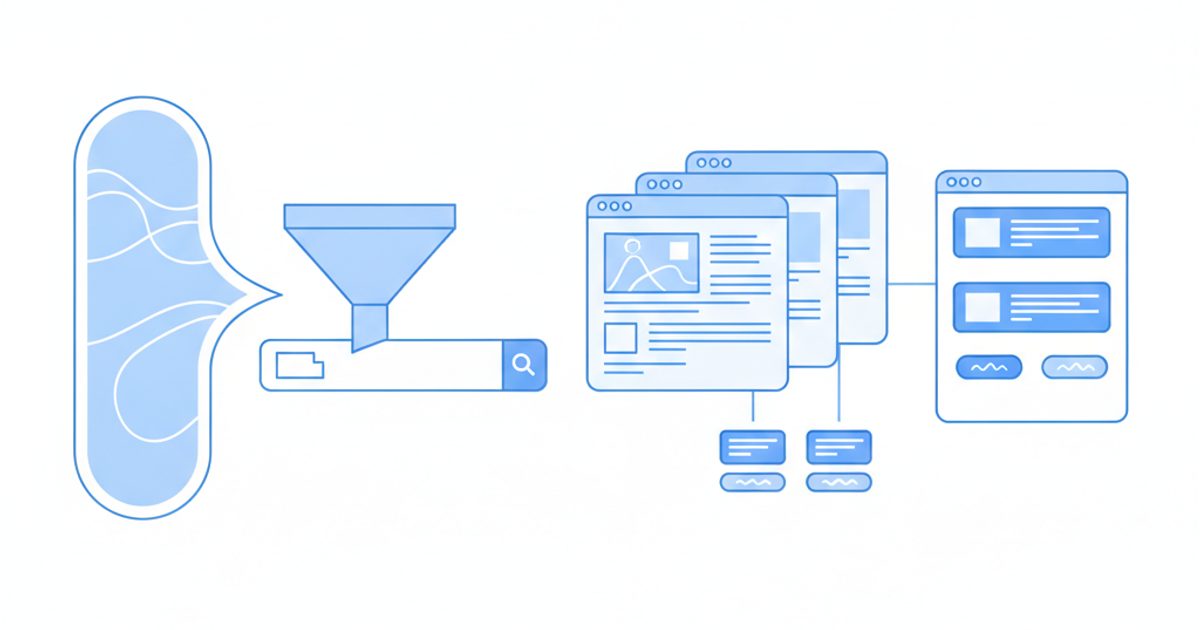
IndexNow is a free protocol for telling search engines a URL has changed. You host a key file and send the changed URLs to an endpoint. Microsoft ties it directly to AI answers: "IndexNow helps ensure that AI systems reference the most current version of a page when generating answers." It's not a ranking factor and doesn't promise a crawl. What it does is shorten the time between your edit and the version Copilot can use.
The easy route is a built-in integration. The IndexNow FAQ lists native or plugin support in WordPress, Shopify, Wix and Duda, and says "Cloudflare offers native IndexNow integration." If your platform has it, switch it on and skip to step 6. To set it up by hand (per the IndexNow documentation):
- Generate a key of "a minimum of 8 and a maximum of 128 hexadecimal characters."
- Host the key as a UTF-8 text file named
{your-key}.txtat your site root, containing the key. To store it elsewhere on the host, pass its location with thekeyLocationparameter. - Submit a single URL with a GET request:
https://www.bing.com/indexnow?url=https://www.example.com/page&key=your-key - Submit in bulk with a JSON POST to
/indexnow. You can send "up to 10,000 URLs per post." - Check the response code. 200 means submitted, 202 means received with key validation pending, 400 is a bad format, 403 is an invalid key, 422 means the URL doesn't belong to the host, and 429 means too many requests.
- Submit only real changes. The FAQ says: "Submit only when content has changed. Do not resubmit unchanged URLs." Do submit deleted, 404, 410 and redirected URLs so old versions drop out.
- Keep your XML sitemap. IndexNow covers recent changes and sitemaps give the full inventory. The FAQ recommends using both.
POST https://www.bing.com/indexnow
Content-Type: application/json; charset=utf-8

{
  "host": "www.example.com",
  "key": "your-key",
  "keyLocation": "https://www.example.com/your-key.txt",
  "urlList": [
    "https://www.example.com/pricing",
    "https://www.example.com/guide/updated-page"
  ]
}
A submission to one participant is shared: engines agree that "submitted URLs will be automatically shared with all other participating search engines." On October 18, 2026, the published list (searchengines.json) named Bing, Yandex, Seznam, Naver, Yep, the Internet Archive and Amazonbot. Google wasn't on it. After submitting, use URL Inspection in Bing Webmaster Tools to check the last crawl time. Bing says changes can take "anywhere from a few seconds to up to a week" to be reflected.
Which robots directives control Copilot's use of your content?
Bing uses page-level robots meta values to control Copilot, not a separate AI crawler you block in robots.txt. These controls let you stay in Bing search while limiting or removing your content from Copilot answers. Microsoft first introduced them for Bing Chat, the product later renamed Copilot (Bing Webmaster blog, September 22, 2023), and the February 2026 guidelines rewrite restates them for Copilot and grounding results.
| Directive | Bing search results | Copilot and AI answers |
|---|---|---|
| None | Eligible | Eligible. Content "may be included" in answers and may be used to train Microsoft's generative models. |
nocache | Still shown | Microsoft "will only display URL/Snippet/Title in the answer." Bing advises against it for content you want richly cited. |
noarchive | Still shown | "Will not be included in Bing Chat answers, not be linked to in the answers"; also excluded from training |
noarchive, nocache together | Still shown | Treated as nocache, which Bing recommends for paywalled sites that still want to be referenced |
nosnippet | No text snippet | The guidelines say it may limit citation quality |
data-nosnippet on an element | Section hidden from snippets; page still indexed and "available for ranking" | That section is excluded from "AI-generated answers"; the rest of the page stays eligible |
noindex | Not indexed | Not eligible |
| robots.txt disallow for Bingbot | Not crawled | Not eligible; Bing says it "respects all content owner preferences expressed through robots.txt" |
Two traps catch a lot of sites. Bing itself notes that "many paywall sites use only the NOARCHIVE tag," which removes those pages from Copilot answers entirely; adding nocache keeps them referenced. And a blanket robots.txt rule written to block AI training bots can catch Bingbot too. Our AI crawler user agent list explains which AI tokens you can block without touching Bingbot. The data-nosnippet attribute is the precise tool for keeping subscriber text, legal boilerplate or user comments out of answers (Bing, October 15, 2025).
What should a Copilot SEO checklist include?
Work top to bottom. The first six rows decide whether you can be cited at all, and the rest decide how often.
| # | Check | How to verify |
|---|---|---|
| 1 | Site verified in Bing Webmaster Tools | Add the site, or import it from Google Search Console |
| 2 | Bingbot allowed in robots.txt | Read the Bingbot and * groups; no Disallow: / that applies to Bingbot |
| 3 | Key pages indexed in Bing | URL Inspection in Bing Webmaster Tools, page by page for your top 20 URLs |
| 4 | No accidental noindex, noarchive or nocache | View source and HTTP headers on templates, not just single pages |
| 5 | XML sitemap submitted with true lastmod (date and time) | Sitemaps section: status, last read date, errors. Bing reads sitemaps "at least once per day." |
| 6 | IndexNow live | A test submission returns 200 or 202 |
| 7 | One topic per URL, answer in the opening lines | Read the first 100 words: do they answer the page's main question? |
| 8 | Facts stated directly, with sources and numbers | Every claim that matters has a figure, a date or a link |
| 9 | Core content in HTML text | Not only in tabs, accordions, PDFs or images |
| 10 | Duplicates consolidated | Canonicals on variants, 301s for retired pages, hreflang for locales |
| 11 | Consistent entity names; Bing Places for local businesses | Same company and product names across text, images, video and listings |
| 12 | Monthly AI Performance review | The six-step workflow above |
| 13 | Copilot referrals tracked | copilot.microsoft.com as a source in your analytics |
AI Rank Lab's SEO, AEO and GEO audit covers parts of rows 2, 4, 5 and 9 automatically: it reads robots.txt, robots meta values including noindex, noarchive and nosnippet, canonical tags and the XML sitemap, and it flags content that depends on JavaScript to render. It doesn't test Bingbot-specific rules, HTTP header directives or IndexNow, so check those in Bing Webmaster Tools.
How much traffic does Microsoft Copilot send to websites?
Not much, in our data. The AI Rank Lab JS tag records the referrer of every tracked page view. From July 27, 2025 to October 18, 2026, 28 sites using it received AI-assistant referrals. Of those 3,677 AI-referred page views, 62 came from copilot.microsoft.com, 1.7% of the total, and only 5 of the 28 sites received any.
| Assistant | AI-referred page views | Share | Sites receiving any |
|---|---|---|---|
| ChatGPT | 2,087 | 56.8% | 26 |
| Gemini | 629 | 17.1% | 15 |
| Perplexity | 457 | 12.4% | 7 |
| Claude | 442 | 12.0% | 10 |
| Copilot | 62 | 1.7% | 5 |
Method: page views whose document.referrer host is an AI assistant, recorded by the AI Rank Lab tracking tag across 28 sites, July 27, 2025 to October 18, 2026. Counts are page views, not unique users, and the sample is small and skewed toward our customers' industries.
This undercounts Copilot's influence for structural reasons. Clicks from Copilot Search and AI summaries on bing.com arrive with a Bing referrer and look like ordinary Bing organic traffic. Work Copilot and desktop apps may pass no referrer at all. And as Whole Whale's numbers show, a citation often produces no click. So read the 1.7% as "Copilot is a small direct traffic source," not "Copilot doesn't matter." Measure it by citations in Bing Webmaster Tools, and by assisted conversions if your analytics can see them. Our guide to tracking AI referral traffic in GA4 includes a tested regex that captures copilot.microsoft.com.
Which tools help you track Copilot visibility?
Disclosure: AI Rank Lab is our product. We list it first because this is our site, and we've kept the same criteria for every tool below.
- AI Rank Lab - covers the groundwork and the traffic side: the audit catches indexability problems, and AI bot tracking records which pages AI assistants send visitors to, including Copilot referrals. Its prompt tracking runs on ChatGPT, Claude, Gemini, Perplexity, Google AI Overviews and AI Mode, not on Copilot. For Copilot citations, pair it with Bing Webmaster Tools.
- Bing Webmaster Tools - free and the only first-party source of Copilot citations and grounding queries. For anything Copilot-specific, it's the better choice than any third-party tool, ours included. Its limits are no click data and no per-surface split.
- Google Analytics 4 - its AI Assistant default channel includes Copilot when a referrer is passed. Clicks from Copilot inside bing.com stay in Organic Search.
Methodology and limitations
We read Microsoft's primary sources on October 18, 2026: two Microsoft Learn pages on Copilot web search (updated August 2026), eleven Bing Webmaster and Bing Search blog posts from September 2023 to October 2026, two Microsoft Advertising posts, and the IndexNow documentation, FAQ and participant list. We also analyzed 15 ranking articles and reports on Copilot SEO and the AI Performance report, and used Google's documentation for the comparison. Two Microsoft pages render only with JavaScript, and neither our fetcher nor a reader proxy could load them: the Bing Webmaster Guidelines page and the AI Performance help page in Bing Webmaster Tools. For the February 2026 guidelines rewrite, we relied on Search Engine Journal's report, which quotes the old and new text. Third-party citation figures come from single sites and are labeled as such. Our referral numbers come from a small set of sites, are aggregated and anonymized, and can't see Copilot clicks that arrive through bing.com. AI Rank Lab doesn't run prompts on Copilot, so this article has no Copilot answer-tracking data of our own. We have no affiliation with Microsoft.
If you want to see how your Copilot groundwork compares with your visibility in ChatGPT, Gemini, Claude, Perplexity and Google's AI features, start tracking with AI Rank Lab.
Get a free AI ranking consultation
Want your brand to show up when ChatGPT, Gemini and Perplexity answer questions in your market? Tell us about your site and our team will send a personalized strategy.


