


AI Overviews are the AI summary Google adds on top of a normal results page when it decides a summary helps. AI Mode is a separate, conversational search experience that people choose to open, which breaks a question into subtopics, runs many searches at once and keeps context across follow-up questions. Both are grounded in Google's regular Search index and have the same eligibility rule for websites, but published studies show they cite different pages, link differently, send different amounts of traffic and are counted differently in Search Console.
This guide puts the two side by side using Google's own documentation (checked October 18, 2026) and eight third-party studies, each labeled with who ran it, when and on what sample. Where studies disagree, we show why. You will also get the Search Console counting rules for each feature, how the new site-level opt-out works, and what, if anything, to do differently for each.
Key takeaways
- Same eligibility, same switch: a page must be indexed and snippet-eligible, and one Search Console setting, the Search generative AI control (rolled out to all sites on August 31, 2026), includes or excludes your site from AI Overviews and AI Mode together. You cannot opt out of one and keep the other.
- Different citations: in Ahrefs' September 2025 data, the two features cited the same URLs for the same query only 13.7% of the time. Being cited in one tells you little about the other, so track them separately.
- AI Mode cites more, names more brands and cites Google's own pages more: Profound measured google.com rising 8.4x in AI Mode citation share between April 15 and June 30, 2026, to become its #2 cited domain.
- AI Mode sends fewer clicks: in a preregistered field experiment with 1,100 US users (March 2026), forcing searches into AI Mode cut click-through to external sites by 18.8 percentage points.
- Search Console blends both: the Generative AI performance report shows impressions for AI Overviews and AI Mode combined, with no feature filter and no clicks. Splitting them needs a third-party tracker.
- Google's official position is that neither needs special optimization. The practical differences are in what you measure and which Google surfaces (Business Profile, Merchant Center, YouTube) you keep accurate.
AI Mode vs AI Overviews at a glance
The short version: AI Overviews are a feature inside the results page, AI Mode is a destination. Everything else in the table below follows from that. Google sums up the link difference itself in its AI features documentation: "AI Mode and AI Overviews may use different models and techniques, so the set of responses and links they show will vary."
| Dimension | AI Overviews | AI Mode |
|---|---|---|
| What it is | An AI-generated snapshot above or within classic results | A full-page conversational search experience |
| How it is triggered | Automatically, only when Google's systems judge it "additive to classic Search" (and so "often don't trigger") | By the user: the AI Mode tab, the Google app, or a follow-up typed under an AI Overview |
| Follow-up questions | Not inside the Overview itself; a follow-up hands you to AI Mode with context carried over | Yes, multi-turn, with history saved to the account |
| Retrieval | Grounded in the Search index; may use query fan-out | Grounded in the Search index; Google says it uses query fan-out by design, and Deep Search "can issue hundreds of searches" |
| Inputs | Text, plus image searches and Circle to Search | Text, voice, images, PDFs and other files, URLs, Chrome tabs |
| Model choice | None exposed to the user | Auto or Fast by default; Google AI Pro and Ultra subscribers can pick Gemini 4 Argon |
| Availability (Google help pages) | All users in 200+ countries and territories and roughly 100 languages | Over 200 countries and territories since Google's October 2025 expansion; scale reported as 1 billion+ monthly active users (May 2026) |
| Citations per answer (third-party) | 11.1 per run (Profound, May 2026) | 15.2 per run (Profound, May 2026) |
| Search Console position | All links share the single position the Overview occupies | Standard position rules; each follow-up counts as a new query |
| Site-level opt-out | The same Search generative AI control in Search Console covers both (plus generative AI features in Discover) | |
Sources: Google Search Help pages for AI Overviews and AI Mode, Google's May 2025 AI Mode launch post, Search Console Help, and Profound's study linked below. Checked October 18, 2026.
What is Google AI Mode, and what is an AI Overview?
AI Overviews: a summary layered onto the results page
An AI Overview is a generated summary with supporting links that Google places in the normal results page. Google launched AI Overviews in the US at I/O in May 2024 and describes them as a "core Google Search feature, like knowledge panels" that users cannot turn off, although the Web filter shows a links-only page. The searcher did not ask for an AI answer; Google decided one was useful. That matters for visibility: AI Overviews reach people who never chose AI search.
AI Mode: an AI-first search experience people opt into
Google AI Mode is what Google calls its "most powerful AI search experience": the whole page becomes a conversation, and you keep asking. Google opened it to all US users on May 20, 2025, then expanded it to more than 200 countries and territories in its October 2025 language and location update. Google's help page describes the mechanism plainly: AI Mode "divides your question into subtopics and searches for each one simultaneously". It also handles uploads, voice, interactive visuals and, for signed-in users who enable it, personalization from Search history and connected Google apps.
The two are now joined at the seam. On mobile, tapping "Show more" under an AI Overview and typing a follow-up moves the user into AI Mode, and Google's help page says "the context from your original search carries over". So an AI Overview is often the first turn of an AI Mode conversation.
When does Google show an AI Overview versus AI Mode?
Google decides when to show an AI Overview; the user decides when to use AI Mode. That makes their reach very different in practice, even though AI Mode's absolute numbers are large.
- AI Overviews appear on a large minority of searches. In the March 2026 field experiment by researchers at Northeastern and Penn (Wang et al., arXiv, August 2026), 36% of participants' real searches triggered an AI Overview during the baseline period.
- AI Mode is used for a small share of searches. The same participants used AI Mode for 0.6% of their searches before the experiment changed anything. The authors note their sample skewed younger and more educated than the US population.
- But AI Mode is growing fast. Google said in May 2026 that AI Mode "has surpassed a billion monthly active users globally" and that AI Mode queries "have more than doubled every quarter since launch", with the average AI Mode search "triple the length of a traditional Search query" (Google, May 19, 2026).
The practical reading: today most of your AI-feature impressions on Google likely come from AI Overviews, while AI Mode carries the longer, comparative and planning questions that tend to sit closer to a decision. Google's own documentation frames it the same way: AI Mode is "particularly helpful for queries where further exploration, reasoning, or complex comparisons are needed."
How do AI Mode and AI Overviews choose which sources to cite?
Both features retrieve pages from Google's Search index using its core ranking systems, then generate an answer and link the pages that support it. Google's Guide to Optimizing for Generative AI Features (updated July 10, 2026) names two techniques:
- Retrieval-augmented generation (grounding). Core ranking systems "retrieve relevant, up-to-date web pages from our Search index", and the response shows "prominent, clickable links" to pages that support it.
- Query fan-out. The model issues "a set of concurrent, related queries" to fetch more results. Google's example: "how to fix a lawn that's full of weeds" fans out to queries like "best herbicides for lawns" and "remove weeds without chemicals". We cover the mechanism in depth in our query fan-out explainer.
The difference is degree. Google's documentation says AI Overviews "may" use fan-out, while AI Mode is built on it, and Deep Search in AI Mode takes it to "hundreds of searches". More sub-queries means a wider pool of candidate pages, which is why AI Mode answers are longer and cite more sources.
Who is eligible to be cited?
The eligibility rule is identical for both. A page "must be indexed and eligible to be shown in Google Search with a snippet". Since August 31, 2026 there is a second condition: the site must be included via the Search generative AI control in Search Console. Inclusion is the default for every property, so most sites do not need to do anything, but it is worth confirming nobody on your team switched it off.
How much do citations overlap with the organic top 10?
Less than most people assume, and less for AI Mode than for AI Overviews. Ranking well raises your odds but guarantees nothing:
- AI Mode: Moz's February 2026 study of nearly 40,000 US and UK queries found only 12% of AI Mode citations matched a URL in the top 10 organic results for the same query, and about 1 in 5 matched at the domain level. Semrush's July 2025 study of 5,000 keywords put AI Mode's URL overlap with the top 10 at about 35%.
- AI Overviews: Ahrefs' March 2026 update (863,000 SERPs, 4 million cited URLs) found 37.9% of AI Overview citations ranked in the top 10, down from about 76% in its July 2025 analysis. Semrush's 2025 figure for AI Overviews was 67%.
Both features have drifted further from the classic top 10 over time, consistent with heavier fan-out. AI Mode has drifted further.
Do AI Mode and AI Overviews cite the same pages?
Mostly not, though the size of the gap depends on how you measure it. Ahrefs compared 540,000 query pairs in September 2025 US data and found the two features cited the same URLs only 13.7% of the time, even though their answers were semantically similar (86% average cosine similarity). Semrush's July 2025 study reported far higher overlap: 58% at URL level and 88% at domain level. Both are real numbers; they measure different things.
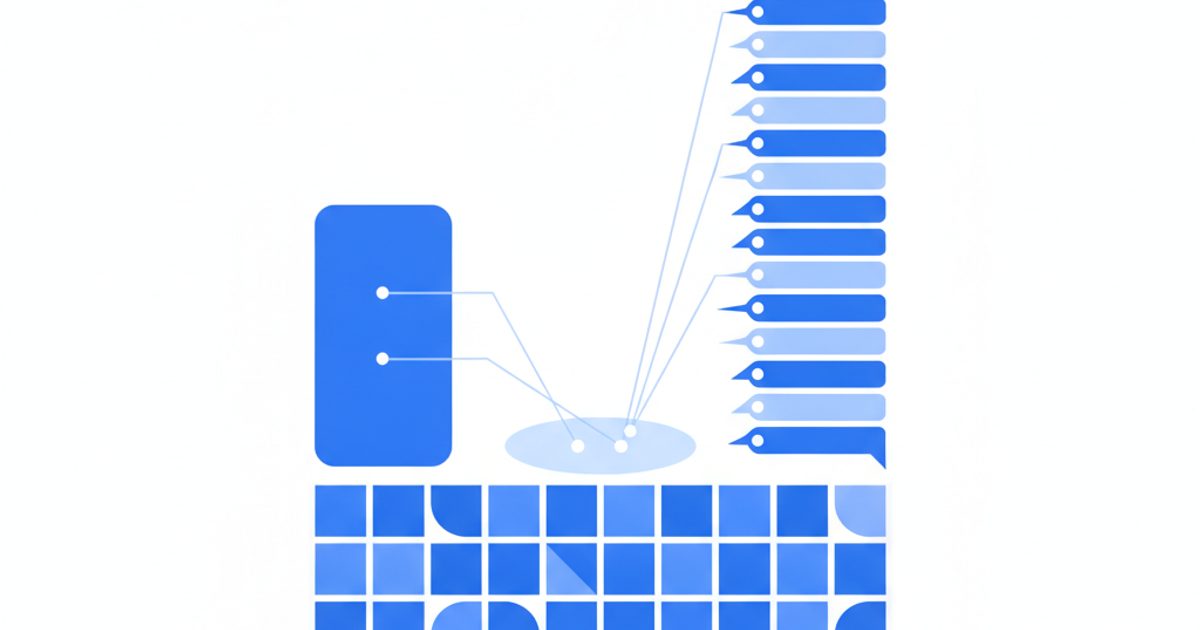
The table below lines up the studies we used. Read the "why it differs" column before quoting any one number.
| Study (type) | Data date and sample | Headline finding | Why it differs from the others |
|---|---|---|---|
| Semrush AI Mode comparison (vendor study) | 2025, 5,000 keywords, desktop | AI Mode vs AIO URL overlap 58%, domain 88%; AI Mode about 7 unique domains per answer vs about 3 for AIO | Early AI Mode (about two months after US launch); domain-level matching inflates overlap |
| Ahrefs AIO vs AI Mode (vendor study) | Sept 2025, 540k-730k US query pairs | Same-URL overlap 13.7%; AI Mode answers about 4x longer; 11% of AIOs vs 3% of AI Mode answers had no citation | Single snapshot per query; Ahrefs notes AI Overview citations already change between generations |
| Moz AI Mode citations (vendor study) | Feb 2026, about 40k US and UK queries | 12% of AI Mode citations in the organic top 10; 96% of answers cite at least one URL | Measures AI Mode against classic results, not against AIO |
| Ahrefs AIO citations vs top 10 (vendor study) | Published Mar 2026, 863k SERPs | 37.9% of AIO citations rank in the top 10, down from about 76% | AIO only; shows the trend over time |
| Profound model variability (vendor study) | May 2026, 2.64B citations, 2,346 prompts run daily | Citations per run: AI Mode 15.2, AIO 11.1; brands named per answer 5.0 vs 4.5; about 40% of named companies shared | Prompt-based tracking of brand-category prompts, not keyword SERPs |
| Profound google.com study (vendor study) | Apr 15 to Jun 30, 2026 | google.com citation share in AI Mode up 8.4x, now the #2 domain | Total sample not stated; AI Mode only |
| Wang et al. field experiment (academic preprint) | Mar 2026, 1,100 US Chrome users, 7 days | AI Mode-only search cut external click-through by 18.8 points; removing AIO and AI Mode raised it 8.8 points | Measures behavior and clicks, not citations; forced AI Mode use |
Two conclusions survive every method. First, the citation sets differ enough that a page cited in one feature is not a proxy for the other. Second, both are unstable from run to run, so a single check is an anecdote. Our answer stability study shows how much repeated runs of the same prompt move in other AI engines, and the same discipline applies here: track on a schedule and read trends, not snapshots.
Does AI Mode cite Google's own properties more than other sites?
Yes, increasingly, according to third-party data. Profound's analysis of AI Mode citations from April 15 to June 30, 2026 found that google.com's citation share "aggressively increased (8.4x)", making it the #2 cited domain. The growth came almost entirely from two Google-hosted surfaces: Business Profile pop-up panels (the google.com/searchviewer/ path, which Profound counted over 32 million times) and Product Knowledge Panels. Profound is a vendor and does not publish the total sample or the baseline for that multiple, so treat 8.4x as directional.
A second Profound dataset makes the contrast with AI Overviews clearer. In May 2026, google.com held 2.80% of all AI Mode citations and was its third most-cited domain, behind youtube.com (5.70%) and reddit.com (3.31%). google.com did not appear in the AI Overviews top five at all, where youtube.com (6.13%), reddit.com (3.31%), facebook.com, g2.com and instagram.com led. Moz's February 2026 study also found Google-owned YouTube and Play Store links prominent among AI Mode citations.
What this means for a business: in AI Mode, the "landing page" for a local or product query is increasingly a Google-hosted card built from data you supply. The levers are the ones Google itself points to in its optimization guide: keep your Google Business Profile complete and current, keep Merchant Center feeds accurate, and treat YouTube as a citation surface, not only a video channel.
Does AI Mode send less traffic than AI Overviews?
The best causal evidence available says yes. In the preregistered field experiment by Wang, Gleason, Bart, Wilson and Metaxa (draft posted August 18, 2026), 1,100 US Chrome users were randomly assigned for seven days to search with no AI features, normal Google Search, or AI Mode for every search. Compared with normal Search:
- AI Mode-only search reduced click-through to external sites by 18.8 percentage points, and reduced the share of users clicking through to news sites (-12.5 points), Reddit (-21.2 points) and Wikipedia (-9.9 points).
- Removing AI Overviews and AI Mode increased click-through by 8.8 points.
- AI Mode raised minutes per session while lowering search sessions per day: people stayed inside the AI answer and visited the web less.
The authors flag limits worth repeating: the sample skewed younger and more educated, the exposure lasted seven days, and forcing every search into AI Mode is a full-adoption scenario, not how people use it today. AI Overviews have their own observational evidence. Pew Research Center tracked 900 US adults in March 2025 and found users clicked a traditional result on 8% of visits when an AI summary appeared versus 15% without one, and clicked a link inside the summary on just 1% of visits. Our own AI Overviews CTR analysis breaks the AI Overview side down by query type.
Google's view differs in emphasis. Its documentation says clicks from results pages with AI Overviews are "higher quality (meaning, users are more likely to spend more time on the site)", and on October 15, 2026 Google announced more inline links placed higher in AI Mode and AI Overview responses, a test of a dedicated section for official websites, and more prominent link cards at the end of answers. Those changes postdate every study above, so the click gap may narrow. For now, plan on AI Mode visibility being worth more as brand exposure and less as referral traffic than an equivalent AI Overview citation.
How does Search Console count AI Mode and AI Overview data?
Search Console includes both features in the regular Performance report (Web search type) and in the separate Generative AI performance report, but it counts them differently and never lets you split one from the other. These rules come from Google's Search Console help on impressions, position and clicks and the Generative AI performance report help page.
| Metric or rule | AI Overviews | AI Mode |
|---|---|---|
| Click | Clicking a link to an external page in the Overview | Clicking a link to an external page in AI Mode |
| Impression | Standard impression rules | Standard impression rules |
| Position | The Overview occupies one position; every link in it gets that same position | Same methodology as a results page; carousels and image blocks follow their usual rules |
| Follow-up questions | A follow-up moves the user into AI Mode | Each follow-up is a new query; its impressions, positions and clicks belong to that new query |
| Generative AI performance report | Impressions only, for AI Overviews and AI Mode combined; dimensions are pages, countries, devices and dates; filters for text and multimodal search; rolled out to all sites August 31, 2026 | |
| Split by feature | Not available in either report | |
Two practical consequences. Position averages for AI Overview queries can look better than the page's organic rank because every cited link inherits the Overview's slot. And AI Mode conversations inflate your query list with long, conversational follow-ups that look like separate searches. We walk through reading the new report in our Search Console Generative AI report guide.
How do you track AI Mode and AI Overviews separately?
Search Console tells you how much generative AI visibility you have; a tracker tells you where it comes from. Google is right that "no third-party tool has access to our internal ranking or AI systems": trackers run real queries and record what the public answer shows. That is sampling, not Google data, so treat it as a complement to Search Console. A workable setup:
- Confirm eligibility. Check that the Search generative AI control is set to include your site, and that key pages are indexed with no
nosnippetor tightmax-snippetlimits. - Baseline in Search Console. Export the Generative AI performance report by page and by country so you know which URLs already earn AI impressions.
- Build one query set, run it in both features. Use the same 30 to 100 questions your buyers ask, including the longer comparison and planning questions AI Mode attracts. In AI Rank Lab, the AI Overview tracker and AI Mode tracker record whether each feature appears and which URLs it cites.
- Record citations, not just presence. Log every cited URL and domain per run, so you can see whether you are cited in one feature, both, or neither, and which competitor or Google-owned page took the slot. Our citation tracker keeps that history.
- Repeat on a schedule. Weekly runs are a sensible minimum given how much citations move between generations.
- Tie it to outcomes. Google says to track conversions and time on site in analytics. Connect GA4 (AI Rank Lab's GA4 integration connects it) and compare engagement on pages that gain or lose AI citations.
Tools that track both features:
- AI Rank Lab. Disclosure: AI Rank Lab is our product. We list it first because this is our site, and we've kept the same criteria for every tool below. Tracks AI Overviews and AI Mode alongside ChatGPT, Claude, Gemini and Perplexity, and pairs tracking with site audits, an Action Plan and content publishing. Plans start at $69 a month (pricing checked October 18, 2026).
- Ahrefs Brand Radar. Its AI Overview and AI Mode datasets power the large Ahrefs studies cited above, which makes it a strong choice if you already live in Ahrefs and want market-wide benchmarks rather than only your own query set.
- Profound. Tracks AI Overviews, AI Mode and Gemini at very large prompt volumes, as its May 2026 study shows; best suited to enterprise teams with a dedicated AI visibility budget.
Can you opt out of AI Mode but stay in AI Overviews?
No. The Search generative AI control is one switch for "AI Overviews, AI Mode, and generative AI features in Google Discover", per Search Console Help. Excluding your site removes your links and stops your content grounding answers in all of them, with no traffic or impressions from those features; Google says exclusion generally takes a few days: 1 to 2 days after the change goes live, longer for some cached content. Google also states the setting "isn't used as a ranking or inclusion signal affecting other parts of Search."
The other controls are blunter. nosnippet, data-nosnippet and max-snippet limit what Google shows from a page in AI features and in classic snippets alike. Google-Extended, according to Google's AI features page, governs AI training and grounding "in some of Google's other systems", not inclusion in AI Overviews or AI Mode. For almost every business, opting out costs more visibility than it protects.
Do you need to optimize differently for AI Mode than for AI Overviews?
Not in the sense of separate tactics. Google states there are "no additional requirements to appear in AI Overviews or AI Mode, nor other special optimizations necessary", and its 2026 guide lists llms.txt files, "chunking" content and special schema among the things you can ignore. Creating a separate page for every fan-out variation primarily to manipulate rankings or AI responses is, in Google's words, a violation of its scaled content abuse policy. What does change is emphasis, because the two features reward slightly different kinds of coverage:
| If your situation is... | What matters more | Why |
|---|---|---|
| Short factual or definitional queries | AI Overviews; a clear, direct answer early on the page | These queries trigger Overviews automatically; AI Mode users ask longer questions |
| Comparisons, planning, "which should I choose" | AI Mode; one page that answers the follow-up questions too | Fan-out retrieves the sub-questions; AI Mode names about 5 brands per answer in Profound's data |
| Local services or physical products | Google Business Profile and Merchant Center data | AI Mode increasingly cites Google-hosted cards instead of brand sites |
| How-to, reviews, demos | YouTube alongside the written page | YouTube ranks among the most-cited domains in both features in the Profound, Moz and Ahrefs data |
| Brand not mentioned at all | Being named in sources AI Mode already cites | AI Mode includes more entities per answer; AI Overviews often name no brand (59% of AIOs in Ahrefs' data) |
The common thread is Google's own top recommendation: a unique, first-hand point of view rather than a summary of what already ranks. That serves both features, because both retrieve from the same index with the same quality systems.
Limitations of this comparison
Every number above comes from someone else's dataset, and we have labeled each one. Six of the seven studies in the comparison table come from vendors that sell SEO or AI visibility tools (Profound, Ahrefs, Semrush and Moz); their methods are disclosed to different degrees, and Profound does not state the sample behind its 8.4x figure. Most data is US-centric and dates from 2025 to mid-2026, before Google's October 15, 2026 link changes. We do not publish our own AI Mode vs AI Overviews figures here because our tracked sample of runs for these two features is still too small to support a reliable comparison; we will add it when it is. Google features and model names change often: every product detail in this article was checked on October 18, 2026.
See both answers for your own queries. AI Rank Lab runs your questions through Google AI Overviews and AI Mode, keeps every run, shows which pages each one cites, and turns the gaps into a prioritized fix list. Start tracking AI Mode and AI Overviews.
よくある質問
What is the main difference between Google AI Mode and AI Overviews?▾
Is AI Mode replacing AI Overviews?▾
Do AI Mode and AI Overviews use the same sources?▾
Does AI Mode send less traffic to websites than AI Overviews?▾
Can I see AI Mode traffic separately in Google Search Console?▾
Can I opt out of AI Mode but stay in AI Overviews?▾
Do I need to optimize separately for AI Mode?▾
Which model powers Google AI Mode?▾
Get a Free AI Ranking Consultation
Want to improve your brand's visibility in AI search engines like ChatGPT, Gemini, and Perplexity? Fill out the form and our experts will create a personalized strategy for you.

著者
Devanshu
Chief Marketing Officer & AI Search Optimization Architect
Digital Marketing Strategist & Pioneer in SEO, Answer Engine Optimization (AEO), and Generative Engine Optimization (GEO).


