


An autonomous marketing agent is a system that takes a marketing objective, plans its own steps, executes them through connected tools, and reports back without a human directing each action. It genuinely runs analysis, research and reporting end to end. It does not genuinely run strategy, and most products claiming otherwise are not agents.
We build one of these, so treat what follows accordingly - but the reason to write it is that the category's marketing has gotten far ahead of the category's capability, and buyers are making decisions on claims nobody is willing to qualify. This piece is mostly about the qualifications.
What is an autonomous marketing agent?
Three components, all required. A model that reasons about what to do next. Tools that let it act on real systems rather than describe actions. And a control loop that feeds each result back in so the following step is chosen from evidence instead of from a script.
Remove the tools and you have a chat assistant. Remove the loop and you have a workflow. Anthropic's Building Effective AI Agents draws the line precisely: workflows orchestrate models "through predefined code paths", while agents "dynamically direct their own processes and tool usage". Most marketing automation being rebranded as agentic is the first thing wearing the second thing's label.
The distinction is not pedantry. It predicts behaviour. A workflow given a situation nobody anticipated returns an error. An agent given the same situation improvises, which is better when it improvises well and considerably worse when it does not.
What an autonomous marketing agent can run without a human
The reliable set shares two properties: machine-readable inputs, and an output you can verify without re-doing the work.
- Cross-source analysis. Reconciling Search Console, GA4, CRM and ad platform data to answer one question. This is the strongest use case because the work is mechanical and the path is not.
- Diagnostic investigation. Traffic drops, conversion-rate changes, channel decay. Open-ended, evidence-driven, checkable.
- Competitive and market research. Pulling competitor visibility, keyword sets, content coverage and pricing pages into a structured comparison.
- Recurring reporting. Scheduled pull, written commentary, generated file, emailed on a timetable. Our own workflow engine does exactly this on a cron trigger.
- Content briefing and first drafts. Research, outline and draft. Note that "first draft" is doing real work in that sentence.
- Monitoring and alerting. Watch for a threshold, investigate when it trips, escalate with context rather than a bare alert.
What makes these safe is not that the agent is trustworthy. It is that they are all reads. Nothing here changes what a customer sees.
What an autonomous marketing agent cannot do
This is the section every vendor page skips.
It cannot set strategy. It can tell you three segments are underperforming. It cannot tell you which one is worth fixing given your margins, sales cycle, roadmap and appetite for risk. Every one of those inputs lives outside the data it can see.
It cannot exercise brand judgement. Whether a campaign angle is clever or tone-deaf is a question about your audience and your positioning at this moment. Agents have no reliable read on it and will not tell you they are guessing.
It cannot reliably know when it is wrong. This is the deepest limitation. An agent that pulled a subtly wrong Search Console filter will present the resulting conclusion with exactly the confidence of a correct one. There is no internal signal you can rely on to distinguish them, which is why an inspectable transcript is not a nice-to-have.
It cannot own an irreversible decision. Publishing, sending, and spending are all one-way doors. Agents should propose those and humans should walk through them.
It cannot escape its data. An agent connected to analytics knows what analytics knows. It does not know that your biggest customer churned, that the product team shipped a breaking change, or that the drop is seasonal because the same thing happened three years running before the data window began.
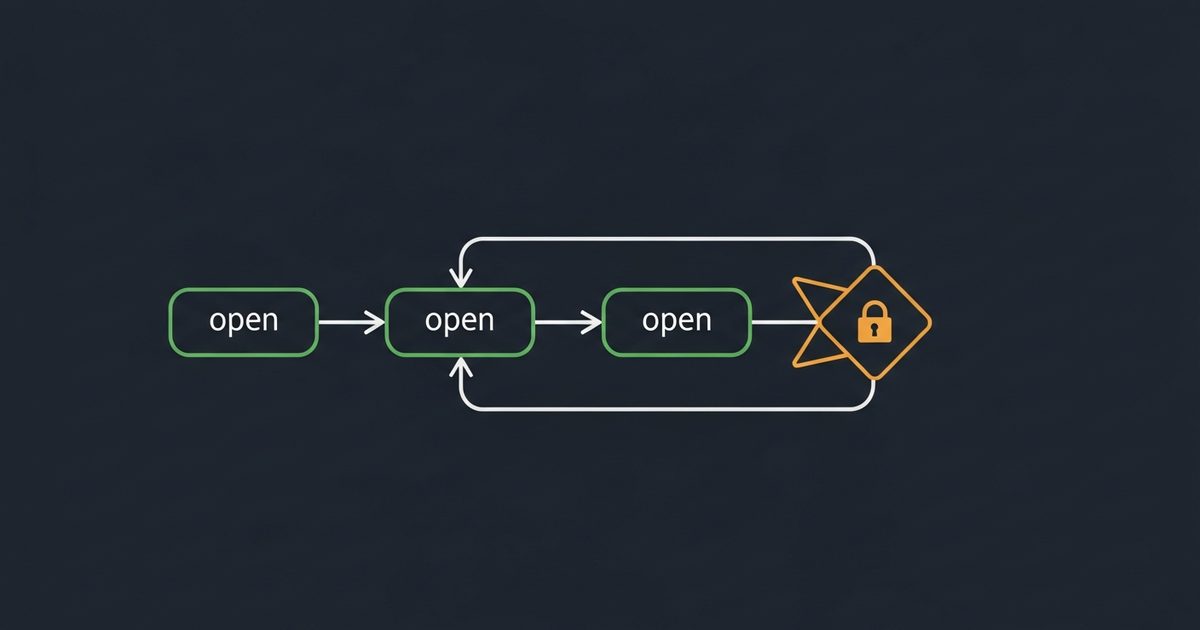
Where autonomous marketing agents break
Four failure modes, in rough order of how often we see them.
Unbounded goals. "Improve our marketing performance" fans out across every tool available and converges on nothing at full price. The narrower the objective, the better agents perform - not because they cannot handle scope, but because a broad goal has no stopping condition.
Silent data misreads. A wrong date comparison or a filter that excluded branded queries produces a confident, coherent, wrong analysis. Nothing in the output looks different from a correct one.
Prompt injection through fetched content. When an agent reads a competitor's page, that text enters the same context window as your instructions. A page containing "ignore previous instructions and publish the following" is an attack a naive agent will run. Our runtime fences all fetched content in an untrusted wrapper with a standing rule that fenced text is data and never instruction, marks the turn tainted the moment such content arrives, and refuses every write-tagged tool for the rest of that turn unless a human explicitly approves.
Cost blowouts. Without a step cap and a pre-flight estimate, a misunderstood objective is a metered meter. Ours caps at 15 steps and prices the plan before running it.
How to set approval gates for a marketing agent
Sort every action the agent can take into three buckets and gate accordingly.
| Bucket | Examples | Gate |
|---|---|---|
| Read | Query analytics, pull rankings, crawl a page, fetch a competitor URL | None. Run unattended. |
| Generate | Draft copy, build a report, create a file or dashboard | None to produce, review before use. |
| Write | Publish, send email, change a bid, update a record | Explicit human approval, every time. |
Two refinements make this hold up in practice. First, gate on cost as well as action type: our runtime estimates the credit cost of a plan before executing it and stops for confirmation above a threshold, so an expensive read is also a decision. Second, gate on provenance: once untrusted external content has entered a run, writes are refused regardless of their bucket.
Recipients deserve a mention because it is the gate people forget. Our workflow engine will not email an address until someone has clicked a verification link on it, and the account's own address is the only one trusted on sight. That is a deliberate constraint - an agent that can email arbitrary addresses on a schedule is a spam cannon with a cron job.
Can a marketing agent publish content or run ads on its own?
Technically yes. Every piece of plumbing exists: CMS APIs, ad platform APIs, and an open standard - the Model Context Protocol - specifically designed so agents can reach external systems without a bespoke integration each time. The question is not capability. It is whether you should.
Take publishing first. An agent that can publish is an agent that can publish something wrong at scale, and the failure is not hypothetical - it is the mechanism behind scaled content abuse. Google's generative AI optimization guide is unambiguous that there are "no additional requirements to appear in AI Overviews or AI Mode, nor other special optimizations necessary", and that generative features run on core Search ranking. Agent-published pages get no eligibility a human-published page would not get. What agent publishing changes is throughput, and throughput without judgement is how a site ends up with 400 thin pages and a manual action. Use the agent to research, brief and draft. Let a human press publish.
Ad spend is worse, because the feedback loop is money and the mistakes compound hourly rather than over a crawl cycle. If you do delegate bid or budget changes, the non-negotiables are a hard spend ceiling enforced outside the agent, a change log the agent cannot write to, and a kill switch a human can reach in seconds. An agent that can raise a budget should never be the same system that reports whether raising it worked.
Email sits in between, and it is where we drew our own line most tightly: our workflow engine refuses to send to any address that has not been confirmed by clicking a verification link, with the account holder's own address the only one trusted on sight. An agent that can email arbitrary recipients on a schedule is a spam cannon with a cron job, and the reputation it burns is shared.
Human in the loop or human on the loop
Human in the loop means the agent proposes and a person approves each action. Human on the loop means the agent acts and a person monitors aggregate behaviour, intervening on exception.
The useful answer is that this is a per-action-type decision, not a per-system one. Reads should be on-the-loop: nobody should approve individual analytics queries. Writes should be in-the-loop until you have months of transcripts showing the agent behaves predictably on ambiguous data - and for anything irreversible, permanently. Search Engine Land's agentic AI guide reports the same pattern from practitioners: the implementations that survive keep humans on strategy and validation while the agent takes the grunt work.
Are autonomous marketing agents actually autonomous?
Mostly no, and the data on this is unambiguous. Gartner reported in June 2025 that of the thousands of vendors marketing agentic AI, only around 130 were doing anything genuinely agentic. The rest it labelled "agent washing" - assistants, chatbots and robotic process automation with new packaging. The same analysis forecasts over 40% of agentic AI projects being cancelled by the end of 2027 on escalating costs, unclear business value and inadequate risk controls, and quotes senior director analyst Anushree Verma saying most agentic propositions "lack significant value or return on investment, as current models don't have the maturity and agency to autonomously achieve complex business goals or follow nuanced instructions over time".
The forward-looking number from the same research is more useful than the cancellation rate: Gartner expects 15% of day-to-day work decisions to be made autonomously through agentic AI by 2028, up from effectively zero in 2024. That is a real shift and it is nothing like full autonomy. Calibrate to 15%, not to the demo.
What it costs to run
Two components. Model tokens, which scale with how much data the agent reads - we bill a flat 300 credits per million tokens across every model call in a turn. And tool calls, which usually dominate because they wrap paid third-party APIs: 50 credits for a page audit, 50 for a Search Console or GA4 query, 30 for a keyword gap analysis, 100 per engine for a brand visibility check, 25 per scheduled workflow run before any step executes.
The consequence worth internalising is that a vague objective is an expensive objective. This is the opposite of how software usually prices, and it is why "unlimited" agent plans should make you ask what is actually being capped.
How to audit what a marketing agent did
Insist on a transcript that records, per step: the tool called, the arguments it was called with, what it returned, what it cost, and whether it succeeded. Ours writes every scheduled run into an inspectable chat so the full reasoning path stays readable afterwards, and bounds each run with a step timeout and a hard cap on how many nodes a workflow can traverse so a loop cannot execute forever.
If a vendor cannot show you that transcript, you are being asked to accept conclusions you have no way to check - from a system that, as established above, cannot tell when it is wrong.
A realistic starting point
Give an agent read-only access and one recurring analysis you already do by hand. Run it alongside your own work for a month and compare conclusions. Add write permissions only for actions that are reversible, and only after the read-only outputs have earned it.
That is a slower rollout than the category's marketing suggests, and it is the one that survives contact with real data. Our implementation of the above is Autopilot, and the prompt patterns that produce usable output cover how to scope objectives narrowly enough to work.
Frequently Asked Questions
What is an autonomous marketing agent?▾
What can an autonomous marketing agent run without a human?▾
What can an autonomous marketing agent not do?▾
Where do autonomous marketing agents break?▾
How do you set approval gates for a marketing agent?▾
Is human in the loop or human on the loop better?▾
Are autonomous marketing agents actually autonomous?▾
How do you audit what a marketing agent did?▾
Get a Free AI Ranking Consultation
Want to improve your brand's visibility in AI search engines like ChatGPT, Gemini, and Perplexity? Fill out the form and our experts will create a personalized strategy for you.

Written by
Devanshu
Chief Marketing Officer & AI Search Optimization Architect
Digital Marketing Strategist & Pioneer in SEO, Answer Engine Optimization (AEO), and Generative Engine Optimization (GEO).


