


Generative engine optimization, usually shortened to GEO, is the practice of structuring content so that AI systems like ChatGPT, Google AI Overviews, Perplexity, Gemini, and Claude cite it when they generate an answer. Where traditional SEO earns a spot in a list of ten blue links, GEO earns a mention or citation inside the two to seven sources an AI model typically pulls from to write its response.
That is the whole definition. Everything else - schema markup, entity clarity, adding statistics, structuring content in extractable blocks - is a tactic for achieving it, not the definition itself. This page keeps it to just the definition and the handful of questions people actually ask right after hearing the term for the first time.
Where the Term Actually Comes From
Generative engine optimization is not an invented marketing label. It comes from a specific piece of research: "GEO: Generative Engine Optimization", a paper by researchers at Princeton, Georgia Tech, the Allen Institute for AI, and IIT Delhi, presented at the ACM SIGKDD conference in 2024. The team built a benchmark of real user queries, tested different ways of rewriting the same content, and measured which rewrites got cited more often by generative answer engines.
The result that matters most for anyone learning this term: keyword stuffing, a tactic that has driven a decade of SEO advice, did not improve citation rates in their experiments. Adding relevant statistics and direct quotations did, improving visibility by as much as 41% on their benchmark. That single finding is why GEO is treated as its own discipline rather than just "SEO with extra steps."
How Generative Engine Optimization Differs From SEO
Traditional SEO optimizes for a ranking position a human then has to click. Generative engine optimization optimizes for inclusion in an answer a person may never click through from at all - they read the AI's synthesized response and move on, having still absorbed the brand's name, data, or framing.
According to WordStream (2026), this shift matters because of where attention has already moved: ChatGPT alone processes more than 1.7 billion visits a month, and roughly 35% of Gen Z users now default to an AI tool first when researching something, ahead of a traditional search engine. GEO is the response to that behavior change, not a replacement for SEO but a second, parallel discipline layered on top of it.
Is GEO the Same as AEO?
No, though the two get used interchangeably often enough to cause real confusion. Answer engine optimization (AEO) is usually used for structuring content to become a direct answer - inside AI Overviews, voice assistants, and featured-snippet-style results. Generative engine optimization is the broader term covering optimization for any generative AI system's output, including longer conversational answers from ChatGPT, Claude, or Perplexity that synthesize multiple sources rather than surfacing one direct answer. In practice the two disciplines overlap heavily and use many of the same techniques, which is why most teams treat them as one combined skill set rather than maintaining two separate strategies.
What Generative Engine Optimization Looks Like in Practice
Because different AI engines source their answers differently, GEO is not one uniform checklist. Profound's 2025 citation-pattern research found that Wikipedia accounts for 47.9% of ChatGPT's top-cited sources, while both Google AI Overviews and Perplexity lean much more heavily on Reddit. That means the specific work of generative engine optimization depends on which engine a brand is actually trying to be cited in.
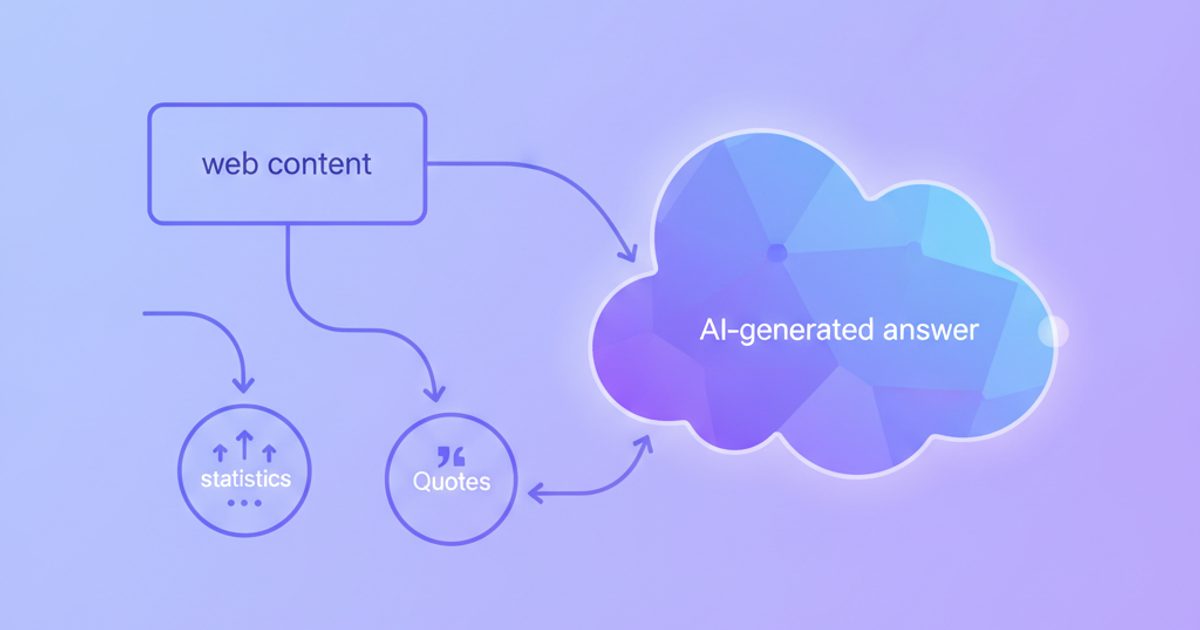
That said, a few practices show up across almost every engine, based on the research above:
- Add specific statistics and direct quotations rather than generic claims - the original GEO study's single strongest lever.
- Keep content fresh. Frase (2025) found roughly half of all content cited in AI answers was published or updated within the previous 13 weeks.
- Structure content so a single passage answers a single question cleanly - AI systems retrieve passages, not whole pages, so a page that buries its best answer in the middle of a long paragraph is harder to cite than one with a clear, extractable block.
- Earn placement on the sources AI engines already trust. The 5W Citation Source Index (2026) found the top 15 domains across the web capture 68% of all AI citation share, so being referenced or covered by those domains carries real weight.
A Worked Example
The clearest way to see generative engine optimization is side by side. A typical unoptimized product page might say: "Our software helps teams manage customer feedback more efficiently." That sentence is a generic claim with nothing an AI model can quote or verify, so it is easy for a generative engine to skip in favor of a competitor's page that offers something concrete.
The generative-engine-optimized version of the same claim might read: "In a 2026 internal analysis of 400 support teams, teams using structured feedback tagging resolved tickets 31% faster than teams using free-text notes." That version has a number, a timeframe, and a specific, checkable claim - exactly the pattern the original GEO research found AI engines were more likely to lift into a generated answer. Nothing about the underlying product changed. Only the way the claim was written did.
How to Tell If It's Working
Unlike a search ranking, a citation inside an AI answer does not show up in a standard analytics dashboard. Confirming generative engine optimization is working means running the actual prompts a target customer would ask, across the actual engines that matter (ChatGPT, Claude, Gemini, Perplexity), and checking whether the brand shows up, how it is described, and which competitors show up instead. That kind of live, repeated tracking - not a one-time check - is what separates a real GEO measurement practice from a guess.
It also means the definition in this article is the starting point, not the finish line. Knowing what generative engine optimization means does not tell you whether a specific brand is actually being cited today, by which engines, or against which competitors - that requires running live queries against the engines themselves and tracking the results over time, rather than checking once and assuming the answer stays the same.
For anyone who wants to see where a specific website currently stands before doing any of the tactical work above, AI Rank Lab's free SEO, AEO, and GEO audit tool runs a structured check across these exact signals and reports back what is and is not working today.
Frequently Asked Questions
What is generative engine optimization in one sentence?▾
Who coined the term generative engine optimization?▾
Is generative engine optimization the same as AEO?▾
Does generative engine optimization replace SEO?▾
Is generative engine optimization backed by real research?▾
What's a common misconception about generative engine optimization?▾
How long does it take to see results from generative engine optimization?▾
Get a Free AI Ranking Consultation
Want to improve your brand's visibility in AI search engines like ChatGPT, Gemini, and Perplexity? Fill out the form and our experts will create a personalized strategy for you.

Written by
Devanshu
Chief Marketing Officer & AI Search Optimization Architect
Digital Marketing Strategist & Pioneer in SEO, Answer Engine Optimization (AEO), and Generative Engine Optimization (GEO).


