



Topical authority is the degree to which search engines and AI answer engines treat your site as a dependable source on one specific subject, and you earn it by covering that subject completely and credibly across many connected pages, not with any single page. Google has never confirmed a general "topical authority" score. The only system it has named is a 2023 topic authority system for news, but its documented site-wide signals, its helpful-content questions and the query fan-out behind AI Overviews and AI Mode all reward the same thing: answering the whole cluster of questions on a topic, with real expertise.
This guide separates what Google has actually said from SEO folklore (with a table and primary sources), explains why fan-out retrieval makes complete coverage matter more in 2026, then gives you a step-by-step topical map method, a worked map with a pillar and 19 supporting pages, an internal linking blueprint, and a way to measure coverage when no tool can show you a real "authority" number. Sources checked October 24, 2026.
Key takeaways
- Google's only named "topic authority" system is for news (announced May 2023). For everything else, the confirmed pieces are site-wide signals, a site's "primary purpose or focus" and whether it is "widely-recognized as an authority on its topic".
- Google says third-party "authority" scores "don't correspond to any of Google's own signals". A Domain Rating or a vendor's topical authority score is a proxy, not the thing itself.
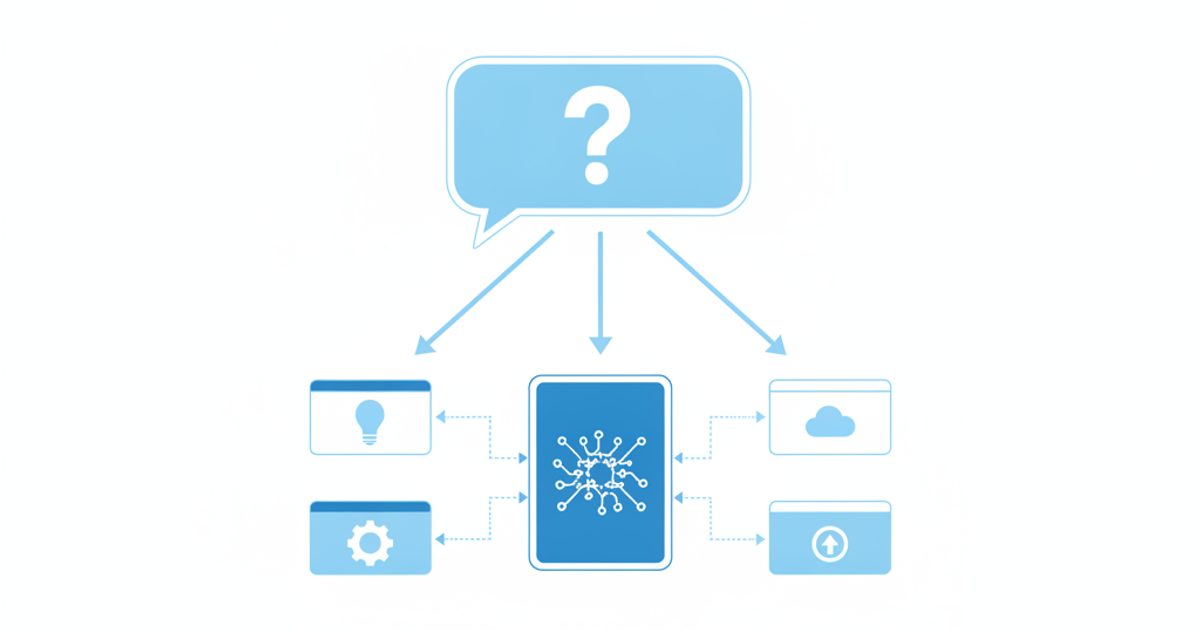
- AI Overviews and AI Mode fan one question out into many related searches. A site that answers the whole cluster has more pages that can be retrieved for those sub-queries.
- Do not build a page per fan-out query. Google's 2026 AI guide says doing that to manipulate rankings or AI answers violates its scaled content abuse policy.
- A sub-question earns its own page only when it has a distinct intent and enough substance to satisfy someone on its own. Everything else is a section of an existing page.
- Measure coverage (questions answered / questions mapped), query breadth in Search Console and AI citation share across repeated runs. No published controlled study gives a reliable timeline.
What is topical authority?
Topical authority is a reputation for a subject, not a metric. It describes how likely a search system is to trust your pages when someone asks about that subject, based on how thoroughly you cover it, how good and original that coverage is, and whether other people recognize you as a source on it. The term came from SEO practitioners, not from Google.
Three distinctions keep the concept useful:
- Topical authority vs domain authority. Domain Authority (Moz), Domain Rating (Ahrefs) and Authority Score (Semrush) are third-party estimates built mostly from backlinks. They are site-wide and topic-blind. Topical authority is topic-specific: a site can have strong links and weak standing on a subject it rarely covers.
- Topical authority vs topical relevance. Relevance is whether one page matches one query. When Google's John Mueller replied "This" to a Reddit comment calling topical authority a fancy word for relevancy, and later told SEOs not to worry about the term, he was pushing back on treating it as a separate ranking lever, as Search Engine Journal reported in November 2023.
- Topical authority vs topic clusters. A topic cluster (a pillar page plus supporting pages linked together) is an architecture. A topical map is the plan for that architecture. Topical authority is the outcome you hope the plan produces.
What has Google actually confirmed about topical authority?
Google has confirmed site-wide signals and a news-only topic authority system, and it has explicitly rejected third-party authority scores and page-count tactics. Everything else is inference. Most ranking guides blur this line. Here is the evidence, claim by claim.
| Claim | Status | What the primary source says |
|---|---|---|
| Google has a "topic authority" system | Confirmed, for news only | Google's May 23, 2023 post describes a system that "helps determine which expert sources are helpful to someone's newsy query in certain specialized topic areas, such as health, politics, or finance", used in Top Stories and other news features. |
| That system uses notability, original reporting and reputation | Confirmed, for news | Named signals: how notable a source is for a topic or location, how its original reporting is cited by other publishers, and its history of high-quality reporting or recommendations from expert bodies. |
| Google uses site-level signals, not just page-level ones | Confirmed | The ranking systems guide (updated December 2025): "Site-wide signals and classifiers are also used and contribute to our understanding of pages." It adds that good site-wide signals do not make every page rank well. |
| Lots of unhelpful content can hold back a whole site | Confirmed (2022), now part of core ranking | The August 2022 helpful content post introduced a site-wide signal: content on sites "determined to have relatively high amounts of unhelpful content overall is less likely to perform well". The ranking systems guide says this system became part of core ranking in March 2024. |
| Focus and recognition on a topic matter | Confirmed as self-assessment questions, not a formula | Google's helpful content guidance (updated October 5, 2026) asks "Does your site have a primary purpose or focus?" and whether a researcher would find the site "well-trusted or widely-recognized as an authority on its topic". |
| Third-party authority scores reflect Google's view | Rejected by Google | Google's March 2024 core update FAQ: third-party "reputation" or "authority" scores "don't correspond to any of Google's own signals nor come from Google." |
| Google scores how focused a site is (siteFocusScore, siteRadius) | Unconfirmed | These attribute names appeared in internal API documentation leaked in May 2024. Google confirmed the documents were real but cautioned against "inaccurate assumptions". The leak shows a field exists, not how or whether it is weighted. |
| More pages on a topic means more authority | Rejected by Google | The 2026 guide to generative AI search: "a high quantity of pages doesn't make a website higher quality or more relevant to users." |
| A page for every fan-out query helps AI visibility | Rejected, and a policy risk | Same guide: creating separate content for fan-out queries "primarily to manipulate rankings or generative AI responses" violates the scaled content abuse policy. |
| Topical coverage predicts AI citations | Observed correlation, not proven cause | A 2026 observational study and a fan-out ranking study (both below) find positive correlations, while a 2025 Ahrefs analysis found fan-out does not explain many citations. None tested whether publishing more causes citations. |
| Topical authority takes 6 to 18 months | Speculation | No published controlled study supports a fixed timeline. Google's only timing statement is that the 2022 site-wide signal could be applied "over a period of months". |
The practical reading: Google rewards sites that are focused, demonstrably expert and recognized by others on a subject, and it can judge some of that at site level. It does not reward volume. Notice how closely the news system's signals (notability for a topic, being cited by others, reputation) resemble what the helpful content questions ask of every site.
Is topical authority a ranking factor?
Not as a single named factor outside news. It is better understood as the combined effect of signals Google does confirm: page relevance across many queries, site-wide quality and focus signals, links and mentions from others, and content that shows first-hand expertise. That is why you cannot "add" it with a plugin or a score, and why a vendor's topical authority number can move without your rankings moving.
Why does topical authority matter more in AI search?
Because AI search retrieves pages for many sub-questions at once, a site that answers the whole cluster has more chances to be retrieved and cited. Google's generative AI guide describes two mechanisms. Retrieval-augmented generation pulls pages from the normal Search index to ground the answer. Query fan-out is "a set of concurrent, related queries generated by the model". Its example: "how to fix a lawn that's full of weeds" fans out to "best herbicides for lawns", "remove weeds without chemicals" and "how to prevent weeds in lawn". Google's AI features page confirms both AI Overviews and AI Mode may issue "multiple related searches across subtopics and data sources".
A lawn-care site with one great herbicide page competes for one of those searches. A site that answers all three, and links them, competes for all of them. That is topical coverage turned into retrieval opportunities. We explain the mechanics in depth in our query fan-out guide; here is what the 2025-2026 data says about coverage specifically.
- Fan-out is wide and mostly invisible to keyword tools. Seer Interactive ran 501 prompts with forced grounding on Gemini 3 and counted 10.7 fan-out queries per prompt on average (range 3 to 28), up from 6.01 on Gemini 2.5. 95% of those queries had zero recorded search volume (November 2025).
- Ranking for sub-queries correlates with AI Overview citations. Surfer generated about 33,000 fan-outs with Gemini for 10,000 keywords and analyzed 173,902 URLs. Of cited pages that ranked, 51.2% ranked for the main query and at least one fan-out, versus 19.6% for the main query alone, and the Spearman correlation between fan-out rankings and citations was 0.77 (Surfer, updated October 22, 2026). Surfer notes the fan-outs are a Gemini proxy and that only about 27% repeated across runs.
- Within-topic coverage predicts held-out citations, modestly. Wellows split 9,471 questions in 151 topics into two halves and checked whether sites cited across one half were cited on the other (247,397 snapshots, January to May 2026). The average within-topic Spearman correlation was 0.29 for AI Overviews, 0.28 for AI Mode, 0.25 for Perplexity, 0.20 for Gemini and 0.13 for ChatGPT (Wellows, September 2026).
- But the counter-evidence matters. Ahrefs found 76.1% of AI Overview citations (1.9 million citations, 1 million AI Overviews, July 2025) came from pages already in the top 10, and its test of the fan-out explanation for the remaining citations did not hold up: pages cited from outside the top 10 matched fewer keywords, not more.
Two honest conclusions follow. First, coverage helps mostly by making you a strong, rankable candidate for more of the sub-queries, not by tricking a model. Second, the strongest predictor in the Wellows data was not coverage at all: it was how widely a site gets cited on other topics (0.29 to 0.37 on every engine). Recognition beyond your own pages, the same thing Google's news system calls notability and influence, is part of the picture. Our guide to entity SEO for AI search covers how engines work out who you are.
What our own tracking data adds
Across 972 successful runs of 42 prompt-engine pairs tracked in AI Rank Lab between February 13 and October 22, 2026 (pairs with at least five runs, aggregated and anonymized), the median pair cited 2.7 times as many distinct domains across all its runs as in a single run, and in the median pair only 3.4% of cited domains appeared in every run. In 42.9% of pairs, whether the tracked brand was mentioned flipped at least once. The method is described in our AI answer stability study.
This does not measure topical authority. What it shows is that the set of sources an engine cites for any one question rotates heavily from run to run. One page that answers one question gets a lottery ticket. A cluster that answers the question and its neighbors gets many, which is the practical case for covering the topic rather than the keyword.
Does topical authority work the same in ChatGPT, Claude and Perplexity?
Not quite. In the Wellows data, once sites with similar cross-topic reach were compared, within-topic coverage still correlated with citations on AI Overviews (0.208), AI Mode (0.197) and Perplexity (0.185), but barely on ChatGPT (0.043). The study shows the difference, not the reason. One plausible explanation is that ChatGPT retrieves through its own search providers rather than Google's index, so for ChatGPT it pays to also check whether you appear in the sources it leans on. See which sources LLMs cite for the patterns by engine.
How do you build a topical map step by step?
Start from the questions your audience asks about one subject you are qualified to cover, group them by intent, give each distinct intent exactly one page, and fold everything else into sections. The steps below are the method we used to build the worked example in the next section.
- Draw the topic boundary. Write one sentence: "We are the best source on X for Y people because Z." Z must be real (product data, practitioners on staff, years of doing the work). Google's helpful content guidance warns against entering "some niche topic area without any real expertise" for traffic. Anything outside the boundary goes on a "not us" list.
- List the entities and subtopics. Name the central entity (the thing the topic is about), its types, attributes, processes, tools, rules and adjacent decisions. This becomes the skeleton of the map.
- Collect real questions, not just keywords. Pull People Also Ask boxes, related searches, Search Console queries for pages you already have, sales and support tickets, forum threads and competitor headings. Then capture what AI engines actually search: the Gemini API's grounding tool returns the queries the model executed for a prompt. Because most fan-outs have no search volume, this step finds questions keyword tools miss. Our prompt research guide shows how to turn these into a tracked prompt set. In AI Rank Lab, the Content Suite suggests prompts and topics from an analysis of your site and competitor research, which speeds up this step.
- Group questions by intent. Questions that would be satisfied by the same answer belong together, whatever their wording. A quick test: if two queries return mostly the same top results, they are one intent.
- Decide page or section for every group, using the decision table below. This is where most topical maps go wrong.
- Map what you already have. Assign existing URLs to groups and label each keep, improve, merge or remove. Two pages chasing one intent is cannibalization; merge them and redirect.
- Prioritize. Score each planned page on business value, the size of the gap and whether you can add something first-hand (data, a template, a test). Build the pillar and the highest-scoring pages first.
- Plan links and publishing order before writing. Every page gets its parent, its siblings and its next step decided up front, so nothing ships orphaned.
Should a sub-question get its own page or a section?
| Signal | Own page | Section of an existing page |
|---|---|---|
| The searcher wants to do something different (compare, calculate, comply, buy) | Yes | No |
| A complete answer needs steps, a table, a template or a tool | Yes | Rarely |
| The answer is a definition or two to three sentences | No | Yes |
| Its top results mostly overlap with another page in your map | No, merge | Yes |
| You can add first-hand evidence nobody else has | Strong yes | Possible |
| Only the wording, city or variant changes, with no new facts | No (scaled content risk) | Yes, as a row in one table |
What does a topical map look like? A worked example
Below is a complete map for a hypothetical company that sells employee scheduling software. It is illustrative, built for this article, not a client project. The topic boundary: "We are the best source on shift scheduling for managers of hourly teams, because our product team works with scheduling data every day." The pillar answers the broad question; each supporting page owns one distinct intent and the sub-question an engine is likely to fan out to.
| # | Page | Type | Intent | Sub-question it answers | Links to |
|---|---|---|---|---|---|
| P | Employee shift scheduling: a manager's guide | Pillar | Learn | How do I schedule hourly employees well? | All 19 pages |
| 1 | Shift patterns compared: 2-2-3, DuPont, Pitman, 4-on-4-off | Comparison | Choose | Which 12-hour shift pattern is best? | P, 2, 12 |
| 2 | Rotating vs fixed shifts | Explainer | Choose | Are rotating shifts bad for staff? | P, 1, 9 |
| 3 | How to make a staff schedule in a spreadsheet | How-to | Do | How do I build a schedule in Excel or Sheets? | P, 4, 16 |
| 4 | Free weekly shift schedule template | Template | Do | Is there a free employee schedule template? | P, 3 |
| 5 | Predictive scheduling laws by state and city | Reference (reviewed by an employment lawyer) | Comply | Which places require advance schedule notice? | P, 6, 7 |
| 6 | Overtime and scheduling: what the FLSA requires | Reference | Comply | When does a schedule trigger overtime pay? | P, 5, 14 |
| 7 | On-call shifts: pay rules and fair practice | Reference | Comply | Do I have to pay employees who are on call? | P, 5, 6 |
| 8 | How to handle shift swaps without chaos | Process | Do | How should employees trade shifts? | P, 9, 16 |
| 9 | Reducing no-shows and late arrivals | Playbook | Fix | How do I stop employees missing shifts? | P, 8, 2 |
| 10 | Split shifts: definition, rules and when to use them | Explainer | Learn | Are split shifts legal? | P, 5 |
| 11 | Restaurant scheduling | Vertical guide | Do | How do restaurants schedule around rushes? | P, 13, 14 |
| 12 | Nurse and healthcare shift scheduling | Vertical guide | Do | How do hospitals build nurse rotas? | P, 1, 6 |
| 13 | Retail scheduling for peak seasons | Vertical guide | Do | How many staff do I need for the holidays? | P, 11, 14 |
| 14 | How to forecast labor demand | Method | Plan | How do I know how many people to schedule? | P, 15, 13 |
| 15 | Labor cost percentage calculator | Tool | Calculate | What should my labor cost percentage be? | P, 14 |
| 16 | Best employee scheduling software | Comparison | Buy | Which scheduling app should I use? | P, 17, 18 |
| 17 | Our product vs a named competitor | Comparison | Buy | How does X compare with Y? | P, 16, 18 |
| 18 | Scheduling software pricing explained | Commercial | Buy | How much does scheduling software cost? | P, 16 |
| 19 | What 12 months of anonymized shift data shows about no-shows | Original study (only with real data) | Learn | When are no-shows most likely? | P, 9, 14 |
What did not get a page matters as much:
- "What is an employee schedule?" and "benefits of scheduling" are sections of the pillar. They are definitions, and their results overlap with the pillar's.
- "Predictive scheduling law in [city]" for 15 cities is one page (5) with a table row per city, not 15 near-identical pages. Separate pages would only change the city name, which is the pattern Google's scaled content abuse policy describes.
- "Shift scheduling tips" and "how to schedule employees" are the pillar's intent with different wording. A second page would compete with the pillar.
- Payroll and hiring sit outside the boundary for now. They are adjacent, but the company has no special expertise there, so they go on the "not us" list.
Page 19 is the one that makes the cluster citable: it is the only page in the map that contains information no other site has. Google's AI guide is explicit that "a first-hand review provides a unique perspective" while "a summary of existing content simply restates information already available elsewhere". A cluster built entirely from summaries is complete but interchangeable.
How should internal links connect a topic cluster?
Link the pillar to every supporting page, every supporting page back to the pillar, and siblings to each other wherever the reader's next question lives, always with descriptive anchor text. Internal links are how crawlers find the cluster and how readers (and retrieval systems) understand which page owns which question. Google lists "making your content easily findable through internal links" among the SEO fundamentals that still apply to AI features.
| Link type | From and to | Purpose | Rule of thumb |
|---|---|---|---|
| Hub to spoke | Pillar to each supporting page | Discovery and hierarchy | Link in context in the relevant section, plus a short "in this topic" list. Never leave a spoke reachable only from a sitemap. |
| Spoke to hub | Each supporting page to the pillar | Signals the parent topic | One contextual link early, anchored with the topic name, not "click here" or "our guide". |
| Sibling | Spoke to spoke | Answers the next question | Link only where a reader would naturally go next (overtime page to on-call page). Not every spoke to every spoke. |
| Commercial bridge | Informational page to comparison or product page | Moves ready readers on | One link where the reader has the problem your product solves. Not in every paragraph. |
| Legacy to cluster | Older, high-traffic posts to new pillar | Passes discovery to new pages | Update old posts that mention the topic so new pages get crawled sooner. |
| Breadcrumbs | Every page to its parent path | Consistent structure | Matches the folder or category the cluster lives in. |
Two checks before you publish: every page in the map should be reachable from the pillar in one click, and no two pages should use the same main anchor text for different targets. A shared anchor for two URLs is usually a sign of an intent you have not split cleanly.
How do you measure topical coverage and authority?
You cannot measure topical authority directly, so measure the three things it is made of: how much of the topic you answer, how broadly you rank and get shown, and how often AI engines cite you across the cluster. Google's March 2024 FAQ is the reminder that any single "authority score" from a tool is not Google's view.
| Metric | How to calculate it | Where to get it | Caveat |
|---|---|---|---|
| Coverage ratio | Questions in your map with a satisfying page or section, divided by all mapped questions | Your topical map spreadsheet | Only as good as the question list. Refresh it quarterly. |
| Query breadth | Distinct queries with impressions for pages in the cluster folder, tracked monthly | Search Console Performance report, filtered by page URL | Grows with impressions, not just quality. Watch clicks and positions too. |
| Top-10 share | Share of mapped questions where a cluster page ranks in the top 10 | Rank tracker or Search Console average position | Average position is blended across queries and locations. |
| AI feature impressions | Impressions for cluster URLs in AI Overviews and AI Mode | Search Console's Generative AI performance report (announced June 2026, rolled out to a subset of sites first) | Impressions only at launch, and it does not show which fan-out triggered them. |
| AI citation share | Share of runs in which a cluster URL is cited, across a prompt set that covers the map | An AI visibility tracker, or manual runs logged in a sheet | Answers rotate, so use repeated runs and compare trends, not single checks. |
| Outside recognition | Unlinked and linked mentions of your brand on the topic by other sites | Backlink tools, brand monitoring | Slow-moving, and the strongest predictor in the Wellows data. |
For the AI citation metric, write one or two prompts per supporting page, run them on each engine you care about, and record cited URLs every time. In AI Rank Lab, AI visibility tracking runs the prompts you choose on ChatGPT, Claude, Gemini, Perplexity, AI Overviews and AI Mode and stores every run for comparison, and the citation tracker shows which of your URLs and which competitor domains get cited. Runs happen when you start them; the only automatic re-check is the Action Plan citation tracker, which re-checks prompts you opt in once a week.
How long does it take to build topical authority?
There is no reliable number. The "6 to 18 months" figures that circulate come from agency experience, not controlled studies, and the only timing Google has published is that its 2022 site-wide helpful content signal could be applied "over a period of months". What you can plan around is the order in which evidence tends to appear, and a review cadence for checking it:
- Indexing first. Check Search Console's page indexing report about two weeks after publishing. Nothing else matters until this is true: Google's AI features documentation says a page must be indexed and eligible to show with a snippet to be a supporting link in AI Overviews or AI Mode.
- Query breadth next. Impressions for long-tail and zero-volume questions are the leading indicator. Compare the cluster folder's distinct query count month over month.
- Positions and first citations. Look for improving positions on mid-tail questions and the first AI citations on sub-questions where you added something original. Review quarterly.
- Head terms and steady citation share last. These depend on outside recognition (mentions, links, references) growing alongside the content, so review them twice a year rather than weekly.
Treat this as a checklist order, not a forecast. Starting points differ too much between sites, topics and competitors for any honest promise of weeks or months.
What are the most common topical authority mistakes?
- Thin cluster pages. Twenty 400-word pages that each restate a definition are a cluster on paper and a quality problem in practice. Google's 2022 post is clear that a high share of unhelpful pages can hold back the whole site.
- A page per keyword variation or fan-out query. This is the exact pattern Google's 2026 AI guide calls scaled content abuse. Answer variations inside one strong page.
- Expanding outside the boundary for traffic. Every off-topic post dilutes the "primary purpose or focus" question Google asks you to answer about your site.
- Rewriting the current top 10. A map tells you which questions to answer, not what to say. Pages with nothing first-hand are interchangeable with the sources they summarize.
- Orphaned or one-way clusters. Spokes that link to the pillar but are not linked from it, or a pillar nobody links to from the rest of the site.
- Ignoring existing pages. Publishing new pages beside older ones on the same intent creates cannibalization. Merge first, then expand.
- Optimizing a vendor score. A tool's topical authority number is a useful coverage proxy, but Google says those scores are not its signals.
- Publishing a cluster all at once with AI and no review. The scaled content policy targets the purpose and value, "no matter how it's created", so speed is not the risk; pages without added value are.
Which tools help with topical maps and coverage tracking?
Disclosure: AI Rank Lab is our product. We list it first because this is our site, and we've kept the same criteria for every tool below. The criteria: does it help you find questions, map pages, or measure coverage in Google and AI answers? Features are taken from each vendor's own published pages, checked October 24, 2026; we have left out pricing.
| Tool | Best at | Worth knowing |
|---|---|---|
| AI Rank Lab | Finding prompts and topics from your site and competitors (Content Suite), then measuring citations across ChatGPT, Claude, Gemini, Perplexity, AI Overviews and AI Mode | Tracking and fixing (audit, Action Plan, content, publishing) in one place. Prompt runs are on demand, not scheduled. |
| Google Search Console | Query breadth per page and folder, plus AI feature impressions | Free and first-party. Does not show fan-out queries or AI citations outside Google. |
| Ahrefs | Keyword research at scale and grouping by parent topic; a free topical map template and SOP | Strong for search demand. Most fan-out questions have no volume, so pair it with question collection. |
| Semrush | Topic grouping with Keyword Strategy Builder and personalized difficulty | Its topical authority and Authority Score metrics are proprietary proxies. |
| Surfer | Topical map and content editor for on-page coverage | Publishes useful fan-out research; coverage scores are its own model. |
| InLinks | Entity-based topic maps from SERP analysis and site-wide topic audits | Good for spotting missing entities and planning links to pillar pages. |
Where the others are the better choice: if your main need is backlink and keyword research for a large site, Ahrefs and Semrush are built around large keyword and link databases, which is not what AI visibility tools are built for. Search Console remains the only source of Google's own impression data.
The short version
Pick one subject you can genuinely be the best source on. Map the questions people and AI engines ask about it, give each distinct intent one strong page, fold the rest into sections, and link the cluster so every page is one click from the pillar. Add at least one thing nobody else has. Then measure coverage, query breadth and citation share instead of chasing a score Google says it does not use.
If you want to see which of your cluster pages AI engines already cite, and which competitors they cite instead, run your topic's prompts in AI Rank Lab. Signup includes 100 free credits, no card required.
Get a free AI ranking consultation
Want your brand to show up when ChatGPT, Gemini and Perplexity answer questions in your market? Tell us about your site and our team will send a personalized strategy.


