



Entity SEO is the work of making search engines and AI assistants recognize your brand as one specific, well-described thing, instead of a string of words that could mean several things. Google stores those things in its Knowledge Graph, while ChatGPT, Claude, Gemini and Perplexity piece them together from what they learned in training plus the pages they retrieve at answer time - so if your name is ambiguous or your facts disagree across the web, they may describe the wrong company, or a blurred mix of two.
This guide explains both mechanisms from Google's own documentation, maps the sources that actually feed entity facts (including the Wikipedia and Wikidata rules most guides skip), and gives you a copy-ready Organization schema block, a name-collision playbook, a prompt set for checking what each AI engine believes, and a 30-day consolidation checklist. Documentation and policies were checked on October 24, 2026.
Key takeaways
- A keyword is what people type; an entity is the real-world thing behind it, with an ID, attributes and relationships. Entity SEO makes your name resolve to one entity everywhere.
- Google builds knowledge panels automatically from public sources, licensed data and owner input. You can claim a panel and suggest edits, but you cannot write your own description.
- LLMs know a brand through two layers: what they learned in training and what they retrieve live. Little-known brands with word-like names are the most exposed - Peec AI found that on the newest model it tested, one description in twelve described the word instead of the company.
- Organization schema with a stable
@idandsameAslinks is the cheapest identity signal you control. Google says it is not required for AI features, so treat it as identity hygiene, not a ranking trick. - Wikipedia and Wikidata strongly discourage companies from writing about themselves. Disclose, request edits, and earn independent coverage instead.
- Check what engines believe with a fixed prompt set and repeated runs: in our tracking data, 18 of 42 prompt-engine pairs flipped between mentioning and not mentioning the brand at least once.
What is entity SEO, and how is it different from keyword SEO?
In two sentences: a keyword is the text a person types, such as "jaguar price". An entity is the real-world thing behind that text - the car maker, the animal or the football team - with its own identifier, attributes and relationships, and entity SEO is the work of making sure machines connect your name to the right one.
Google described this shift when it launched the Knowledge Graph in 2012 as "things, not strings", using the example of Taj Mahal the monument versus Taj Mahal the musician. At launch the graph held more than 500 million objects and 3.5 billion facts. Generative AI did not replace that idea; it made it more important, because an assistant that writes a paragraph about you has to decide who "you" are before it writes a word.
What does a brand entity consist of?
For a company, the entity is the bundle of facts machines can attach to one identity:
- Names: the canonical name, alternate and former names, and the legal name.
- Category: what kind of thing it is ("payroll software for dental clinics", not just "software").
- Attributes: founding date, headquarters, founders, products, pricing model.
- Relationships: parent company, founders and executives, competitors, the category it belongs to.
- Identifiers: your website URL, social profile URLs, a Wikidata ID if one exists, and registry codes such as a DUNS number or LEI.
Entity SEO sits underneath SEO, AEO and GEO rather than beside them. If the identity layer is broken, better content and more citations get attributed to the wrong thing, or to nothing.
How does Google's Knowledge Graph decide who your brand is?
Google creates entities and knowledge panels on its own once enough consistent information exists on the open web. According to Google's knowledge panel help page, panel facts come from public web sources, licensed data (for things like stock prices and sports scores) and information content owners send directly. There is no application form.
Three inputs are under your control. First, the markup on your home page: Google's Organization structured data documentation (updated September 8, 2026) says the markup helps Google "understand your organization's administrative details" and "disambiguate your organization in search results", and that some properties can influence the logo and knowledge panel shown. Second, the consistency of your public profiles. Third, claiming and correcting the panel once it exists.
How do you claim or correct a Google knowledge panel?
You claim a panel by proving you control an official profile Google already associates with the entity. Google's verification steps are:
- Sign in to a Google Account and search for your brand.
- Click "Claim this knowledge panel" at the bottom of the panel.
- Sign in to one of the official sites or profiles Google lists, such as your YouTube channel or Search Console property. If Google cannot match one, it asks for more information to verify you.
- Once verified, use "Suggest edits" next to the wrong item, describe the problem and include public URLs that support the correction.
Know the limits before you start. Google's editing guidance says it "can't create a custom description" and does not accept custom subtitles; for a wrong description it tells you to contact the original source. Not every panel is claimable, and local businesses manage their details through Google Business Profile instead.
How do you check whether Google has an entity for your brand?
Search your brand name and look for a panel (Kalicube's Jason Barnard points out that featured snippets often look like panels; the share icon is the tell). For a more direct check, the Knowledge Graph Search API returns matching entities with an ID such as kg:/m/0dl567, a type, a description and a resultScore. Google labels the API "not suitable for use as a production-critical service" and is migrating it to Cloud Enterprise Knowledge Graph, and practitioners report that it lags what Search shows, so an empty result is a hint, not proof.
Does entity markup help you appear in AI Overviews?
Not directly. Google's guide to generative AI features says: "Structured data isn't required for generative AI search, and there's no special schema.org markup you need to add." AI Overviews and AI Mode ground their answers in the normal Search index. Entity work helps indirectly: when Google is confident which organization your pages belong to, the right pages surface for brand and category queries, and those are the pages AI features can cite. The same guide warns that "seeking inauthentic 'mentions' across the web isn't as helpful as it might seem", which rules out link-farm style "entity building".
How do LLMs work out which company a brand name refers to?
An AI assistant resolves a brand from two layers. The first is what the model learned during training: associations between your name and other words, drawn heavily from curated text such as Wikipedia, which the Wikimedia Foundation calls "one of the highest-quality datasets in the world for training AI". The second is retrieval: when web search is on, the assistant runs searches, reads the pages it finds and grounds its answer in them.
In both layers, the model uses the words around your name - in the user's prompt and in retrieved pages - to decide which entity is meant. A prompt like "Is Pulse good for clinic payroll?" gives it strong context. A bare "What is Pulse?" does not. When neither layer holds a strong, consistent picture of your company, the model fills the gap from whatever is nearest: the dictionary meaning of the name, or a better-known namesake whose pages the search step returned.
Why do ambiguous or generic brand names hurt in AI answers?
Because for brands a model does not recognize, the name itself becomes evidence. Peec AI's August 2026 study, "AI assistants judge your company by its name", tested this two ways:
- Observational: 904 real brands with single-English-word names, described by ChatGPT, Gemini, Google AI Overview, Google AI Mode and Microsoft Copilot. Brands whose name word scored one point more positive on a 9-point human sentiment scale were described 0.07 points more positively. The author flags this as correlational.
- Controlled: 80 matched pairs of fictional names (one positive word, one negative) run against four neutral company descriptions with web search off, 640 samples per model across four models. The effect held for nearly all models, and on the newest model tested, one description in twelve ignored the company and described the word instead. A fictional payroll firm called "Unethical Inc." was described as "Dishonest, Corrupt, Deceptive".
The finding that matters most for entity work: the effect "shows up only on brands the models don't recognize". Known brands with negative-word names, such as Discord and Slack, were not described by their word meanings. Peec's conclusion is that renaming is not the fix; becoming a well-known, well-described entity is. Peec sells a brand perception tool, so read the recommendations with that in mind, but the method is published in the post.
When you review AI answers about your brand, these five labels make problems easier to sort:
- Semantic takeover: the answer describes the word, not the company.
- Namesake conflation: facts from a same-name company (founder, HQ, pricing) are merged into yours.
- Category drift: you are described by an old product line or the wrong category.
- Stale identity: a former name, former owner or retired product is presented as current.
- Invisibility: the engine has no confident picture of you and leaves you out of unbranded answers.
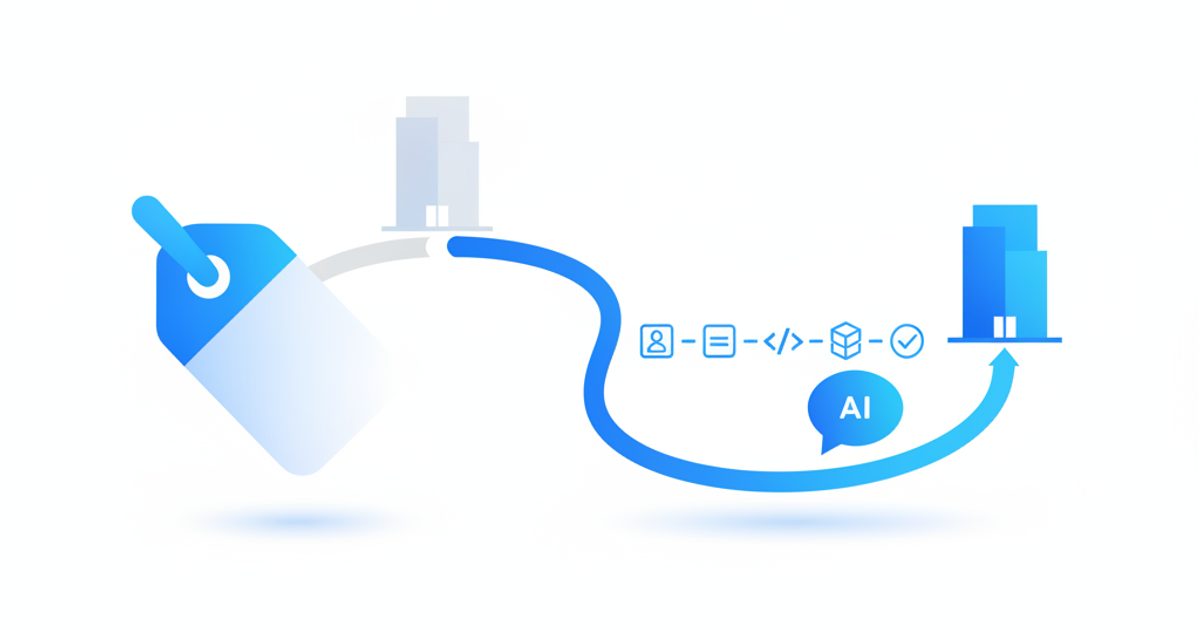
Which sources feed entity facts to Google and AI engines?
No single source decides your entity. Engines corroborate: your own site states the facts, and structured knowledge bases, verified profiles and independent coverage confirm or contradict them. The table below shows each source's role and, just as important, the legitimate way to influence it.
| Source | Role in entity resolution | Who controls it | Legitimate way to influence it | Hard limit |
|---|---|---|---|---|
| Your website (home and About page) | The canonical self-description that everything else is checked against | You | One descriptor sentence, facts stated in text, consistent naming | Self-published, so it cannot establish notability alone |
| Organization schema (JSON-LD) | Machine-readable identity: name, URL, logo, identifiers, sameAs | You | Home page markup per Google's documentation, validated | Not required for AI features; does not guarantee a panel |
| Wikidata | Open structured knowledge base with stable IDs (QIDs); Google's own API docs point to it for graph data | Volunteer community | If an item exists, correct facts with references and disclose paid editing | Creating an item about yourself is "strongly discouraged" |
| Wikipedia | The most reused prose description of an entity; Knowledge Panels often show a Wikipedia snippet; a core training dataset | Volunteer editors | Earn independent coverage; propose changes on the talk page with {{edit COI}} | Direct editing by COI editors is strongly discouraged; paid editing must be disclosed |
| Google Business Profile | Verified local identity: name, address, category, hours | You, after verification | Use your real-world name and the most accurate category | "Including unnecessary information in your business name isn't permitted" |
| LinkedIn company page | Corroborates name, industry, size and people relationships | You | Match the canonical name, descriptor, URL and founding year | Self-reported |
| Crunchbase and business databases | Corroborate founding date, founders, HQ and funding | You plus the database | Claim the profile and keep it identical to your fact sheet | Self-reported fields are only as useful as they are consistent |
| Review sites and directories | Confirm category and product, often cited in AI answers | Platform and users | Correct category, same descriptor, same URL | You do not control reviews |
| Independent press and analysts | What makes you notable, and much of what retrieval finds | Journalists and analysts | Give them real news, data and expertise | Paid or sponsored pieces do not count toward Wikipedia notability |
Notice the pattern: the sources you control state your identity, and the sources you do not control make it credible. That is also why brand mentions and citations behave differently in AI answers, which we cover in brand mentions vs citations in AI search.
Should you create a Wikipedia page or Wikidata item for your own company?
No. Both communities ask companies not to write about themselves, and ignoring that tends to end in deletion and a worse record than having nothing. The specific rules:
- Wikipedia conflict of interest: the COI guideline says COI editors "are strongly discouraged from editing affected articles directly". Propose changes on the article's talk page with the
{{edit COI}}template and submit new articles through Articles for Creation. Anyone paid to edit must disclose who pays them, a Wikimedia Foundation Terms of Use requirement. Fixing vandalism, spelling or broken links is allowed. - Wikipedia notability: the company notability guideline requires significant coverage in multiple independent, reliable, secondary sources, at least one of them regional or wider. Press releases, funding announcements, product launches, "best of" lists and sponsored articles do not count.
- Wikidata: an item is acceptable if it has a Wikipedia sitelink, describes a clearly identifiable entity using "serious and publicly available references", or fills a structural need (Wikidata notability). The community's self-promotion essay calls creating an item about yourself "strongly discouraged" and suggests at least three independent, reputable sources with substantial coverage as a rule of thumb.
Be wary of anyone selling a guaranteed Wikipedia page; the COI guideline states plainly that "paid editors cannot guarantee any outcome". A Wikipedia article is also not a prerequisite for a knowledge panel, since Google builds panels from information across the web. The productive path is earning the independent coverage that would make an article inevitable, and keeping every source you do control accurate.
How do you add Organization schema with sameAs?
Put one JSON-LD Organization block on your home page (or a single About page), give it a stable @id, and list in sameAs only the profiles that are unmistakably you. Google lists no required properties for Organization markup and recommends adding every property that applies. Here is a complete example to adapt:
How to get each part right:
@idis your internal identifier. Reuse the same value wherever another block refers to the company (for example aspublisheron articles). As Momentic's guide to@idnotes, Google processes structured data page by page, so pair the reference withurlrather than assuming blocks merge across pages.sameAsmeans "same entity", not "mentions us". Schema.org defines it as the "URL of a reference Web page that unambiguously indicates the item's identity" (schema.org/sameAs). Link profiles you own and a Wikidata or Wikipedia page only if it already exists and is about you. Never link press coverage or a namesake's page.alternateNameandlegalNametell machines that your short name, former name and registered name are one entity, which matters most after a rebrand.- Identifiers: Google now recommends
iso6523Code(for example a DUNS number with prefix 0060 or an LEI with prefix 0199) over the olderdunsandleiCodefields, and listsvatIDas a trust signal. - Use the most specific type that fits, such as
OnlineStoreor aLocalBusinesssubtype, and a logo of at least 112x112 pixels. - Validate with the Rich Results Test and check indexing with URL Inspection, as Google's documentation recommends.
If you would rather not hand-write JSON, AI Rank Lab's free schema generator builds Organization markup you can paste in. For which other schema types matter for AI answers, see schema markup for AEO and LLM citations.
How do you disambiguate a brand that shares its name with something else?
You cannot own a word, but you can make your entity the easy one to pick. Pair the name with a category descriptor everywhere, use one canonical spelling, connect your identifiers, and get third parties to describe you the same way. The right emphasis depends on what you collide with:
| Collision type | Typical risk in AI answers | What to do |
|---|---|---|
| Name is a common word | Semantic takeover: the answer describes the word | Put the descriptor in every first mention ("Pulse, payroll software for dental clinics"), in title tags and in the schema description |
| Same name, different industry | Namesake conflation: founders, HQ or products merged | State distinguishing facts (founding year, city, founders) on the About page; never link to the namesake in sameAs; keep profile descriptors category-specific |
| Same name, same industry, other country | Wrong HQ, currency or pricing quoted | Include location in the descriptor and schema address; use country-specific profiles and Google Business Profile |
| Name matches a famous person, product or place | Invisibility on the bare name | Accept that the head term belongs to them; win name-plus-category queries and build co-occurrence with your category |
| Rebrand or former name | Stale identity: old name and old facts persist | Add the old name to alternateName, say "formerly X" on the About page, redirect old URLs, update every profile on the same day |
| Acronym or initials | Confused with other expansions of the same letters | Spell out the full name on first use and in legalName; avoid using the bare acronym as the page title |
Then apply these copy rules across your site and profiles:
- Write one descriptor sentence (name, category, audience, one differentiator) and use it verbatim as the opening line of your About page, LinkedIn, Crunchbase and directory listings.
- Keep the spelling and spacing of the name identical everywhere, including capitalization.
- Answer the confusion directly on your own site, for example an About page line such as "Example Pulse is not affiliated with any other company named Pulse". It gives retrieval a clear passage to quote.
- When you pitch press or partners, give them the descriptor sentence so independent coverage repeats it.
How can you check what AI engines believe about your brand?
Ask each engine a fixed set of identity prompts, repeat each one several times, and score the answers against your own fact sheet. One run is an anecdote, not a finding. Start with these probes:
| Probe prompt | What it tests | A correct answer |
|---|---|---|
| What is [Brand]? | Identity and category with no context | Names your category, not the dictionary word or a namesake |
| What does [Brand] do, and who is it for? | Category and audience | Matches your descriptor sentence |
| Who founded [Brand], when, and where is it based? | Attributes | Correct founders, year and HQ, with no merged facts |
| Is [Brand] the same company as [namesake]? | Disambiguation | Clearly separates the two |
| [Brand] vs [main competitor] | Relationships and positioning | Places you in the right category and peer set |
| What are the best [category] tools for [audience]? | Unbranded inclusion | Mentions you, described correctly |
| How much does [Brand] cost? | Freshness | Current pricing or an honest "check the site" |
A workable procedure:
- Write the canonical fact sheet first, so you score against facts rather than impressions.
- Run every probe in ChatGPT, Claude, Gemini, Perplexity and Google AI Mode, and search your brand query to see whether an AI Overview appears and what it cites. Where an engine lets you turn web search off, run it both ways: search off shows the training layer, search on shows retrieval.
- Repeat each prompt at least three times per engine. Answers move more than most teams expect: across 972 runs of 42 prompt-engine pairs tracked in AI Rank Lab between February 13 and October 22, 2026 (pairs with at least five successful runs), 18 pairs (42.9%) flipped between mentioning and not mentioning the tracked brand at least once, and the median overlap of cited domains between consecutive runs was 0.41 (Jaccard). By engine, the flip rate was 6 of 11 pairs for ChatGPT, 5 of 11 for Claude, 4 of 6 for Perplexity and 3 of 13 for Gemini. These were general tracked prompts rather than identity probes, and the samples are small, but the lesson holds: never judge your entity from one answer.
- Score each answer: right entity, right category, right facts, any namesake confusion, and which sources were cited.
- Trace every wrong fact to the page the engine cited, fix or request a fix at that source, and re-run once the corrected page is crawled. Our guide to fixing wrong AI answers about your brand covers that tracing step in detail.
To skip the copy-paste, you can save the probes as prompts in AI Rank Lab's brand visibility tool and run them across ChatGPT, Claude, Gemini, Perplexity, Google AI Overviews and AI Mode. Each run records whether you were mentioned, your position and sentiment, which competitors appeared and which URLs were cited, and every run is stored so you can compare before and after. Runs happen when you trigger them, so plan your re-checks. For help choosing prompts beyond identity probes, see prompt research for AI visibility tracking.
A 30-day entity consolidation checklist
Thirty days is enough to make every source you control consistent and to measure a baseline twice. It is not enough to force a knowledge panel or retrain a model, so the checklist ends with a comparison, not a promise.
| Days | Task | Done when |
|---|---|---|
| 1-3 | Write the canonical entity sheet: official, alternate and legal names, descriptor sentence, founding date, HQ, founders, parent company, official URLs | One approved document exists and marketing, PR and support all use it |
| 3-5 | Baseline: brand search on Google, a Knowledge Graph Search API lookup, and the probe prompts run three times per engine | Results logged per engine with the problem labels above |
| 6-10 | Entity home: rewrite the About page opening around the descriptor; state key facts in plain text; add the category to the home page title | A reader can answer "what is it, who is it for, who runs it" from the first paragraph |
| 8-12 | Organization schema with @id, sameAs, logo and identifiers on the home page | Passes the Rich Results Test; URL Inspection shows the live page indexed |
| 11-18 | Profile sweep: LinkedIn, Crunchbase, Google Business Profile, social accounts, review sites, app stores, directories, executive bios | Same name, descriptor, URL and founding year everywhere; duplicates merged or closed |
| 15-20 | Knowledge panel: claim it if one exists and submit evidence-backed corrections | Claimed, or noted as "no panel yet" |
| 18-24 | Wikipedia and Wikidata: review existing entries; request corrections with disclosure and references; do not create new ones | Requests filed, or a list of independent coverage measured against the notability bar |
| 20-27 | Disambiguation and coverage: publish the "not affiliated with" clarification where needed; plan one piece of earned coverage (original data, expert commentary) | Clarification live; pitch sent with the descriptor sentence |
| 28-30 | Re-run the same probes on the same engines and compare with the baseline | Each remaining error tagged as retrieval-driven or training-driven |
That last tag decides what happens next. Retrieval-driven errors, where the engine cited a page with the wrong fact, can change as soon as the corrected page is crawled. Training-driven errors, which appear with web search off, change only when the model is retrained, which typically takes months and is out of your hands. Knowledge panels update on Google's schedule. Keep the sheet current and re-run the probes after every model release and every company change.
What entity SEO cannot do
Being honest about limits keeps the work focused:
- It cannot guarantee a knowledge panel. Google generates panels automatically, and some entities never get one.
- Schema is not an AI ranking lever. Google says no special markup is needed for AI features. Markup clarifies identity; it does not earn citations on its own.
- It will not win a bare name against a far more famous namesake. Win the name-plus-category queries instead.
- It does not replace being notable. Consistency makes you easy to identify; independent coverage and genuine expertise make you worth mentioning. Our guide to E-E-A-T trust signals for AI search covers that second half.
If you want to see how ChatGPT, Claude, Gemini, Perplexity and Google's AI features describe your brand today, add your identity probes to AI Rank Lab and run them once before you change anything. That baseline is what turns the 30 days above into a measurable result.
Get a free AI ranking consultation
Want your brand to show up when ChatGPT, Gemini and Perplexity answer questions in your market? Tell us about your site and our team will send a personalized strategy.


