


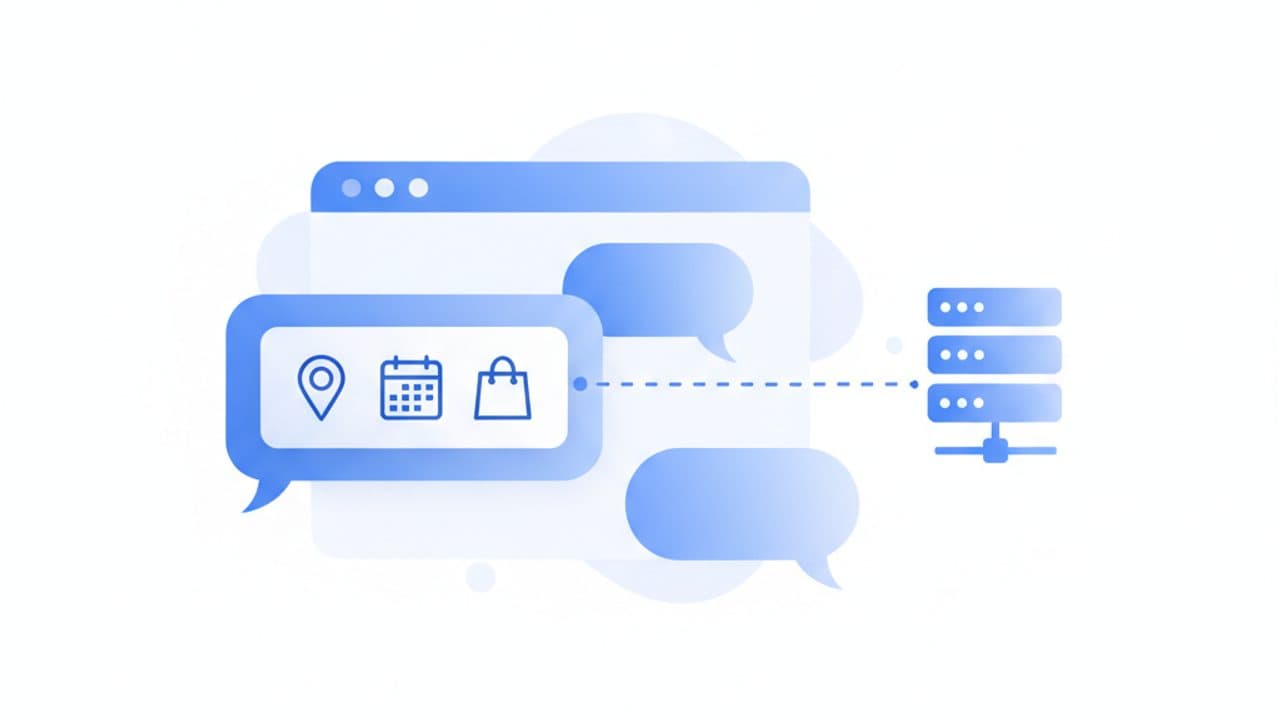
A ChatGPT app is a connection between ChatGPT and your own service, built as an MCP server and optionally a small interface, that ChatGPT can call in the middle of a conversation to fetch your live data or take an action for the user. Since July 9, 2026, OpenAI packages these apps as "plugins" and lists them in a Plugin Directory shared by ChatGPT and Codex, but the building blocks people still call the ChatGPT Apps SDK are the same. Most brands should build one only if users want to finish a specific task in chat that needs your data (search inventory, book, get a quote, check an order), and only after checking that ChatGPT already mentions them for the prompts that app would serve.
The pages that rank for "ChatGPT Apps SDK" are written for developers. This one is for the marketer or founder who has to decide whether to fund one. It covers what changed in the July 2026 rename, how users actually find apps, which brand use cases pass OpenAI's rules, what a build involves, a build, wait or skip table, how apps compare with organic citations and ChatGPT ads, and how to measure the result. Every rule below was checked against OpenAI's developer documentation on October 24, 2026. This platform changes every few months, so re-check anything you plan to spend money on.
Key takeaways
- ChatGPT apps are now distributed as plugins (since July 9, 2026). A plugin can hold skills, an MCP server, or both. The MCP server with optional UI is what used to be the "app".
- Users reach an app by naming it or using @, by searching the directory, or through suggestions and entity-card buttons that OpenAI reserves for plugins with "strong real-world utility and high user satisfaction".
- Commerce is limited to physical goods. Plugins cannot sell subscriptions, digital goods or credits, cannot serve ads, and cannot advertise pricing or promotions in their listing.
- OpenAI's submission docs list no listing fee or revenue share as of October 24, 2026. The cost is your engineering, hosting, review preparation and ongoing maintenance.
- An app does not replace organic visibility. Across 240 ChatGPT runs tracked in AI Rank Lab (February to October 2026), the brand's mention flipped on and off for 6 of 11 prompt-engine pairs, and 4 pairs never mentioned the brand at all. If ChatGPT does not think of you, it is unlikely to suggest your app.
What is a ChatGPT app, and why is it now called a plugin?
A ChatGPT app is a set of tools hosted on your servers that ChatGPT can call when a user's request matches them. OpenAI's own definition, from its post What makes a great ChatGPT app, is "a set of well defined tools that can perform tasks, trigger interactions, or access data." It is not a mini copy of your website or mobile app. The model decides when to reach for it, based on the names and descriptions you give each tool.
The name has changed more than the technology. Here is the timeline a marketer needs:
- October 6, 2025: OpenAI introduced apps in ChatGPT and the Apps SDK in preview, built on the Model Context Protocol (MCP), with launch partners including Booking.com, Canva, Coursera, Expedia, Figma, Spotify and Zillow. At launch, apps were available to logged-in users outside the EU.
- November 13, 2025: apps reached ChatGPT Business, Enterprise and Edu in preview, according to an update on the same OpenAI post.
- December 17, 2025: OpenAI opened app submissions and launched an app directory. Approved apps began rolling out in early 2026.
- July 9, 2026: the app directory was migrated to a Plugin Directory shared by ChatGPT and Codex. Existing app connections kept working.
- September 11, 2026: OpenAI announced it plans to retire custom GPTs and offer a migration path to plugins, with Enterprise retirement scheduled for December 11, 2026 per its custom GPT retirement FAQ (dates subject to change).
OpenAI's plugin architecture page now describes a plugin as a package that can contain skills (written instructions for repeatable workflows), an MCP server (tools that connect to your systems), or both. The old developer URL for the Apps SDK redirects there. If you read an article that says "App Directory" or "chatgpt.com/apps", it predates July 2026. The current directory lives at chatgpt.com/plugins.
| Term you will hear | What it means in October 2026 |
|---|---|
| Apps SDK | The developer toolkit and docs for building MCP-backed experiences with UI in ChatGPT. Docs now live under "Plugins". |
| App | The integration itself: an MCP server that connects ChatGPT to your data and actions, optionally with UI. |
| Plugin | The installable package listed in the directory. It can bundle skills, an app (MCP server), or both. |
| Skill | A folder of instructions and resources that teaches the model a workflow. Can ship without any server. |
| MCP Apps | The open MCP Apps standard for interactive UI returned by an MCP server. ChatGPT implements it, and so do Claude, VS Code GitHub Copilot and Microsoft 365 Copilot. |
| 2023 ChatGPT plugins | A different, retired system. OpenAI shut it down in April 2024. Same word, new product. |
How do users discover apps in ChatGPT?
Users find a ChatGPT app in four ways: by naming it, by searching or browsing the directory, through suggestions ChatGPT makes during a conversation, and, for a few beta categories, through buttons on ChatGPT's own result cards. Only the first two are fully in your control, and both require the user to already know your brand.
- Naming the app or using @. OpenAI's launch post says that if a user starts a message with an app's name, ChatGPT can surface the app in the chat. Once installed, a plugin can be called by typing @ and selecting it, or from the tools menu.
- Directory search and browse. In a test published in September 2026, Scrimba found that only plugins OpenAI selects for enhanced distribution appear on the directory's main pages, while search covers the full directory. It also found its own product was listed under a different name ("Explain Video Generator"), so searching the brand name did not find it. Your listing name matters.
- Suggestions in conversation. OpenAI's example is a user talking about buying a home, where ChatGPT can surface the Zillow app. The plugin guidelines are explicit that this is earned: plugins "that demonstrate strong real-world utility and high user satisfaction may be eligible for enhanced distribution opportunities, such as directory placement or proactive suggestions."
- Buttons on ChatGPT's entity cards (beta). OpenAI publishes conversion specs for restaurant reservations, local service quotes and product checkout. In the restaurant reservation spec, when users search for restaurants, the restaurant card includes a Reserve button that opens the partner's reservation UI. These are in beta with approved partners, who apply through OpenAI's merchants form and supply a feed.
The fourth route is the one most coverage misses, and it changes the build decision. The Reserve, Get Quote and Open buttons appear on cards ChatGPT shows because it already chose that restaurant, business or product as an answer. An app plugs into organic discovery; it does not create it. The same logic applies to suggestions: ChatGPT can only suggest your app in a conversation where your category, and ideally your brand, is already relevant.
Inside a conversation, the model decides whether to call your tools from the metadata you write. OpenAI's Optimize Metadata guide says to treat tool names, descriptions and parameter docs "like product copy" and to test them against a "golden prompt set" of direct prompts (users name your product), indirect prompts (users describe the outcome without naming you) and negative prompts (where your tool should stay quiet). That indirect set is, in practice, the same list of prompts you would track for organic AI visibility.
Which brands have ChatGPT apps today?
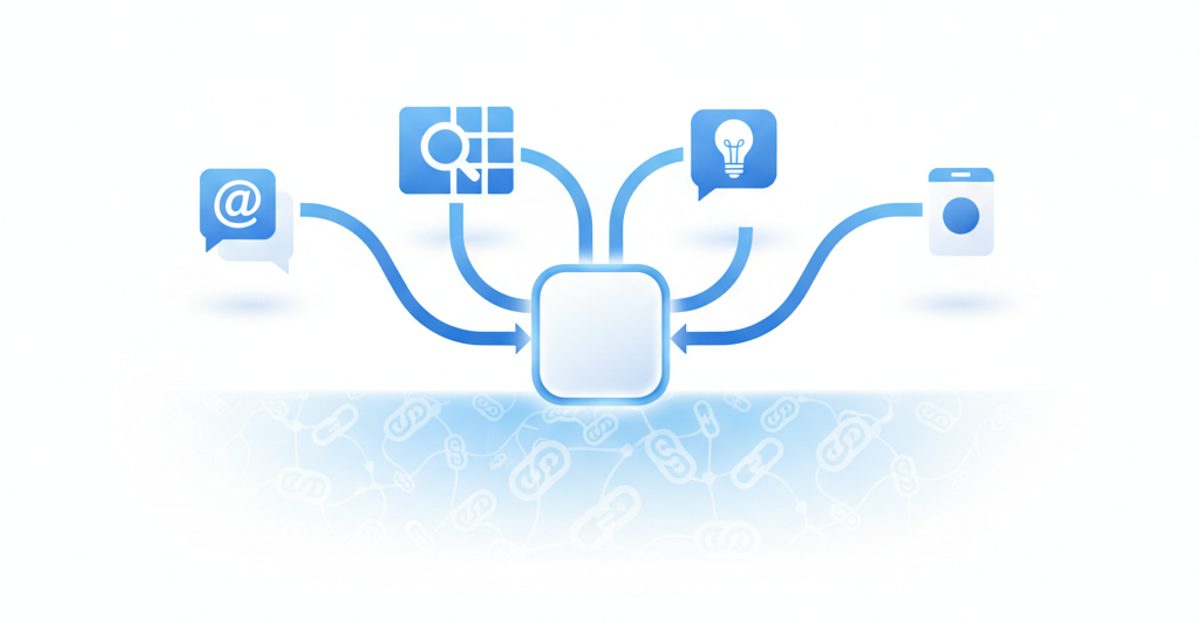
The brands with live ChatGPT apps share one trait: they own live inventory, a transaction or a tool that a text answer cannot replace. Examples we could verify from primary or trade sources:
- Launch partners (October 2025): Booking.com, Canva, Coursera, Expedia, Figma, Spotify and Zillow, named in OpenAI's launch post.
- Skyscanner (February 27, 2026): flight search inside ChatGPT for the UK and US, with follow-up messages to change dates or airports and a redirect to complete the booking, reported by Travolution. The same report says Booking.com, Expedia, Accor and Awaze have apps too.
- MoneySuperMarket (February 2026) launched an app and Rightmove announced one, according to UK agency ROAST (April 2026).
- Workplace software: Canva, Figma, HubSpot, Linear, Notion and GitHub are among the plugins described in a September 2026 roundup by Composio.
Two limits on this list. First, we could not open the directory with an automated browser, so we cannot confirm each listing is live in every market today. Second, none of these brands has published usage or conversion numbers for its app. Anyone who quotes app ROI figures in 2026 is guessing or selling.
What does building a ChatGPT app involve?
Building a ChatGPT app means running an MCP server on a public HTTPS endpoint, optionally adding UI, wiring up sign-in if users have accounts, testing it inside ChatGPT, and passing OpenAI's review. Here is the sequence from OpenAI's use-case, testing and submission docs, translated for a non-developer:
- Write a use-case inventory. List what people would ask an installed version of your app, both directly ("show my Acme order") and indirectly ("where is my parcel?"). Record the goal, required data, safety boundary and whether version one supports it. This is the brief your developers build from.
- Build the MCP server. It exposes each action as a separate tool with a clear name, input schema and description. Every tool must declare whether it only reads data, whether it can destroy or overwrite something, and whether it reaches the open internet (the readOnlyHint, destructiveHint and openWorldHint annotations).
- Add UI only where it helps. OpenAI says custom UI is optional and worth adding when people need to "inspect, compare, edit, confirm, or navigate" information. The UI guide offers four sizes: an inline card, an inline carousel, fullscreen and picture-in-picture.
- Set up authentication. If users sign in, the portal supports OAuth or no authentication. API-key and bearer-token connections are not supported in the submission portal.
- Test in ChatGPT. Add the server in ChatGPT as a custom MCP server, then run your golden prompt set and record which tool fired, with what arguments, and whether the UI rendered. Apps must work on desktop and mobile.
- Prepare the submission. Verify your organization in the OpenAI Platform, publish a privacy policy and a support contact, pass a domain verification challenge, and supply five positive test cases, three negative test cases, a video walkthrough, release notes, and a reviewer account with sample data that works without MFA codes.
- Review, publish, maintain. One review can be active at a time and feedback comes by email. Once approved, you choose when to publish. After that, OpenAI scans your MCP server daily, and eligible tool changes go live after automated checks. New tools stay unavailable until approved.
How much does it cost to build a ChatGPT app?
There is no published listing fee or revenue share in OpenAI's plugin docs as of October 24, 2026, so the cost is internal. A proof of concept can be quick: TELUS Digital built a stock and news tracker in 48 hours in late 2025. A production app that passes review is a bigger job, mostly because of authentication, test cases and ongoing maintenance. We are not publishing dollar estimates because no reliable public data exists; use this table to scope it with your team instead.
| Cost component | What it involves | What makes it bigger |
|---|---|---|
| Use-case and prompt design | Use-case inventory, golden prompt set, tool descriptions | Many user intents, regulated copy review |
| MCP server | Tools over your existing APIs, hosting on public HTTPS | No clean internal API, write actions that need confirmation flows |
| UI components | Optional cards, carousels or fullscreen views | Maps, configurators, checkout with saved payment methods |
| Authentication | OAuth sign-in for existing customers | Legacy identity systems, enterprise SSO, no OAuth provider |
| Review preparation | Privacy policy, test cases, demo video, reviewer account with sample data | Rejections and resubmissions, iframe embeds that need extra review |
| Maintenance | Daily scans, schema compatibility, metadata tuning, platform changes | OpenAI renaming or reshaping the platform again, as it did in July 2026 |
Should your brand build a ChatGPT app? Build, wait or skip
Build when your app passes OpenAI's "know, do or show" test, meaning it gives ChatGPT data it cannot see, takes an action, or shows something better than text, and when the use case is allowed under the commerce rules. Wait when the route you need is still a partner beta. Skip when your value is content ChatGPT can already summarize or when your business model is one the guidelines prohibit.
| Use case | Verdict | Why |
|---|---|---|
| Travel, booking or reservation search with live availability | Build | Live inventory is "know" plus "do". Booking can redirect to your site. Restaurant reservations have a dedicated conversion spec (partner beta). |
| Physical-goods catalog search for retailers | Build or test | Physical goods are the one allowed commerce category. External checkout on your domain is generally available; in-chat Instant Checkout is limited to select partners. |
| Order status, account lookups for existing customers | Build | Sign-in to an existing account is allowed and useful. Low risk, clear user goal, read-only tools. |
| Calculators and configurators using your own data or pricing logic | Build if the output depends on your data | Passes "know" or "show". If ChatGPT can do the same math without you, it fails the originality rule. |
| Local services quotes | Wait | The Get Quote spec is a beta for approved partners and needs local business data. Apply, then build. |
| SaaS wanting new subscribers | Wait | Plugins must not display plans, start subscriptions or promote upgrades. Useful for retention, not acquisition. |
| Digital goods, courses, credits or paid content | Skip for now | Selling digital products or services is not allowed, including freemium upsells. |
| Publishers and content-only brands | Skip | Copying articles into an app adds nothing ChatGPT cannot already do. Invest in being cited instead. |
| Prohibited categories (Rx drugs, gambling, nicotine, firearms, money transfers) | Skip | Listed as prohibited goods and services in the plugin guidelines. |
| Any brand ChatGPT rarely mentions today | Wait | Suggestions and entity buttons depend on ChatGPT already choosing you. Fix organic visibility first. |
If your use case is commerce, read our explainer on agentic commerce protocols first. For many retailers a product feed and checkout protocol matter more than a branded app.
ChatGPT apps vs organic citations vs ChatGPT ads
These are three different ways to show up in ChatGPT, and they are not substitutes. Organic citations decide whether ChatGPT recommends you in the answer. Ads, as covered in our ChatGPT ads guide, are sponsored cards below the answer for Free and Go users, which OpenAI's ads help article says do not change the answer itself. Apps let users act on a recommendation without leaving the chat.
| Organic citations and mentions | ChatGPT app (plugin) | ChatGPT ads | |
|---|---|---|---|
| What it is | ChatGPT names or links you inside its answer | Your tools and UI running inside the conversation | A labeled sponsored card below the answer |
| How a user reaches it | Asks a question in your category | Names you, installs you, or accepts a suggestion | Sees it next to a relevant answer |
| Who decides | The model, based on retrieved sources | The user, then the model per your tool metadata | An auction among advertisers |
| Your cost | Content, PR and technical work | Engineering, review and maintenance | Media spend per impression or click |
| Can you sell in it? | No, the click goes to your site | Physical goods only, mostly via external checkout | No, the click goes to your landing page |
| Best for | Every brand, first | Brands with live inventory or account data | Brands that need reach now and can test spend |
Why organic comes first: an app cannot be suggested in a conversation where ChatGPT is not thinking about you. Our own data shows how unstable that recommendation is. Across 240 successful ChatGPT runs of 11 prompt-engine pairs tracked in AI Rank Lab between February 13 and October 22, 2026 (pairs with at least 5 runs), the tracked brand was mentioned in every run for only 1 pair, never mentioned for 4 pairs, and flipped between mentioned and not mentioned for 6 pairs (54.5%). Across all engines the flip rate was 42.9% of 42 pairs over 972 runs. A brand that appears in roughly half of ChatGPT's answers for its core prompts has a visibility problem an app will not solve. For how ChatGPT picks sources in the first place, see how ChatGPT search works.
ChatGPT is still the AI platform worth building for if you build for one. Across 3,764 AI-assistant referral page views recorded by the AI Rank Lab tracking tag on 30 sites (July 2025 to October 2026, page-view events, not unique users), ChatGPT sent 55.8%, against 17.9% for Gemini, 12.5% for Perplexity and 12.2% for Claude. But the median site got only 0.21% of its tracked page views from AI assistants. Size the investment to that reality: for most sites ChatGPT is a fast-growing but still small channel.
How do you measure a ChatGPT app?
Measure a ChatGPT app at three layers: whether ChatGPT calls it when it should, whether users complete the task, and whether that produces visits or revenue on your side. OpenAI gives you very little of this, so most of it comes from your own server and analytics.
- Tool selection quality. Replay your golden prompt set after every metadata change and record precision (the right tool ran) and recall (it ran when it should). OpenAI's metadata guide also says to review tool-call analytics weekly and watch for spikes in "wrong tool" confirmations.
- Server-side usage. Your MCP server sees every tool call, so log calls per tool, errors, empty results and repeat use. This is your only direct usage data.
- Outbound traffic. Your tools return the URLs users click, so add your own UTM parameters to them (for example, a distinct utm_source for the app) to separate app traffic from organic ChatGPT citations. Organic ChatGPT links already arrive tagged utm_source=chatgpt.com in most cases, as explained in our guide to tracking AI referral traffic in GA4.
- Organic visibility on the same prompts. Track the indirect prompts from your golden set on ChatGPT and other engines over time. If your organic mention rate does not move after launch, the app is serving existing fans, which is fine, but say so in your reporting.
Tools that help with these steps:
- AI Rank Lab. Disclosure: AI Rank Lab is our product. We list it first because this is our site, and we've kept the same criteria for every tool below. It runs the prompts you choose on ChatGPT, Claude, Gemini, Perplexity, Google AI Overviews and AI Mode when you run them and stores every run, so you can compare brand mentions and cited URLs before and after launch. Its AI bot tracking tag records AI assistant referrals per page, and the GA4 integration reports AI referral traffic.
- Google Analytics 4. Free and already installed on most sites. Strong for UTM-tagged app traffic and conversions, weaker for anything that happens inside ChatGPT.
- Your MCP server's own logs or observability stack. The only source of tool-call data. Strength: complete and first-party. Weakness: you build the reporting yourself.
To pick the prompts worth tracking, our guide to prompt research for AI visibility tracking shows how to build that list.
What are the policies and risks for ChatGPT apps?
The biggest risks are commercial rules that rule out common business models, review rejections, and platform churn. The plugin guidelines and checkout reference set these limits as of October 24, 2026:
- Physical goods only. Plugins may not sell digital products or services, "including subscriptions, digital content, tokens, or credits", directly or through freemium upsells.
- No upgrade selling. Users can sign in to an existing paid account, but plugins must not display plans, start subscriptions, promote upgrades or link straight to checkout for them.
- No ads, no promo copy. Plugins must not serve ads or exist mainly as an advertising vehicle, and names and descriptions must not advertise pricing, free trials, discounts or promotions, or compare you with competitors.
- No gaming the model. Descriptions and tool metadata must not instruct the model to prefer your plugin over others. OpenAI lists tool names such as "best" or "official" as language to avoid.
- Parity. You must not offer a worse version than on your site, and must not add ChatGPT-specific fees.
- Data limits. Collect only what the task needs. Payment card data, protected health information, government IDs and passwords are restricted data you may not collect. Plugins must suit users aged 13 to 17.
- Quality bar. "Trial or demo plugins will not be accepted", and static frames with no meaningful interaction are not allowed.
- Platform churn. In twelve months the product went from apps to an app directory to plugins, and custom GPTs are being retired. Building on the open MCP and MCP Apps standards reduces lock-in, since the same server and UI can run in other hosts such as Claude.
- Traffic cannibalization. Scrunch, which built a test app, warned in December 2025 that an app without real utility could reduce referral traffic and conversions. Users who finish a task in chat may never visit your site.
- Regional availability. Availability depends on plan, region, workspace settings and device, and each listing sets its own country list at submission. Check coverage in your markets before you budget for them.
A 30-day plan before you commit budget
- Week 1: write the 20 to 30 prompts a user would type before needing your app, split into direct, indirect and negative. These double as the app's golden prompt set.
- Week 1: run the indirect prompts on ChatGPT several times and record whether you are mentioned, in what position, and which URLs are cited. One run is not enough given how often mentions flip.
- Week 2: score each candidate use case against know, do or show, and against the commerce rules above. Drop anything ChatGPT can already answer without you.
- Week 2: if a conversion spec fits (reservations, quotes, product checkout), apply through OpenAI's merchants form now, because partner access takes time.
- Week 3: have a developer build a read-only proof of concept against one tool and test it as a custom MCP server in ChatGPT.
- Week 4: decide build, wait or skip using the table above, and set the three-layer measurement plan before writing production code.
If you want to run step 2 without copying answers into a spreadsheet, AI Rank Lab's AI visibility tracking runs your chosen prompts across engines and keeps every run for comparison.
How we researched this article
We read OpenAI's full plugin developer documentation (the current home of the Apps SDK docs) on October 24, 2026, including the plugin guidelines, submission guide, metadata guide, checkout reference and conversion specs, plus OpenAI's October and December 2025 announcements and the MCP Apps specification. We analyzed 15 ranking articles on the topic to see what they cover and miss. First-party figures come from aggregated, anonymized AI Rank Lab data with the method and sample size stated next to each number; no customer is named.
Limitations: we have not built and submitted our own ChatGPT app, so the build steps come from OpenAI's documentation and published builder accounts rather than our own review experience. OpenAI's help center blocks automated reading, so dates from it (the July 9, 2026 directory migration and the custom GPT retirement schedule) were confirmed through search results and trade coverage. No brand has published app performance data, so this guide makes no ROI claims.
Before you fund an app, find out whether ChatGPT already recommends you for the prompts it would serve. Check your brand visibility in AI Rank Lab and start from real answers, not assumptions.
Get a free AI ranking consultation
Want your brand to show up when ChatGPT, Gemini and Perplexity answer questions in your market? Tell us about your site and our team will send a personalized strategy.


